


Written by Econintersect
Special Edition
Due to a computer systems malfunction, today’s column did not get included in the newsletter. Since that is the way that most who read this feature access it, we are posting a ‘Special Edition’. Normally this column is available only to newsletter subscribers. Because of the special circumstances, the article is today available to all.
What We Read Today 13 September 2016
 Econintersect: Every day our editors collect the most interesting things they find from around the internet and present a summary “reading list” which will include very brief summaries (and sometimes longer ones) of why each item has gotten our attention. Suggestions from readers for “reading list” items are gratefully reviewed, although sometimes space limits the number included.
This feature is published every day late afternoon New York time. For early morning review of headlines see “The Early Bird” published every day in the early am at GEI News (membership not required for access to “The Early Bird”.).
BECOME A GEI MEMBER – IT’s FREE!
Every day most of this column (“What We Read Today”) is available only to GEI members.
To become a GEI Member simply subscribe to our FREE daily newsletter.
The rest of this post is available only the GEI Members. Membership is FREE – click here
Topics today include:
Who Governs the Arctic?
Best States for a Healthy Requirement (and the Worst)
National University Rankings
National Liberal Arts Colleges Rankings
Economic Burden of Incarceration for the U.S.
Largest Gender Life Expectancy Gaps in the World
Oil Glut Has a Longer Way to Go
US Stocks and Bond Move into Positive Correlation
Clinton Server technicians Plead the Fifth
US Median Household Incomes Surge
German Bund Yields Surge Back to Positive Levels
UK Employment in fro a Rough Ride?
And More
The rest of this column would normally be visible only to Econintersect members. Please see above to register (for free) if you are not already a member and would like to see this review every day.
Articles about events, conflicts and disease around the world
Global
Whose job is it to protect the Arctic? (The Conversation) Tthere is an international treaty that governs all activities in the Arctic Ocean. The treaty gives much (but not all) of the formal decision making power to coastal states such as Iceland, Russia and Canada. These nations may choose to cooperate (and sometimes are required to cooperate) through regional organizations such as the Arctic Council, an intergovernmental forum for Arctic governments and peoples, or treaties. The treaty in question is the United Nations Convention on the Law of the Sea (UNCLOS). Signed in 1982, UNCLOS came into force in 1994. However the treaty only applies to the states that have agreed to be bound by it and that doesn’t include the U.S. The most important decisions involve the interests of the native peoples living in the arctic and the environmental health of the planet which is very dependent on conditions in the arctic.
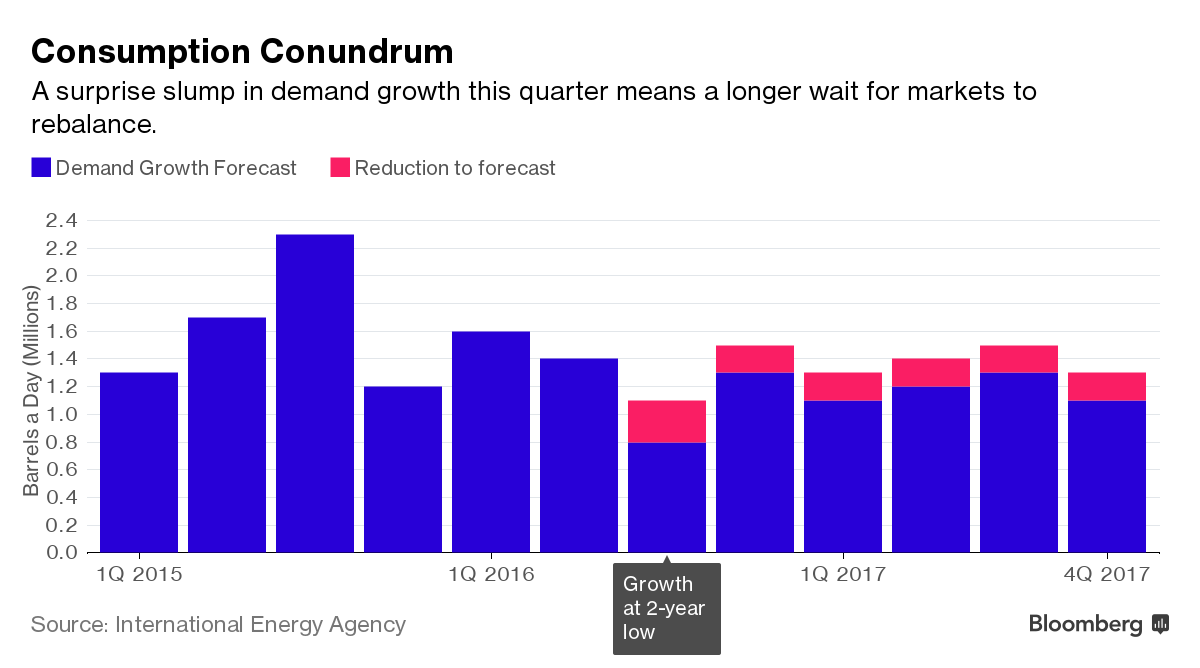
IEA Changes View on Oil Glut, Sees Surplus Enduring in 2017(International Energy Agency) The surplus in global oil markets will last for longer than previously thought, persisting into late 2017 as demand growth slumps and supply proves resilient, the International Energy Agency said.
U.S.
Fed’s estimate of the term premium is still close to historical lows (Walter Kurtz, Sober Look, The Daily Shot) Some explain the negative term premium by the fact that longer-term Treasuries have been used as a hedge for equity portfolios. Therefore buyers of these bonds effectively pay an option premium. But now that the correlation between stocks and bonds moved into positive territory (see next item) can the negative term premium be justified?

Bonds and Stocks Starting to Move Together (Walter Kurtz, Sober Look, The Daily Shot) In the equity markets, we now see the bond-equity correlations moving higher. As discussed above, longer-dated Treasuries can no longer be used to hedge stocks. Does that mean that the Treasuries term premium should begin rising? That would produce a significant further sell-off for U.S. Treasuries. And the implications are also negative for stocks.

Clinton server technicians decline questions from Congress (Reuters) Two computer technicians declined to answer questions from U.S. lawmakers on Tuesday about the unauthorized private email system that Democratic presidential nominee Hillary Clinton used during her tenure as U.S. secretary of state. Paul Combetta and Bill Thornton repeatedly invoked their constitutional right not to incriminate themselves during about 10 minutes of questioning while under oath before the House Oversight and Government Reform Committee. A third technician, Bryan Pagliano, declined even to appear, despite a subpoena ordering his testimony. The investigation of Clinton’s email system has become a troublesome issue for her presidential campaign, with Republican rival Donald Trump saying a recent finding by federal investigators that she mishandled classified government secrets in her email should disqualify her from office. Brian Fallon, a Clinton campaign spokesman, said in a statement it was up to the technicians whether to cooperate, “but we certainly are not prevailing upon anyone to cooperate with this sham of an inquiry.”
Median household incomes just surged for the first time since 2007 (Business Insider) Median household incomes just surged for the first time since 2007, according to the latest US Census report on income and poverty in the US. The median household income rose in real terms by 5.2% to $56,516 in 2015, up from the 2014 median of $53,718 (the green line on the chart). This was the largest increase on record, according to University of Michigan economics professor Justin Wolfers.

UK
Fidelity UK Investmetn Grade Long Credit Fund (Walter Kurtz, Sober Look, The Daily Shot) The ~25% gain in this fund for 2016 is likely to be largely secure or even extended because the Bank of England is about to start buying corporate bonds. Look for this fund to not drop further and possibly move above the previous high.

Post-Brexit, could the UK jobs market be in for a rough ride? (CNBC) Two-and-a-half months on and it appears that the world has gotten over the shock of Brexit, yet back on its home turf, the U.K.’s decision to quit the European Union, still lingers. As Britons adapt to a new government and digest new economic data about what a post-Brexit U.K. could look like, employment consultancyManpowerGroup warns that the job market should be watched closely, as the U.K. may currently be in “the calm before the storm“.
Germany
10-Year Bund Goes Positive (Walter Kurtz, Sober Look, The Daily Shot) While Treasuries have stabilized, the 10yr Bund yield moved higher and remains in positive territory. Some analysts have suggested that, unlike the two sharp bond selloffs in 2015, this one is likely to have a longer-lasting impact. Perhaps.

Other Scientific, Health, Political, Economics and Business Items of Note – plus Miscellanea
Best States for Healthy Retirement (24/7 Wall St, MSN News) The number of senior citizens living in the United States is expected to double in the next 25 years. The aging baby boom generation and improved medical technology will lead to significant increased demand for health care, palliative care, and other industries specifically tailored to the aging population. Some states are likely better prepared than others for the growing elderly population. In these states, senior citizens tend to live much longer, healthier, more enjoyable lives than in other states. Based on data collected by the Centers for Disease Control and Prevention, 24/7 Wall St. reviewed the health of retirement age adults in each of the 50 states. The most healthy states were Connecticut, Vermont, and Massachusetts. The least healthy was West Virginia. Follow title link for slide show for all states.
National Universities Rankings (U.S. News & Wolrd Report) The Top 25 list starts with Princeton, Harvard and the University of Chicago, with #24 tied between Carnegie Mellon University and UCLA (University of California — Los Angeles. Follow title link for slide show for the full list.
National Liberal Arts Colleges Rankings (U.S. News & World Report) The top 25 list starts with Williams, Amherst and Wellesley with #24 tied between Colorado College and Macalester College. Follow title link for slide show for the full list.
The Economic Burden of Incarceration in the U.S. (Washington University in St. Louis) Hat tip to Rob Carter. This study estimates the annual economic burden of incarceration in the United States. While prior research has estimated the cost of crime, no study has calculated the cost of incarceration. The $80 billion spent annually on corrections is frequently cited as the cost of incarceration, but this figure considerably underestimates the true cost of incarceration by ignoring important social costs. Recent reports highlighting the costs to incarcerated persons, families, and communities have made it possible to estimate the true cost of incarceration, which is found to be $1 trillion. This approaches 6% of GDP and is 11X larger than corrections spending.
Largest Gender Life Expectancy gaps (Walter Kurtz, Sober Look, The Daily Shot) It is tough to be a man in some parts of the world. Note: There is one error in the table below. Women in Vietnam have a life expectancy of 80.7 years.


