


Written by Econintersect
Early Bird Headlines 29 August 2016
Econintersect: Here are some of the headlines we found to help you start your day. For more headlines see our afternoon feature for GEI members, What We Read Today, which has many more headlines and a number of article discussions to keep you abreast of what we have found interesting.

Global
Nikkei climbs, boosted by a weaker yen, but other Asia markets slip (CNBC) Japanese shares climbed, boosted by a weaker yen, while other Asia markets put in a mixed performance on Monday. The benchmark Nikkei 225 gained 2.24%, while the Topix added 2.01%.

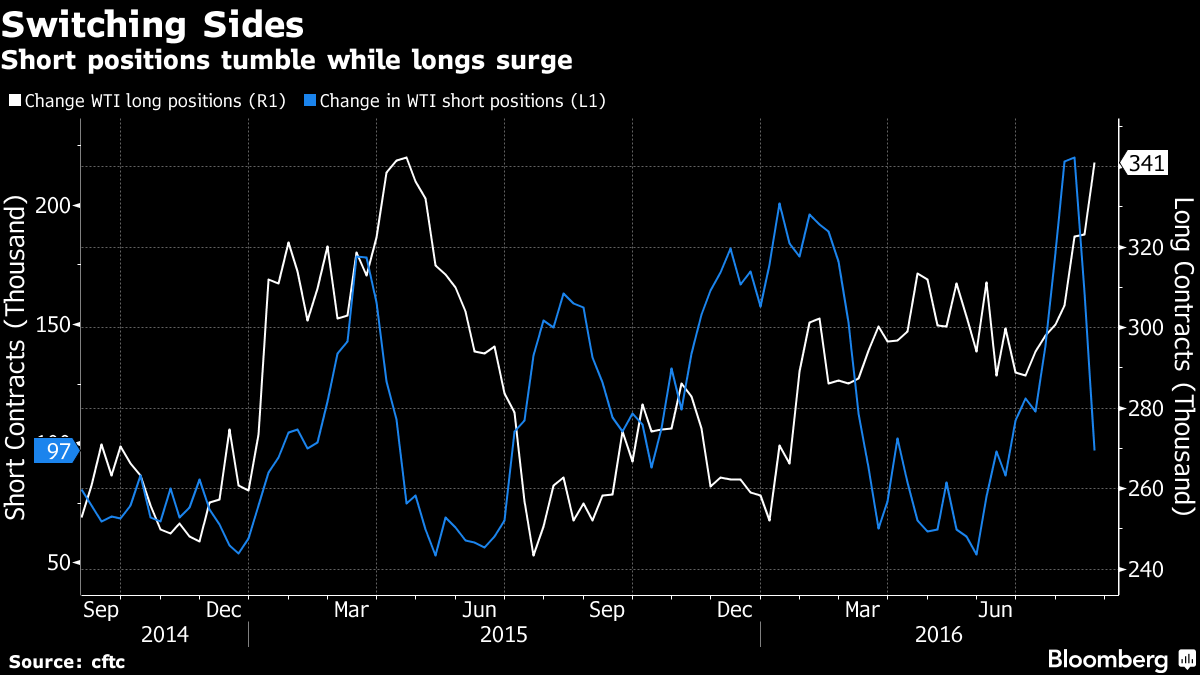
Oil Pessimists Exit as OPEC Cap Talk Spurs Bets Glut Easing (Bloomberg) For a second week, money managers slashed bets on falling prices by a record and boosted wagers on a rally. Futures have climbed 23% in less than three weeks as some OPEC members raised the possibility of an output freeze amid signs the global glut is easing.
Oil prices fall on rising Iraq output, doubt over producer talks (Reuters) Oil prices fell more than 1% on Monday as Iraq’s production rose and as Iran said it would only cooperate in producer talks to freeze output if fellow exporters recognized its right to fully regain market share. International Brent crude oil futures LCOc1 were trading at $49.32 per barrel at 0558 GMT, down 60 cents, or 1.2%, from their previous close. U.S. West Texas Intermediate (WTI) crude futures were down 66 cents, or 1.39%, at $46.98 a barrel.
Central Bankers Spurn Call for Radical Approach at Jackson Hole (Bloomberg) Central bankers aren’t retreating from the fight against low inflation, although they’re wary of launching a fresh assault on any daring new fronts. Faced with disappointing growth after years of ultra-low interest rates, Federal Reserve Chair Janet Yellen and her peers who met this weekend in Jackson Hole, Wyoming, re-affirmed their belief in power of monetary policy to stop economies from slipping into deflation. They were less keen on academic proposals that included the abolition of cash, raising their inflation targets, or keeping permanently large balance sheets.
How demography influences monetary policy (London School of Economics) Demographics (aging populations) are an important driver of lower economic growth rates. How this interplays with monetary policy is discussed in detail.
U.S.
Democratic Pundits Downplay Serious Ethical Issues Raised by the Clinton Foundation (The Intercept) This article details why the relationships between Clinton Foundation donors and the U.S. State Department when Hillary Clinton was Secretary of State are not trivial.
How the Next U.S. Jobs Report Could Influence the Fed (Bloomberg) Mohamed El-Erian suggests the following for September:
Raise interest rates by 25 basis points if the monthly data were to include employment creation of 180,000 jobs or more in August, a steady increase in the rate of growth of wages, and a labor participation rate that either is unchanged or edges up without materially increasing the 4.9 percent unemployment rate.
Avoid hiking rates if job creation is below 120,000, wage growth stagnates or falls, and a meaningful increase in the participation rate points to additional labor market slack.
Obamacare’s Faltering for One Simple Reason: Profit (The Intercept) The flaw built into Obamacare from the start: It permits insurance companies to make a profit on the basic healthcare package Americans are now legally required to purchase. This makes Obamacare fundamentally different from essentially all systems of universal healthcare on earth. Obamacare will add a public option or it will fail. Econintersect: As we have repeatedly pointed out, it is insanity to run basic medical care on an insurance business plan when everybody uses it. Insurance is for protection against the non-routine and the infrequent.
EU
The European Commission seems determined to make itself even more unpopular among Europe’s disaffected public. This is just about the only conclusion that can be drawn from its latest decision to steam ahead with plans to adopt a controversial ancillary copyright law – A.K.A. snippet tax – that would open the way for Big Media in Europe to charge news aggregators and other websites a special fee for linking to their works.
The Commission has repeatedly denied that it has any intentions of introducing such a tax. Just two days ago Commissioner Ansip state unequivocally: “This Commission does not have any plans to tax hyperlinks.”
It was a hugely disingenuous claim, as was confirmed by the publication on Friday of a leaked draft of the Commission’s own impact assessment on the modernization of EU copyright rules.
UK
The reasons behind Brexit – notes from a derided expert (London School of Economics) The British people have suffered tremendously since the financial crisis. The real wages of the average person fell by about 10% between 2007 and 2015. This is not about inequality – poor, middle and rich have all lost out. It has been the longest sustained fall in average pay since the Great Depression and it has made people very angry with the establishment – and rightly so. As LSE’s Professor Stephen Machin, the new Director of the Centre for Economic Performance has shown, the areas with the biggest falls in average wages were the places most likely to vote for Brexit. These wage falls and poor job prospects have nothing to do with immigration and everything to do with the financial crisis and slow recovery.
Germany
Germany is Running a Fiscal Surplus in 2016 After All (Council on Foreign Relations) Germany’s ongoing fiscal surplus contributes to Germany’s massive current account surplus, and the large and growing external surplus of the eurozone (the eurozone’s surplus reached €350 billion ($385 billion) in the last four quarters of data, which now includes q2). The external surplus effectively exports Europe’s demand shortfall to the rest of the world, and puts downward pressure on global interest rates. Cue my usual links to papers warning about the risk of exporting secular stagnation.

Turkey
Turkish army thrusts deeper into Syria, monitor says 35 villagers killed (Reuters) Turkey’s army and its allies thrust deeper into Syria on Sunday, seizing territory controlled by Kurdish-aligned forces on the fifth day of a cross-border campaign that a monitoring group said had killed at least 35 villagers.
China
95% of China’s Electric Vehicle Startups Face Wipeout (Bloomberg) China’s electric-vehicle industry, with 200-plus companies backed by a raft of billionaires, verges on a massive shakeout as the government imposes stricter technology standards on fledgling manufacturers and considers limiting their number to only 10. Any curbs would be aimed at weeding out the weak, said a senior executive with the state-backed auto manufacturers’ association, and they may push as many as 90% of EV startups toward extinction, a government-linked newspaper said. So far, only two ventures have obtained approval to build cars, based on a review of National Development and Reform Commission documents. Three others say they plan to apply for permits.
Brazil
Brazil’s Dilma Rousseff takes stand in impeachment trial (Reuters) Suspended President Dilma Rousseff will make a last stand in Brazil’s Senate on Monday in an impeachment trial that is widely expected to remove her from office and end more than a decade of leftist rule by her Workers Party. Rousseff, who is being impeached on charges of breaking budget laws, has denied wrongdoing and denounced the nine-month impeachment process that has paralyzed Brazilian politics as a conspiracy to overthrow her and roll back policies that have favored Brazil’s poor during 13 years of Workers Party governments.


