


Written by Steven Hansen
The U.S. new cases 7-day rolling average are 15.5 % lower than the 7-day rolling average one week ago. U.S. deaths due to coronavirus worsened and are now 3.8 % above the rolling average one week ago. At the end of this post is a set of interactive graphs and tables for the world and individual states – as well as today’s headlines which include;
- Report on children shows hundreds were sent to intensive care for a syndrome connected to Covid-19
- Federal prison where three out of every four inmates have tested positive for coronavirus
- Will COVID-19 vaccines ‘save the world’?
- Fauci said reducing health disparities are a key part of the plans to develop and distribute vaccines.
- COVID-19’s long-term impact on the workforce
- Here’s how to regulate indoor air when summer weather coincides with a pandemic
- Can HVAC systems help prevent transmission of COVID-19?

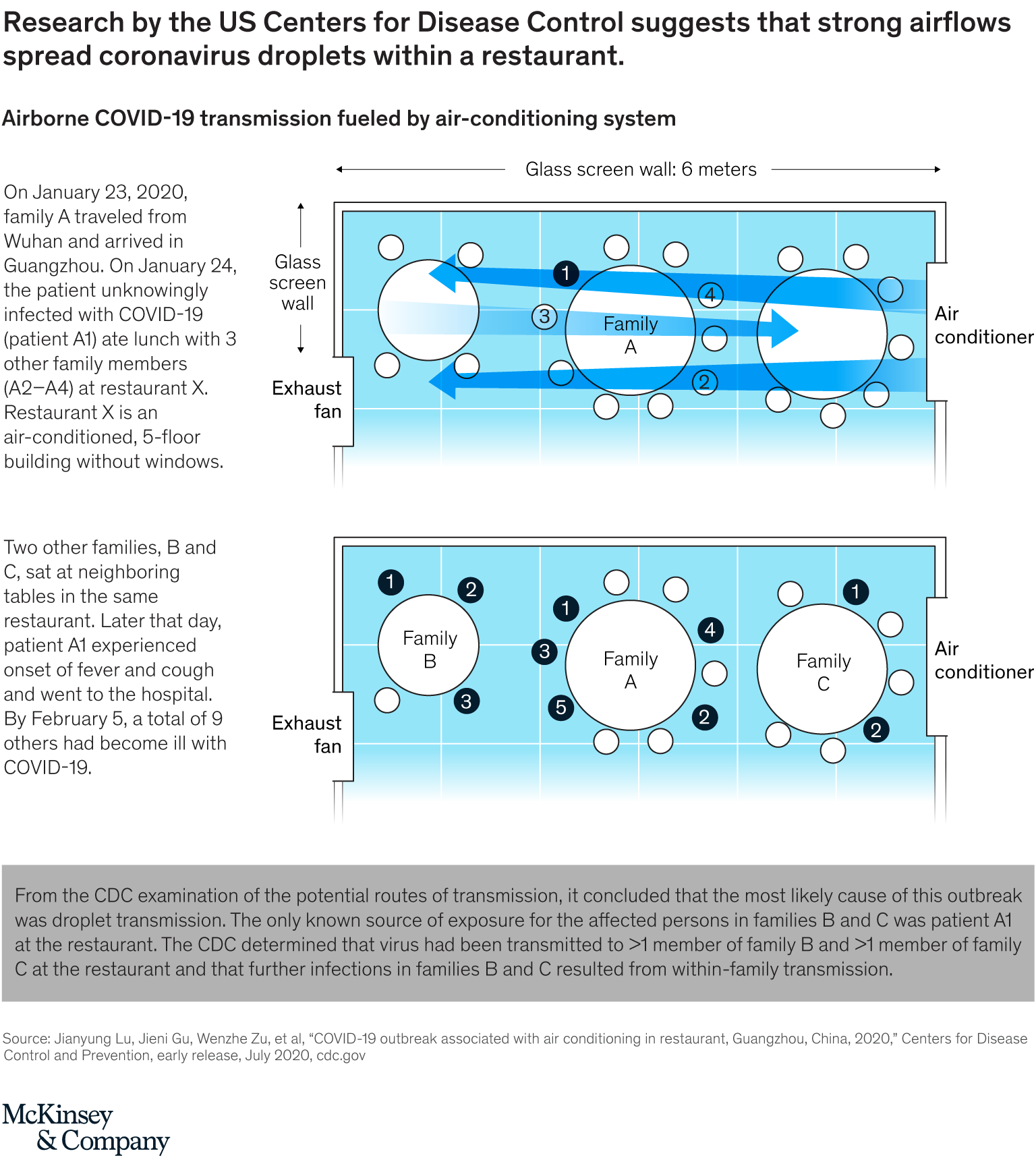
My continuing advice is to continue to wash your hands, wear masks, and maintain social distancing. No handwashing, mask, or social distancing will guarantee you do not get infected – but it sure as hell lowers the risk in all situations. In addition, certain activities are believed to carry a higher risk – like being inside in air conditioning and removing your mask (such as restaurants, around your children/grandchildren, bars, and gyms). It is all about viral load.
The daily number of new cases in the U.S. is remaining stubbornly and embarrassedly high.
The following graphs show the 7-day rolling average for new coronavirus cases and deaths have been updated through 08 August 2020:


z coronavirus.png
Coronavirus Statistics For 08 August 2020 |
| U.S. Only | Global | U.S Percentage of Total | ||||
| Today*** | Cumulative | Today*** | Cumulative | Today | Cumulative | |
| New Confirmed Cases | 58,150 | 4,940,000 | 274,133 | 19,360,000 | 21.2% | 25.6% |
| Deaths** | 1,252 | 161,356 | 6,548 | 721,174 | 19.1% | 22.4% |
| Mortality Rate | 2.2% | 3.3% | 2.4% | 3.7% | ||
total COVID-19 Tests per 1,000 people | 2.21* | 180.22* | ||||
* as of 06 Aug 2020
** evidently several states included “probable” deaths today in the number
*** red color indicates record number
Coronavirus News You May Have Missed
Fed’s Kashkari advocates six-week economic lockdown to defeat the coronavirus – CNBC
- Minneapolis Fed President Neel Kashkari is advocating a full economic shutdown for up to six weeks to halt the Covid-19 spread.
- In a Friday New York Times op-ed he authored with Michael T. Osterholm of the University of Minnesota, Kashkari said the initial March lockdown didn’t go far enough.
- “To be effective, the lockdown has to be as comprehensive and strict as possible,” Kashkari and Osterholm wrote.
A C.D.C. report on children shows hundreds were sent to intensive care for a syndrome connected to Covid-19. – New York Times
Hundreds of children in America, most of them previously healthy, have experienced an inflammatory syndrome associated with Covid-19, and most became so ill that they needed intensive care, according to a new report from the Centers for Disease Control and Prevention.
The syndrome, which can be deadly, has rattled parents and education officials as schools across the United States struggle with the prospect of reopening in the fall and the coronavirus continues its spread.
The researchers said that from early March to late July, the C.D.C. received reports of 570 young people — ranging from infants to age 20 — who met the definition of the new condition, called Multisystem Inflammatory Syndrome in Children or MIS-C. The reports came from health departments in 40 states, as well as New York City and Washington, D.C.
The patients were disproportionately people of color, echoing a pattern in adults who have been struck by the respiratory disease caused by the virus. About 40 percent were Hispanic or Latino, 33 percent were Black, and 13 percent were white, the report said. The median age was 8. About 25 percent of the patients had obesity before becoming sick.
Inside the federal prison where three out of every four inmates have tested positive for coronavirus – CNN
As coronavirus has spread rapidly through prisons and jails around the country in recent months, the Texas lockup where Giannetta spent his last days has emerged as the hardest-hit federal prison in the United States. More than 1,300 of the roughly 1,750 prisoners at FCI Seagoville prison and camp have tested positive for the virus, according to data from the federal Bureau of Prisons — a stunning three out of every four inmates. So far, three inmates at the prison, including Giannetta, have died from Covid-19.
Five Seagoville inmates told CNN in phone interviews from behind bars that they feared for their lives as the virus rushed through the Dallas-area prison, and that the crowded conditions made it all but impossible for them to stay socially distanced.
Will COVID-19 vaccines ‘save the world’? – McKinsey
Here is what we found:
- Vaccine developers and government officials are publicly reporting timelines for potential emergency use of vaccine candidates between the fourth quarter of 2020 and the first quarter of 2021.
- The early data on vaccine safety and immunogenicity in Phase I and II trials are promising—although in a limited number of subjects to date.
- The discrete characteristics of the virus, the sheer number of development efforts, and innovators’ unprecedented access to funding all provide reasons to believe that a COVID-19 vaccine can be developed faster than any other vaccine in history. (It took four years to develop the mumps vaccine, which was previously the fastest developed novel vaccine.1 ) More than 50 candidates are expected to enter human trials in 2020, and 250 total vaccine candidates are being pursued. Historical attrition rates would suggest that such a pipeline could yield more than seven approved products over the next few years.
- A number of hurdles remain, including validating unproven platform technologies, demonstrating vaccine candidates’ safety and protection against COVID-19, and delivering the highest-impact vaccine profiles.
- Regulatory bodies are still finalizing guidelines for COVID-19 vaccines. Recent guidance from the US Food and Drug Administration (FDA), for example, suggests the need for more data prior to granting Emergency Use Authorizations (EUAs). Details are still being worked out.
- Vaccine manufacturers have announced cumulative capacity that could produce as many as one billion doses by the end of 2020 and nine billion doses by the end of 2021.
Taken together, all the evidence suggests that COVID-19 vaccines are likely to become available for focused populations somewhere between the fourth quarter of 2020 and the first quarter of 2021.
Critical Piece in Vaccine Development – MedPage
NIAID Director Anthony Fauci, MD, said Thursday that efforts to reduce health disparities are a key part of the plans to develop and distribute vaccines.
Fauci, speaking during a press briefing hosted by the Alliance for Health Policy and sponsored by APCO Worldwide, also sought to allay concerns raised by some researchers that the virus could be around for decades.
“We hope, as a pandemic threat, that we are really on the cusp of seeing the end of it,” Fauci said.
“You may have some lingering of infection around that might come back in a seasonal way, but hopefully, with the technologies and the vaccines, and getting much, much better in our public health measures … we’ll be able to control it in a way that it is not a pandemic or an epidemic threat,” he said.
It is “up to us as a society” to control the virus by following fundamental public health recommendations of “masks, physical separation, avoiding crowds,” and engaging in outdoor rather than indoor activities, Fauci said.
He stressed that “we shouldn’t be in despair, that it is within our power, which it is, to control this.”
Despite some predictions by some researchers that a vaccine may be only 50% effective, Fauci said he’s optimistic that it may be 70% or 80% effective or even some higher percentage.
Why antibodies may not be the key to beating coronavirus – National Geographic
Like much of the rest of the world, Sweden soon found itself in the grips of an outbreak. As Aleman pivoted from her work on the hepatitis B and C viruses to study COVID-19, she began screening patients for the novel infection and for signs of the body’s immune response. And that’s when things got weird.
The body should produce both protective antibodies, which keep the virus from invading, and killer T cells, which tell virus-infected human cells to destroy themselves to keep the virus from spreading. Normally, these immune responses appear in tandem. But in a subset of those who tested positive for COVID-19, Aleman found T cells but no antibodies.
Other scientists around the world also had similar findings. Much of this work is still preliminary, and scientists don’t know what it means in terms of assessing how well a vaccine will work or how well people are protected from severe forms of the disease. But one thing is becoming clear: antibodies might not be telling the whole story when it comes to COVID-19 immunity. “We shouldn’t just look blindly at antibody tests,” Aleman says.
… They found that although antibodies developed primarily to the spike protein that coated the virus, T cells could respond to epitopes from inside and outside of the virus. Their results were published in Cell.
That’s good news for a vaccine, de Vries says, because it means that even if the outer spike proteins mutate over time, T cells will still be able to provide some protection, since they recognize other parts of the virus that are less prone to change.
What no one can say yet is what these T cell responses mean in terms of preventing and infection, or how long they might last. Potential preexisting T cell responses may yet affect how well a vaccine protects people, Sander says.
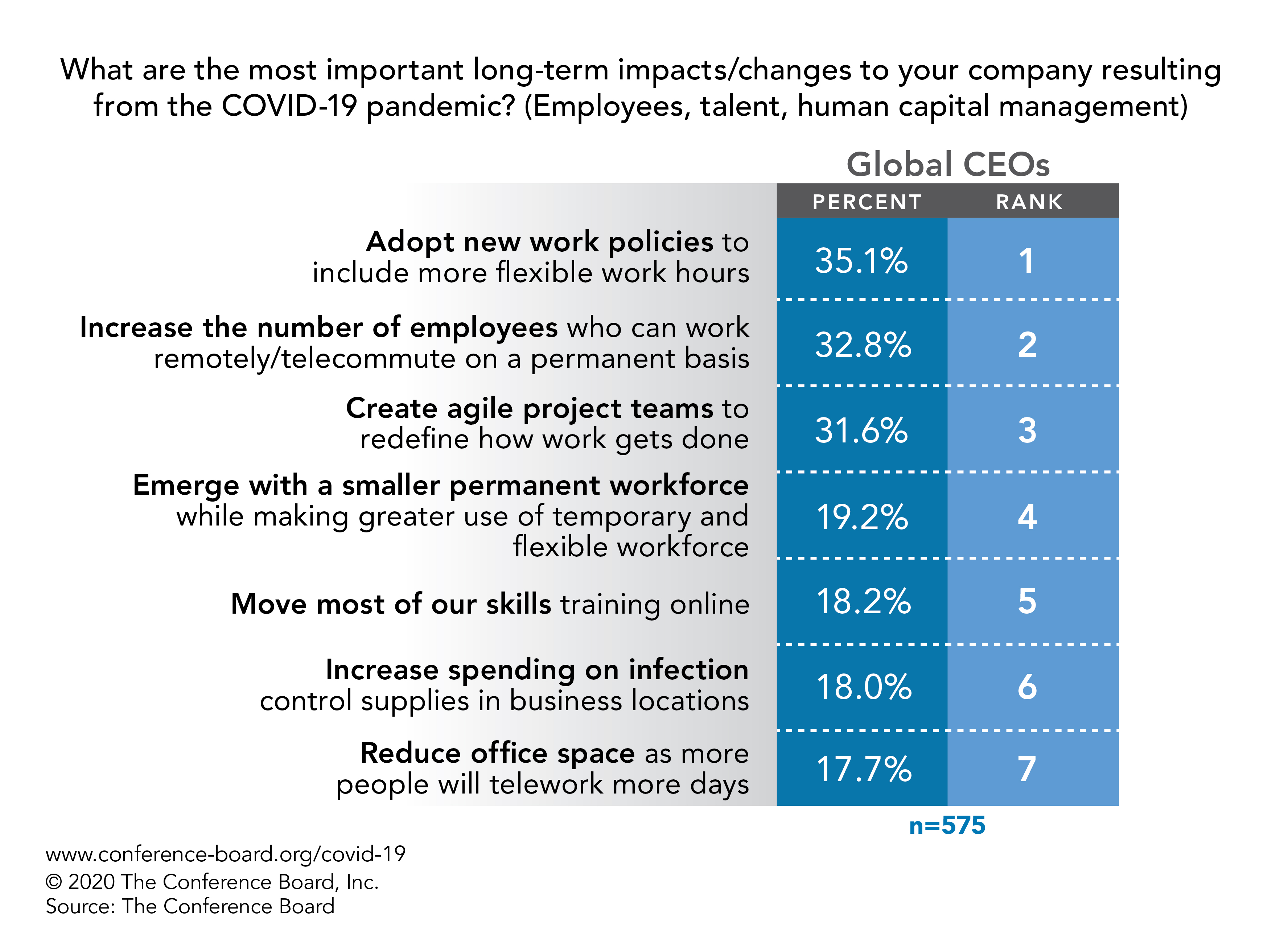
COVID-19’s long-term impact on the workforce: more flexible hours and remote work – The Conference Board
CEOs globally are seeing an increase in remote workers and rethinking how to design and deploy flexible work arrangements that can better serve employees’ evolving work life needs. When it comes to talent, CEOs around the globe consider adopting new work policies to include more flexible work hours and increasing the number of employees who can work remotely/telecommute on a permanent basis as the top two long-term impacts of the pandemic.
Here’s how to regulate indoor air when summer weather coincides with a pandemic. – New York Times
Experts have a few recommendations.
If the temperature outside is tolerable, consider opening a few windows to let outdoor air in. This can be amplified by blowing air inside with a box fan.
“The more outside air you have, the more you dilute the virus,” said Jose-Luis Jimenez, an aerosol scientist at the University of Colorado Boulder.
In hotter climates, some air-conditioners can be used safely if they cool and circulate both outdoor and indoor air. But be wary of certain models that only recirculate the air inside.
Those looking to be especially cautious may consider using air filters. But as with air-conditioners, to derive any real benefit consumers should look to those that meet specifications to filter out virus particles that are far smaller than other airborne particles like dust or pollen.
Above all, experts caution that airflow patterns are difficult to predict. The best way to prevent spreading the virus inside may be to avoid holding indoor gatherings altogether.
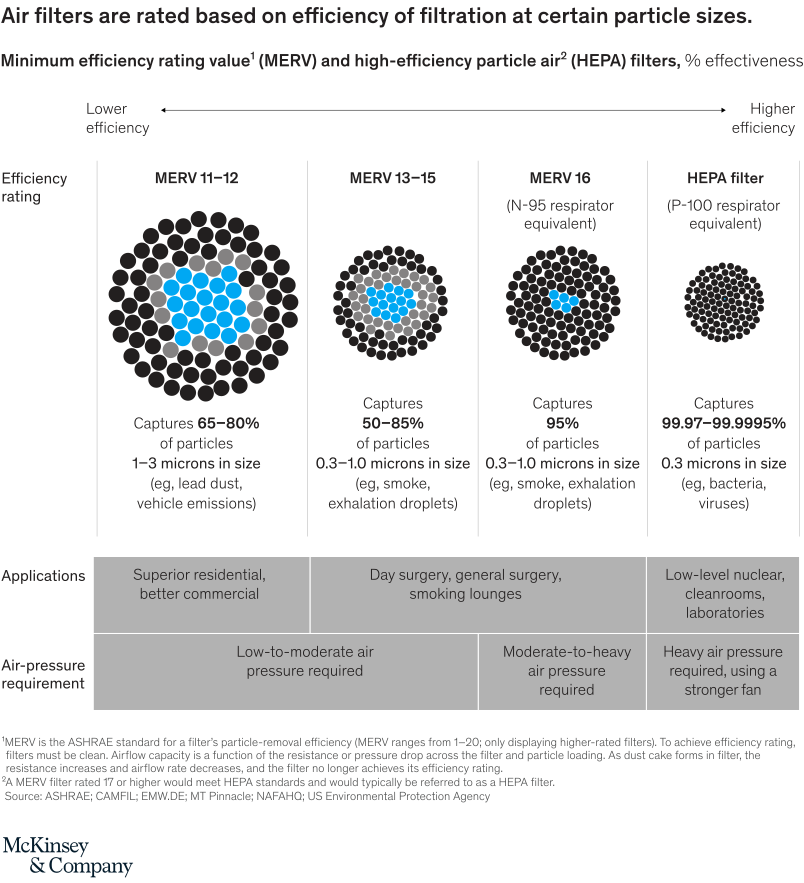
Can HVAC systems help prevent transmission of COVID-19? – McKinsey
{editor’s note: this post contains many different approaches and deserves a full read]
As economies worldwide reopen, healthcare officials have good reason to fear a second wave of COVID-19. Offices have traditionally accommodated large numbers of people and were designed to foster interaction and collaboration. Manufacturing shop floors sometimes require employees to work in close proximity. Schools, with their historically strained budgets, will find it especially hard to separate students from one another and from faculty. Hospitals have put off many elective procedures and noncritical surgeries for months and could begin seeing more patients in closer proximity.
Governments, trade groups, HVAC manufacturers, building engineers, and regulators may want to consider optimizing airflows whenever possible. Changes to ventilation systems, air-purification systems, and airflow management will probably be the focus of their work in this area.
These restaurant chains cut menu items during the pandemic – CNBC
- McDonald’s, Taco Bell and Subway are among the restaurant chains that have slimmed down their menus during the pandemic.
- Some items may return, but restaurant chains might also use the opportunity to permanently alter their menus.
- Bloated menus can overwhelm customers, slow down the kitchen and lead to longer drive-thru lines.
The following are foreign headlines with hyperlinks to the posts
One of the India plane crash victims had Covid-19
Germany records 1,000-plus coronavirus infections for a third straight day
Japan identified more coronavirus cases on Friday than any other day since the pandemic began
The following are additional national and state headlines with hyperlinks to the posts
Borders are closing to Americans. Here’s where you can still go
Virginia Supreme Court Grants Temporary Moratorium on Evictions
2 Out Of 3 Churchgoers: It’s Safe To Resume In-Person Worship
MS Coroner Says COVID Death Tally In State Is Misleading, Causing Fear
California Creating New COVID-19 Case Reporting System After Tech Glitches
How San Francisco succeeded more than other U.S. cities in fighting the coronavirus
Dire outlook for cinemas as coronavirus resurges in U.S.
260 students and 8 teachers quarantined in Georgia school district after first week of school
Today’s Posts On Econintersect Showing Impact Of The Pandemic With Hyperlinks
PMIs Up In Line With Earlier Forecast
The Federal Reserves Large-Scale Repo Program
As Schools Set To Start, How Companies Can Support Parents
Unemployment In Today’s Recession Compared To The Global Financial Crisis
Coronavirus INTERACTIVE Charts
include($_SERVER[‘DOCUMENT_ROOT’].’/pages/coronavirus.htm’); ?>
Analyst Opinion of Coronavirus Data
There are several takeaways that need to be understood when viewing coronavirus statistical data:
- The global counts are suspect for a variety of reasons including political. Even the U.S. count has issues as it is possible that as much as half the population has had coronavirus and was asymptomatic. It would be a far better metric using a random sampling of the population weekly. In short, we do not understand the size of the error in the tracking numbers.
- Just because some of the methodology used in aggregating the data in the U.S. is flawed – as long as the flaw is uniformly applied – you establish a baseline. This is why it is dangerous to compare two countries as they likely use different methodologies to determine who has (and who died) from coronavirus.
- COVID-19 and the flu are different but can have similar symptoms. For sure, COVID-19 so far is much more deadly than the flu. [click here to compare symptoms]
- From an industrial engineering point of view, one can argue that it is best to flatten the curve only to the point that the health care system is barely able to cope. This solution only works if-and-only-if one can catch this coronavirus once and develops immunity. In the case of COVID-19, herd immunity may need to be in the 80% to 85% range. WHO warns that few have developed antibodies to COVID-19. At this point, herd immunity does not look like an option although there is now a discussion of whether T-Cells play a part in immunity [which means one might have immunity without antibodies]
- Older population countries will have a higher death rate.
- There are at least 8 strains of the coronavirus. New York may have a deadlier strain imported from Europe, compared to less deadly viruses elsewhere in the United States.
- Each publication uses different cutoff times for its coronavirus statistics. Our data uses 11:00 am London time. Also, there is an unexplained variation in the total numbers both globally and in the U.S.
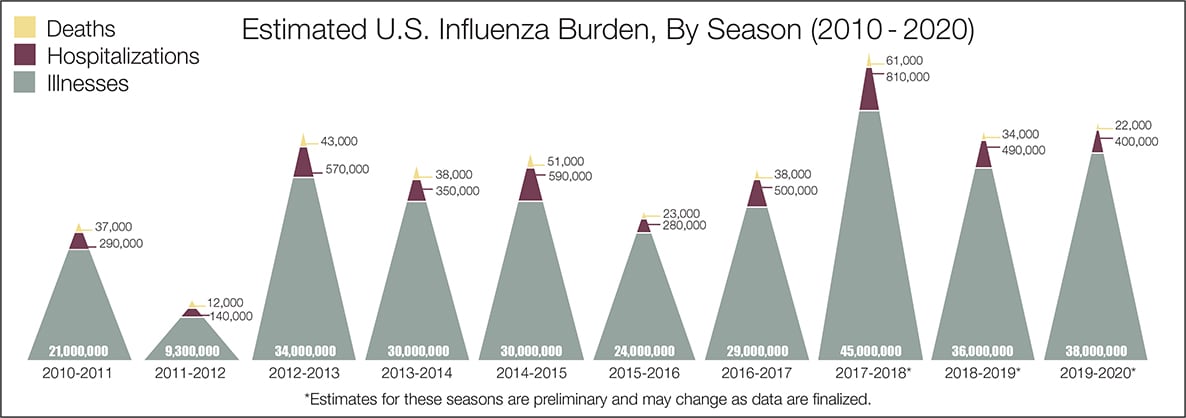
- The real question remains if the U.S. is over-reacting to this virus. The following graphic from the CDC puts the annual flu burden in perspective [click on image to enlarge]. Note that using this data is dangerous as the actual flu cases are estimated and not counted – nobody knows how accurate these guesses are.
What we do not know about the coronavirus [actually there is little scientifically proven information]. Most of our knowledge is anecdotal, from studies with limited subjects, or from studies without peer review.
- How many people have been infected as many do not show symptoms?
- Masks do work.
- Do we develop lasting immunity to the coronavirus? Another coronavirus – the simple cold – does not develop long term immunity.
- To what degree do people who never develop symptoms contribute to transmission?
- The US has scaled up coronavirus testing – and the accuracy of the tests has been improving. However, if one loses immunity – the coronavirus testing value is reduced.
- Can children widely spread coronavirus? [current thinking is that they are becoming a major source of the pandemic spread]
- Why have some places avoided big coronavirus outbreaks – and others hit hard?
- What effect will the weather have? At this point, it does not seem hot weather slows this coronavirus down – and it seems air conditioning contributes to its spread.
- Outdoor activities seem to be a lower risk than indoor activities.
- Can the world really push out an effective vaccine in 12 to 18 months?
- Will other medical treatments for Covid-19 ease symptoms and reduce deaths? So far only one drug (remdesivir) is approved for treatment.
- A current scientific understanding of the way the coronavirus works can be found [here].
Heavy breakouts of coronavirus have hit farm workers. Farmworkers are essential to the food supply. They cannot shelter at home. Consider:
- they have high rates of the respiratory disease [occupational hazard]
- they travel on crowded buses chartered by their employers
- few have health insurance
- they cannot social distance and live two to four to a room – and they eat together
- some reports say half are undocumented
- they are low paid and cannot afford not to work – so they will go to work sick
- they do not have access to sanitation when working
- a coronavirus outbreak among farmworkers can potentially shutter entire farm
The bottom line is that COVID-19 so far has been shown to be much more deadly than the data on the flu. Using CDC data, the flu has a mortality rate between 0.06 % and 0.11 % Vs. the coronavirus which to date has a mortality rate of 4 % [the 4% is the average of overall statistics – however in the last few months it has been hovering around 1.0%] – which makes it between 10 and 80 times more deadly. The reason for ranges:
Because influenza surveillance does not capture all cases of flu that occur in the U.S., CDC provides these estimated ranges to better reflect the larger burden of influenza.
There will be a commission set up after this pandemic ends to find fault [it is easy to find fault when a once-in-a-lifetime event occurs] and to produce recommendations for the next time a pandemic happens. Those that hate President Trump will conclude the virus is his fault.
Resources:
- Get the latest public health information from CDC: https://www.coronavirus.gov .
- Get the latest research from NIH: https://www.nih.gov/coronavirus.
- Find NCBI SARS-CoV-2 literature, sequence, and clinical content: https://www.ncbi.nlm.nih.gov/sars-cov-2/.
- List of studies: https://icite.od.nih.gov/covid19/search/#search:searchId=5ee124ed70bb967c49672dad
include(“/home/aleta/public_html/files/ad_openx.htm”); ?>


