


Written by Steven Hansen
The U.S. new cases grew today (and are significantly elevated) – and today’s 7 day rolling average of new cases is now 37 % higher than one week ago (yesterday it was 40 %). At the end of this post is a set of interactive graphs and tables for the world and individual states – as well as today’s headlines which include;
- Most People With Coronavirus Won’t Spread It. Why Do a Few Infect Many?
- Exactly how face masks stop COVID-19 transmission
- Latinx People Are Hospitalized From COVID-19 At Four Times The Rate Of Whites
- COVID-19 to cost hospitals $323 billion
- Coronavirus Brings American Decline Out in the Open
- Beijing approves experimental COVID-19 vaccine for use in Chinese military
- Record fireworks sales expected as Fourth of July gets celebrated at home

My continuing warning is to continue to wash your hands, wear masks, and maintain social distancing. No handwashing, mask, or social distancing will guarantee you do not get infected – but it sure as hell lowers the risk.
The number of new cases in the U.S. is remaining stubbornly high, increasing, and the 7-day rolling average continues in record territory.
The following graph showing the 7-day rolling average for new coronavirus cases has been updated through 01 July 2020:

z coronavirus.png
Coronavirus Statistics For 01 July 2020 |
| U.S. Only | Global | U.S Percentage of Total | ||||
| Today*** | Cumulative | Today*** | Cumulative | Today | Cumulative | |
| New Cases | 43,880 | 2,630,000 | 172,929 | 10,450,000 | 25.4% | 25.2% |
| Deaths** | 1,270 | 127,410 | 5,728 | 511,037 | 22.2% | 24.9% |
| Mortality Rate | 0.8% | 4.9% | 2.3% | 4.9% | ||
total COVID-19 Tests per 1,000 people | 1.77* | 93.62* | ||||
* as of 28 June 2020
** evidently several states included “probable” deaths today in the number
*** red color indicates record number

Coronavirus News You May Have Missed
The economic recovery is stalling as infections rise in the U.S. – New York Times
The nascent restart of America’s economy has begun to stall as a surge in new cases dampens consumer and business activity across states like Florida, Texas and Arizona.
After weeks of contraction, the economy had begun rebounding faster than many economists expected from mid-April into June, as infection rates stabilized or fell across much of the country and the federal government injected trillions of dollars into the economy.
States began to reopen, shoppers increased their spending and employers started to hire back furloughed workers.
But there were signs even then that the pace of recovery was beginning to slow, even before another wave of infections swept through many states.
Now, real-time economic data shows the economy moving backward, as new outbreaks spook consumers, although the national jobs report scheduled to be released this week may obscure that setback; the report is drawn from data compiled in the middle of the month.
U.S. Coronavirus Deaths Substantially Higher Than Official Tally, Study Shows – Daily Beast
The true number of coronavirus-related deaths in the U.S. is likely much higher than the confirmed count, according to a new Yale University study. Researchers used data from the National Center for Health Statistics, comparing the number of excess deaths in the U.S. between March 1 and May 30 to the number of COVID-19 deaths. The researchers found that the number of excess deaths exceeded the number of confirmed coronavirus deaths, suggesting that there are far more deaths related to the virus than previously thoughts. The deaths in the U.S. numbered about 122,300 more than would typically be expected, but only 95,235 of those were attributed to COVID-19.
“Our analyses suggest that the official tally of deaths due to Covid-19 represent a substantial undercount of the true burden,” Yale epidemiologist Dan Weinberger told CNBC.
Most People With Coronavirus Won’t Spread It. Why Do a Few Infect Many? – New York Times
Growing evidence shows most infected people aren’t spreading the virus. But whether you become a superspreader probably depends more on circumstance than biology.
… Most infected people don’t pass on the coronavirus to someone else. But a small number pass it on to many others in so-called superspreading events.
… doctors have observed that viruses can multiply to bigger numbers inside some people than others. It’s possible that some people become virus chimneys, blasting out clouds of pathogens with each breath.
… A lot of transmission seems to happen in a narrow window of time starting a couple days after infection, even before symptoms emerge. If people aren’t around a lot of people during that window, they can’t pass it along.
Pfizer reports encouraging, very early vaccine test results – Medical Xpress
The first of four experimental COVID-19 vaccines being tested by Pfizer and its German partner BioNTech showed encouraging results in very early testing of 45 people, the companies said Wednesday.
Study volunteers given either a low or medium dose, in two shots about a month apart, had immune responses in the range expected to be protective, when compared to some COVID-19 survivors, according to the preliminary results.
Side effects were typical for vaccines, mostly pain at the injection site and fever.
The report has been submitted for publication in a scientific journal but not yet reviewed. With its other potential candidates still in the earliest stage of testing, Pfizer aims to open a large-scale study this summer but can’t yet say which shot is best to include.
But researchers didn’t administer a second shot of the highest dose initially tested, sticking with the low and medium doses. The higher-dose shot caused more injection reactions without apparent added benefit.
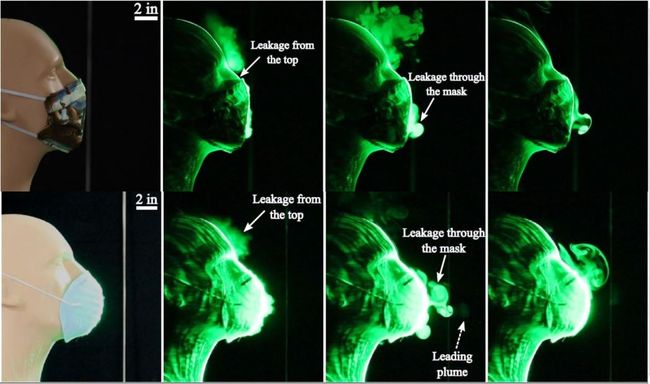
Visualization shows exactly how face masks stop COVID-19 transmission – Live Science
A dramatic new visualization shows exactly why it’s a good idea to wear a face mask to prevent the spread of the new coronavirus.
Without a mask, droplets produced during coughing can travel up to 12 feet (3.7 meters), the visualization revealed, but with a mask, this distance is reduced to just a few inches in the best cases.
The simulation, which was described today (June 30) in the journal Physics of Fluids, also reveals that some cloth masks work better than others at stopping the spread of potentially infectious droplets.
Why Latinx People Are Hospitalized From COVID-19 At Four Times The Rate Of Whites – NPR
As COVID-19 continues to sweep the nation, Latinx people are among those who are being hit the hardest.
“I would equate what we’ve seen with the Latino population as kind of the perfect storm,” said Dr. Joseph Betancourt, the vice president and chief equity and inclusion officer at Massachusetts General Hospital, in an interview with NPR’s Morning Edition.
According to the Centers for Disease Control and Prevention, Latinx people in the U.S. are hospitalized from the virus at four times the rate of white people.
“If you equate it to a fire, to really have a bad fire there are three components to it: You have to have the substrate, so the set of conditions that would be very flammable with the spark, you have to have a spark and you have to have material around it that makes the spread of the fire move extensively and quickly,” Betancourt said. “And I think in the case of the Latino population, we see all three of those kind of coming together to create this perfect storm.”
The set of underlying conditions that Betancourt referred to includes everything from Latinx people being more likely to have preexisting conditions like diabetes to having less access to care to a hesitation to engage with the health care system.
COVID-19 to cost hospitals $323 billion, American Hospital Association says – Beckers Hospital Review
Hospitals will lose $323.1 billion this year because of the COVID-19 pandemic, according to a new report from the American Hospital Association.
The total includes $120.5 billion in financial losses the association predicts hospitals will see from July through December on top of $202.6 billion in losses they estimated between March and June. The losses are in large part due to lower patient volumes.
“While potentially catastrophic, these projected losses still may underrepresent the full financial losses hospitals will face in 2020, as the analysis does not account for currently increasing case rates in certain states, or potential subsequent surges of the pandemic occurring later this year,” the AHA said.
Hospitals and health systems are reporting an average decline of 19.5 percent in inpatient volume and 34.5 percent in outpatient volume when compared to baseline levels from last year. Most hospitals don’t expect to return to last year’s levels in 2020.
Read the full report here.
Use N95 Masks for All COVID-19 Inpatient Care. Period. – MedPage Today
Healthcare professionals taking care of COVID-19 patients should wear N95 respirators at all times, versus medical or surgical masks, researchers argued, as N95 masks offer superior — not just comparable — protection.
Numerous organizational guidelines agree N95 respirators should be worn for aerosol-generating procedures for COVID-19 patients, but existing evidence indicates N95 respirators should be used for all aspects of COVID-19 inpatient care, wrote Harry Peled, MD, of St. Jude Medical Center in Fullerton, California, and colleagues.
“Guideline recommendations that do not support N95 use for all inpatient COVID-19 management should consider reevaluating the existing data or at least acknowledge the issues raised,” they argued in an opinion piece in Annals of Internal Medicine.
They detailed how N95s are superior to medical masks, writing that N95 respirators “achieve better filtration of airborne particles than medical masks if used properly and continuously.”
Coronavirus Brings American Decline Out in the Open – Yahoo
[editor’s note: this is an opinion post]
The U.S.’s decline started with little things that people got used to. Americans drove past empty construction sites and didn’t even think about why the workers weren’t working, then wondered why roads and buildings took so long to finish. They got used to avoiding hospitals because of the unpredictable and enormous bills they’d receive. They paid 6% real-estate commissions, never realizing that Australians were paying 2%. They grumbled about high taxes and high health-insurance premiums and potholed roads, but rarely imagined what it would be like to live in a system that worked better.
When writers speak of American decline, they’re usually talking about international power — the rise of China and the waning of U.S. hegemony and moral authority. To most Americans, those are distant and abstract things that have little or no impact on their daily lives. But the decline in the general effectiveness of U.S. institutions will impose increasing costs and burdens on Americans. And if it eventually leads to a general loss of investor confidence in the country, the damage could be much greater.
The most immediate cost of U.S. decline — and the most vivid demonstration — comes from the country’s disastrous response to the coronavirus pandemic. Leadership failures were pervasive and catastrophic at every level — the president, agencies such as the Centers for Disease Control and the Food and Drug Administration, and state and local leaders all fumbled the response to the greatest health threat in a century. As a result, the U.S. is suffering a horrific surge of infections in states such as Arizona, Texas and Florida while states that were battered early on are still struggling. Countries such as Italy that are legendary for government dysfunction and were hit hard by the virus have crushed the curve of infection, while the U.S. just set a daily record for case growth and shows no sign of slowing down.
Beijing approves experimental COVID-19 vaccine for use in Chinese military – CTV
The Chinese government has approved the use of an experimental COVID-19 vaccine for the country’s military — the latest step in a global race to stop the deadly disease caused by the novel coronavirus.
The vaccine, known as Ad5-nCoV, was jointly-developed by the Beijing Institute of Biotechnology — part of the Chinese government’s Academy of Military Medical Sciences — and vaccine company CanSino Biologics.
In a statement to the Hong Kong Stock Exchange on Monday, CanSino announced that China’s Central Military Commission had given the vaccine a “military specially-needed drug approval” on June 25. The special permission will last for one year and will only apply to military personnel.
Record fireworks sales expected as Fourth of July gets celebrated at home during the pandemic – CNBC
- Firework sellers say they are seeing huge gains in firework sales, with some seeing jumps of 200% to 300% in sales.
- Companies normally place orders for fireworks over a year in advance with the expectation that sales from around the Fourth of July will buoy them through the year.
- Industry leaders say the rise of firework sales to individual consumers likely stems from the cancellation of many professional shows across the U.S.
- However, the providers of professional fireworks displays are hurting as many local shows have been canceled.
US gets almost all of the world’s supply of key Covid-19 drug – CNN
The United States has been allocated almost all of the next few months’ supply of remdesivir, the only drug that’s known to work directly against Covid-19.
The Department of Health and Human Services (HHS) announced Monday that it had secured 100% of drug-maker Gilead’s projected production for July, and 90% of its production for August and September — plus more for clinical trials.
“President Trump has struck an amazing deal to ensure Americans have access to the first authorized therapeutic for Covid-19,” said HHS Secretary Alex Azar in a news release.
HHS has secured more than 500,000 treatment courses of the antiviral drug for US hospitals through September, according to the release. Remdesivir is the only drug that has an emergency use authorization from the US Food and Drug Administration to treat coronavirus, and it is patented by Gilead Sciences.
Another drug, the widely available steroid dexamethasone, is useful for providing supportive care to the sickest Covid-19 patients who require ventilation or oxygen, according to preliminary research from the UK.
The following are foreign headlines with hyperlinks to the posts
Tokyo Disney reopens after nearly 4 months shut
Strong bookings boost Ryanair’s hopes of return to normal
U.N. Security Council Demands Cease-Fire In Conflict Areas, Due To COVID-19
Aeromexico files for US bankruptcy, citing ‘unprecedented’ challenges
The following are additional national and state headlines with hyperlinks to the posts
COVID-19 Affects Kids Differently: We Must Pay Attention
Why Surviving the Virus Might Come Down to Which Hospital Admits You
A Miami ER doctor explained how Florida’s COVID-19 response went from success to disaster
As cases surge in Florida, Miami-area hospital workers fear being ‘inundated.’
US: Arizona reports record in new virus cases, deaths
Accuracy of coronavirus tests questioned after PGA golfer tests positive, and then negative
TSA screening record numbers of travelers ahead of Fourth of July
Google Office Reopening Plans Further Delayed
Economy’s second-half comeback is now threatened by coronavirus resurgence
US car sales just had their worst quarter since the Great Recession
Today’s Posts On Econintersect Showing Impact Of The Pandemic With Hyperlinks
May 2020 Construction Spending Declined
June 2020 ISM and Markit Manufacturing Surveys Improve
June 2020 ADP Employment Gains 2,369,000
June 2020 Job Cuts Over 1,200,000 – Highest On Record.
An Economic Recovery Or An Illusion?
The Fed Has Inflated Another Asset Bubble
Coronavirus INTERACTIVE Charts
include($_SERVER[‘DOCUMENT_ROOT’].’/pages/coronavirus.htm’); ?>
Analyst Opinion of Coronavirus Data
There are several takeaways that need to be understood when viewing coronavirus statistical data:
- The global counts are suspect for a variety of reasons including political. Even the U.S. count has issues as it is possible that as much as half the population has had coronavirus and was asymptomatic. It would be a far better metric using a random sampling of the population weekly. In short, we do not understand the size of the error in the tracking numbers.
- Just because some of the methodology used in aggregating the data in the U.S. is flawed – as long as the flaw is uniformly applied – you establish a baseline. This is why it is dangerous to compare two countries as they likely use different methodologies to determine who has (and who died) from coronavirus.
- COVID-19 and the flu are different but can have similar symptoms. For sure, COVID-19 so far is much more deadly than the flu. [click here to compare symptoms]
- From an industrial engineering point of view, one can argue that it is best to flatten the curve only to the point that the health care system is barely able to cope. This solution only works if-and-only-if one can catch this coronavirus once and develops immunity. In the case of COVID-19, herd immunity may need to be in the 80% to 85% range. WHO warns that few have developed antibodies to COVID-19. At this point, herd immunity does not look like an option.
- Older population countries will have a higher death rate.
- There are at least 8 strains of the coronavirus. New York may have a deadlier strain imported from Europe, compared to less deadly viruses elsewhere in the United States.
- Each publication uses different cutoff times for its coronavirus statistics. Our data uses 11:00 am London time. Also, there is an unexplained variation in the total numbers both globally and in the U.S.
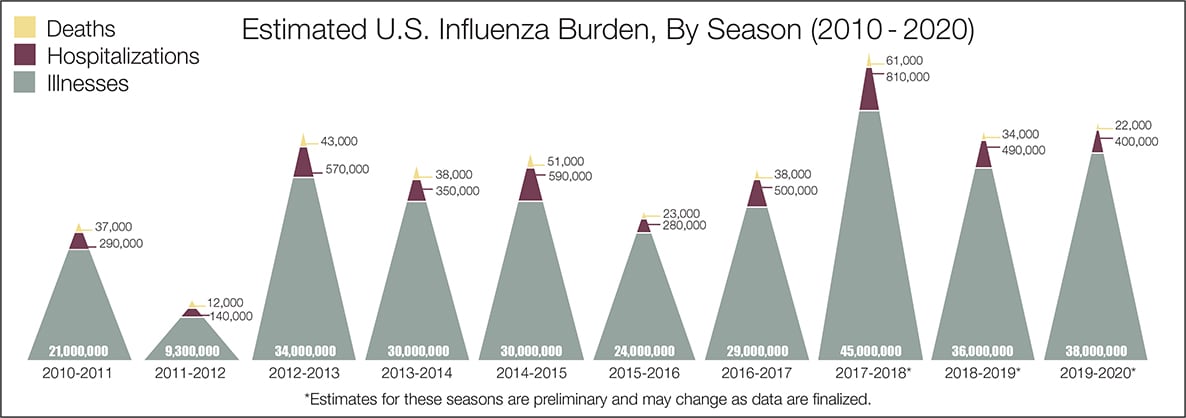
- The real question remains if the U.S. is over-reacting to this virus. The following graphic from the CDC puts the annual flu burden in perspective [click on image to enlarge]. Note that using this data is dangerous as the actual flu cases are estimated and not counted – nobody knows how accurate these guesses are.
What we do not know about the coronavirus [actually there is little scientifically proven information]. Most of our knowledge is anecdotal, from studies with limited subjects, or from studies without peer review.
- How many people have been infected as many do not show symptoms?
- To what degree do people who never develop symptoms contribute to transmission?
- The US has scaled up coronavirus testing – but the accuracy of the tests is in question.
- Can children widely spread coronavirus?
- Why have some places avoided big coronavirus outbreaks – and others hit hard?
- What effect will the weather have? At this point, it does not seem hot weather slows this coronavirus down.
- Outdoor activities seem to be a lower risk than indoor activities.
- Do we develop lasting immunity to the coronavirus? Another coronavirus – the simple cold – does not develop long term immunity.
- Can the world really push out an effective vaccine in 12 to 18 months?
- Will other medical treatments for Covid-19 ease symptoms and reduce deaths?
- A current scientific understanding of the way the coronavirus works can be found [here].
Heavy breakouts of coronavirus have hit farmworkers. Farmworkers are essential to the food supply. They cannot shelter at home. Consider:
- they have high rates of the respiratory disease [occupational hazard]
- they travel on crowded buses chartered by their employers
- few have health insurance
- they cannot social distance and live two to four to a room – and they eat together
- some reports say half are undocumented
- they are low paid and cannot afford not to work – so they will go to work sick
- they do not have access to sanitation when working
- a coronavirus outbreak among farmworkers can potentially shutter entire farm
The bottom line is that COVID-19 so far has been shown to be much more deadly than the data on the flu. Using CDC data, the flu has a mortality rate between 0.06 % and 0.11 % Vs. the coronavirus which to date has a mortality rate of over 5 % – which makes it between 45 and 80 times more deadly. The reason for ranges:
Because influenza surveillance does not capture all cases of flu that occur in the U.S., CDC provides these estimated ranges to better reflect the larger burden of influenza.
There will be a commission set up after this pandemic ends to find fault [it is easy to find fault when a once-in-a-lifetime event occurs] and to produce recommendations for the next time a pandemic happens. Those that hate President Trump will conclude the virus is his fault.
Resources:
- Get the latest public health information from CDC: https://www.coronavirus.gov .
- Get the latest research from NIH: https://www.nih.gov/coronavirus.
- Find NCBI SARS-CoV-2 literature, sequence, and clinical content: https://www.ncbi.nlm.nih.gov/sars-cov-2/.
- List of studies: https://icite.od.nih.gov/covid19/search/#search:searchId=5ee124ed70bb967c49672dad
include(“/home/aleta/public_html/files/ad_openx.htm”); ?>


