


Written by Sig Silber
At the end of every month, NOAA issues an update to their Early Outlook for the following month, in this case, August 2020, which was issued as usual on the Third Thursday of the month. Today, fifteen days later, NOAA has issued their Updated Outlook for August. Everything is connected and these changes appear to be related to the development of La Nina. NOAA is not quite ready to announce that yet but we expect it soon. The changes are fairly significant but not unexpected. Since there is a hurricane approaching it is not a surprise that this is factored into the forecast.

The outlook also contains a continuation of a weak monsoon circulation and resultant lack of precipitation from the four corners region into the Great Basin, consistent with many model solutions and impacts related to the current state of the tropics.
Some housekeeping: On July 18, 2020, we published Part I of our analysis of the NOAA and JAMSTEC Three- to Four- Season Outlook and that can be accessed here. In that report, the August 2020 Early Outlook was issued. This article presents the NOAA update of their Early temperature and precipitation Outlook for August and the most recent Drought Forecast update for the month of August.
Please share this article – Go to the very top of the page, right-hand side for social media buttons. Also, feel free to send this article to anyone you feel will benefit from it. You can find the latest version of all our weather articles by consulting the Directory by clicking here and then clicking on the latest version of the article which is of interest to you.
Now let us address the NOAA Update of the August 2020 Forecast.
We do not usually start with the NOAA Discussion but the changes are so significant and are well explained in the NOAA Discussion released today so we are presenting it first.
30-DAY OUTLOOK DISCUSSION FOR AUGUST 2020
The background climate conditions related to ENSO have not changed since the initial outlook. The MJO has become better organized, with the convectively active portion over the Maritime Continent, where lagged composites have a signal counter to recent model guidance. The lagged composite impacts are minimal in coverage when masked by statistical significance, so the MJO influence is likely to be manifest mostly through modifications to tropical cyclone activity in the eastern Pacific and Atlantic.
The updated outlook for August 2020 reflects recently observed conditions and model outputs since the initial release of the August 2020 outlook. The temperature outlook for August is also influenced by recent and predicted rainfall, as wet conditions in the Great Plains and Mississippi Valley can favor below normal temperatures. The below normal temperatures in the central CONUS are likely to moderate, and even become above normal by the second half of the month, so the probabilities are low. The continued dry conditions over the Western CONUS favor above above normal temperatures. Temperatures trends for August favor above normal temperatures across the western CONUS, the Northeast, and much of Alaska. Exceptions to those warm trends are southwest Alaska and a slight weakness from the Northern Great Plains to the Southeast. Troughing early in the month is likely to yield a colder than normal start to August in southwest Alaska, with moderation later in the month.
The precipitation outlook is heavily influenced by the predicted path and rainfall associated with Hurricane Isaias. The 50 percent contour is indicated where 7-day QPF exceed the threshold for below normal precipitation, effectively ruling it out, if the 7-day total QPF verifies. An anomalous trough is predicted over the central CONUS, which slightly favors above normal precipitation in the northern and central plains. Some model solutions have above normal precipitation extending to the southern plains, but that signal is weak and inconsistent. The outlook also contains a continuation of a weak monsoon circulation and resultant lack of precipitation from the four corners region into the Great Basin, consistent with many model solutions and impacts related to the current state of the tropics. Troughing is expected to develop over southwest Alaska early in the month, favoring above normal precipitation across southwest Alaska. Week-3/4 guidance favors dry conditions across much of Alaska, so the probabilities are low for the above normal area, and the result is no signal for much of central and northern Alaska.
Now, we will compare the NOAA Early Outlook for August 2020 with the newly issued update.
Early Outlook Temperature

Updated Temperature Outlook

Early Outlook Precipitation

Updated Precipitation

| July 18, 2020, Forecast for August | July 31, 2020, Forecast for August | |
| Temperature |
|
|
| Precipitation |
|
|

Visual Consistency Testing.
It is useful to see how the full-month forecast fits with the set of partial-month forecasts that we have. These will continue to update in this article. It is important to remember that with the partial-month forecasts, we generally have about 25 days of the subsequent month to look at when we do this at the end of the month as we are doing now. It depends on what day of the week the month ends. So this month, which ended on a Friday, we are only missing a forecast that includes the last three days of the month. So we are in very good shape for the visual consistency testing this month.
First Temperature
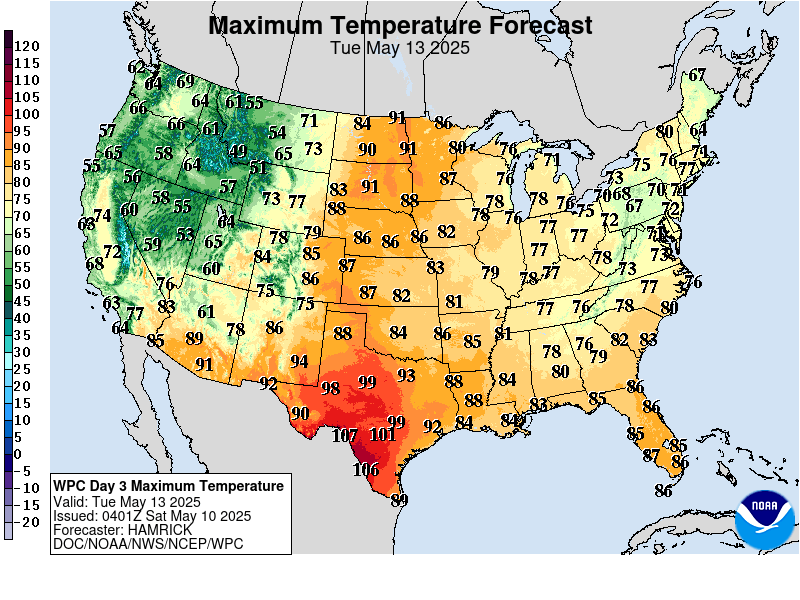 | 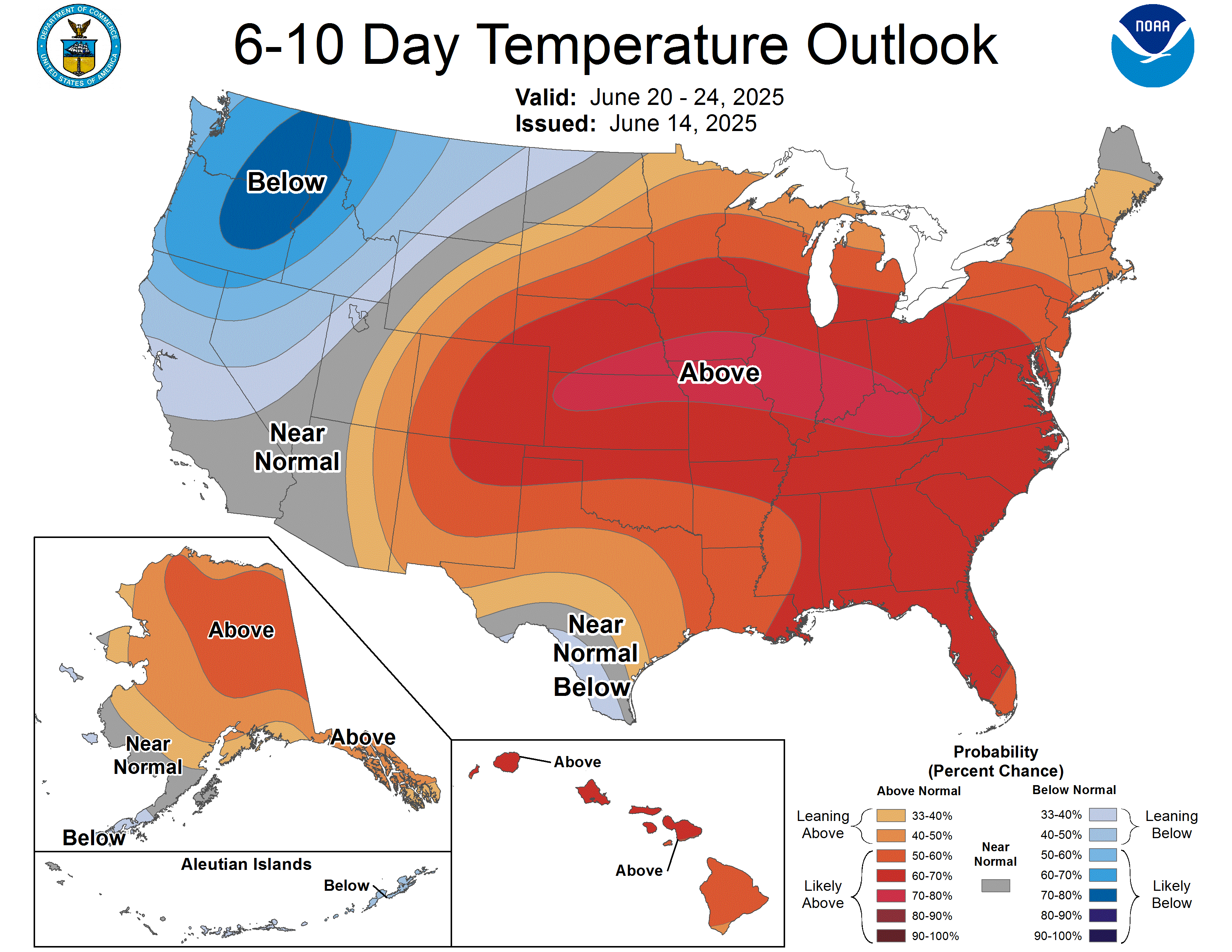 | 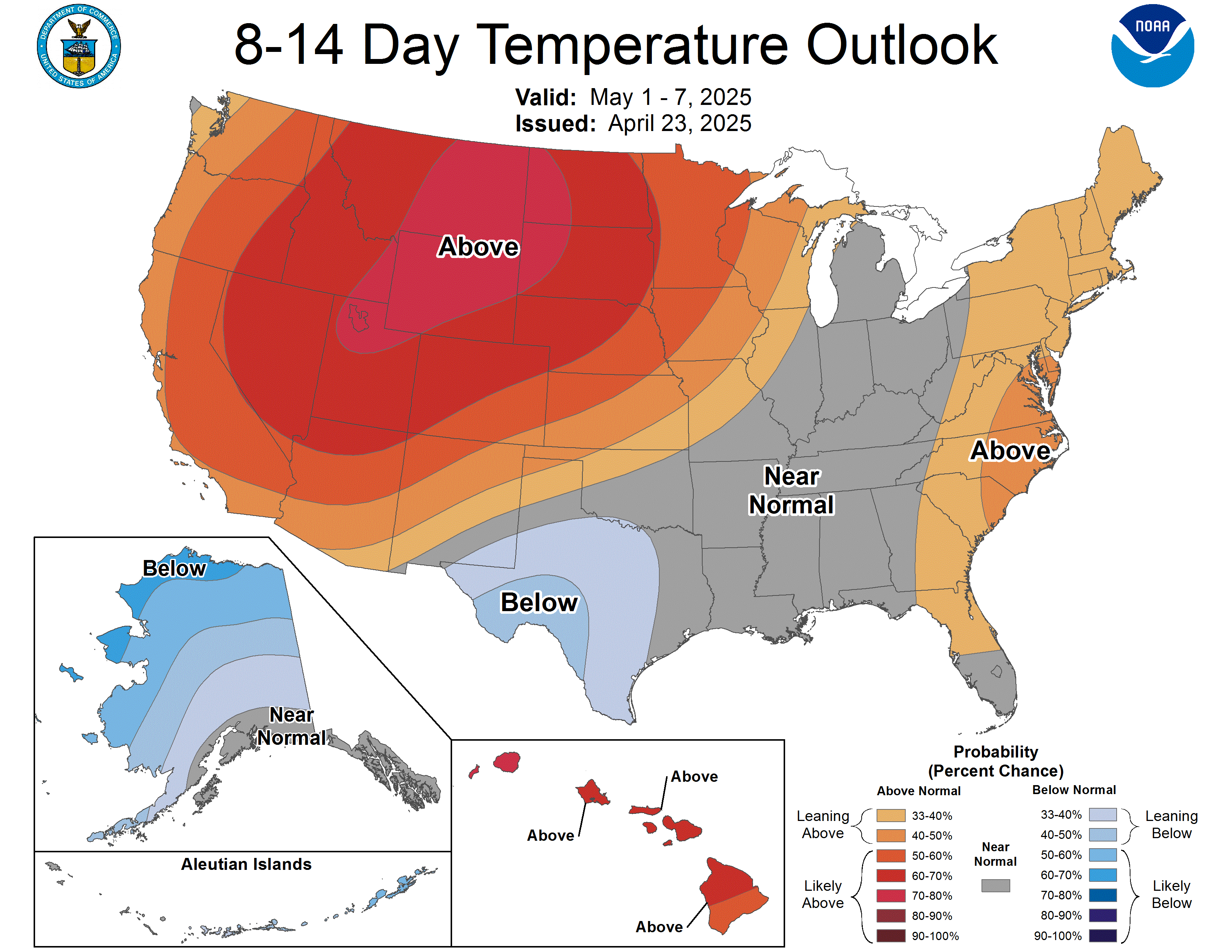 |  |
| The new monthly forecast is to the right. Does it appear to be reflective of the four parts of the month for which we have forecasts? → |
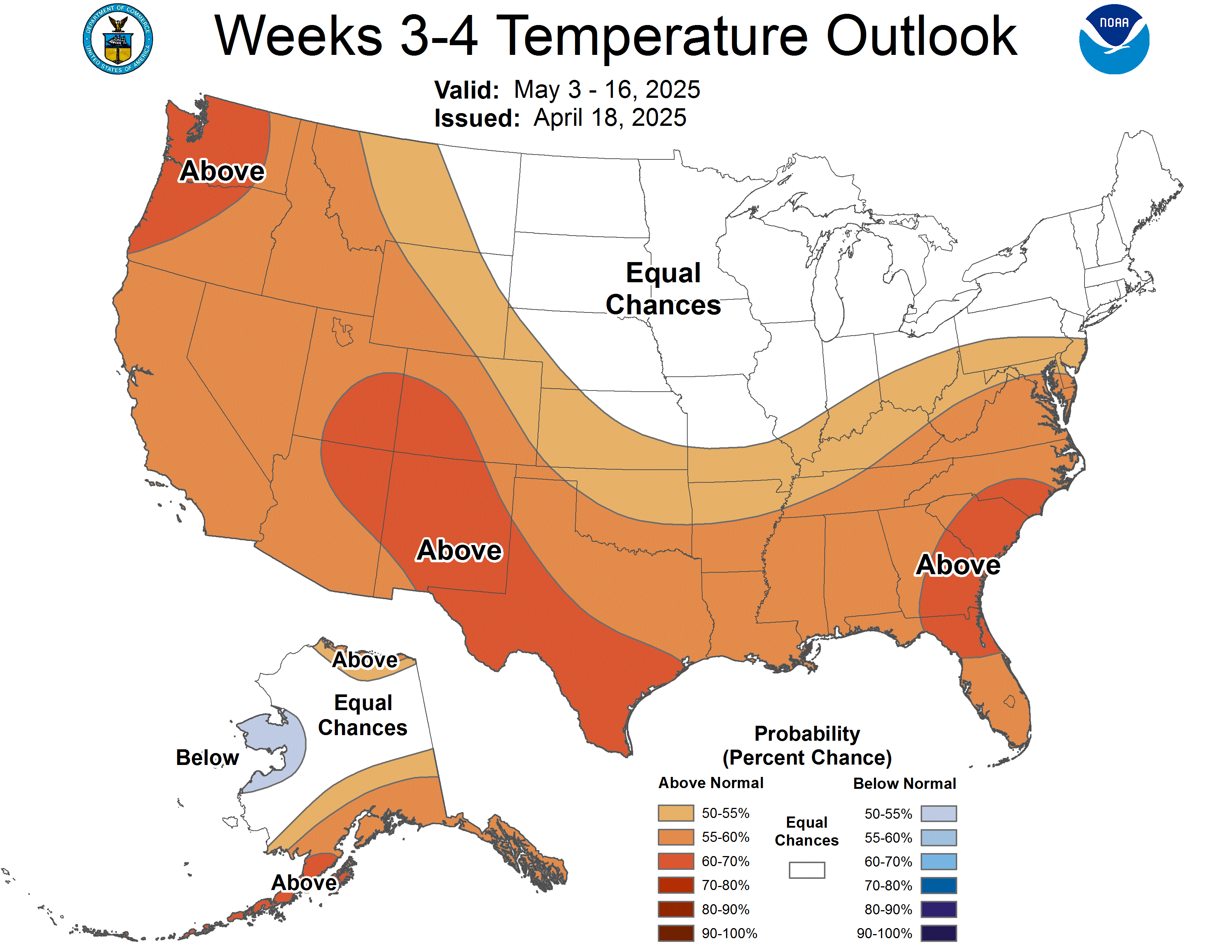
| ↑ ← The Week 3 – 4 forecast was updated Friday, July 31 so we will probably not need to update the commentary when the Week 3 – 4 update is reissued on August 7. But that probably will not be necessary. At this point, we have forecasts for 28 days of the 31 days in August and the fit looks pretty good. | |
And Precipitation
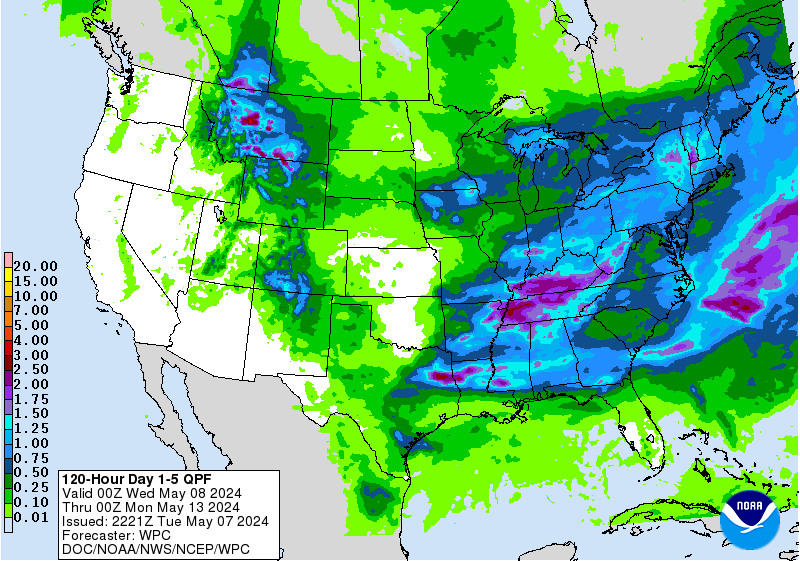 | 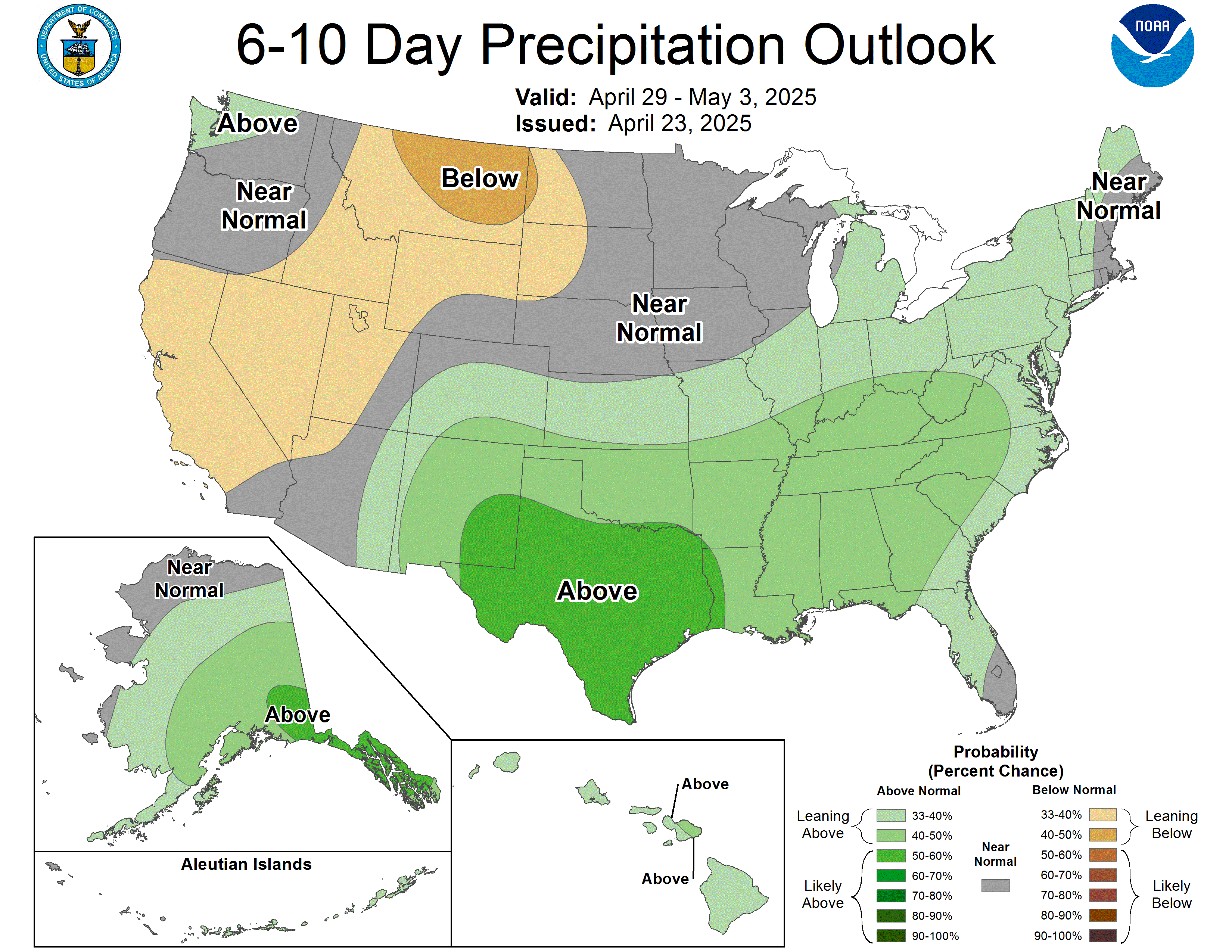 | 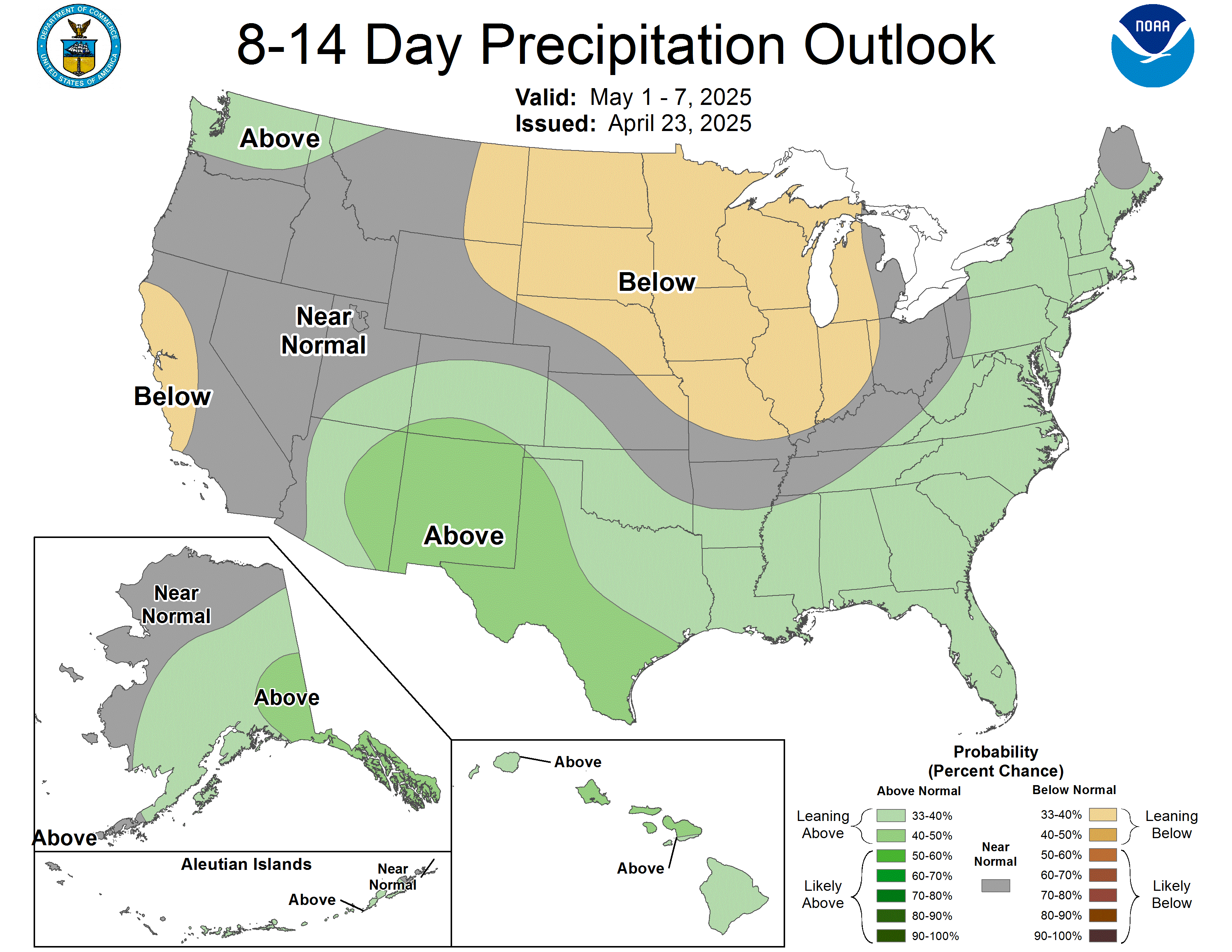 | 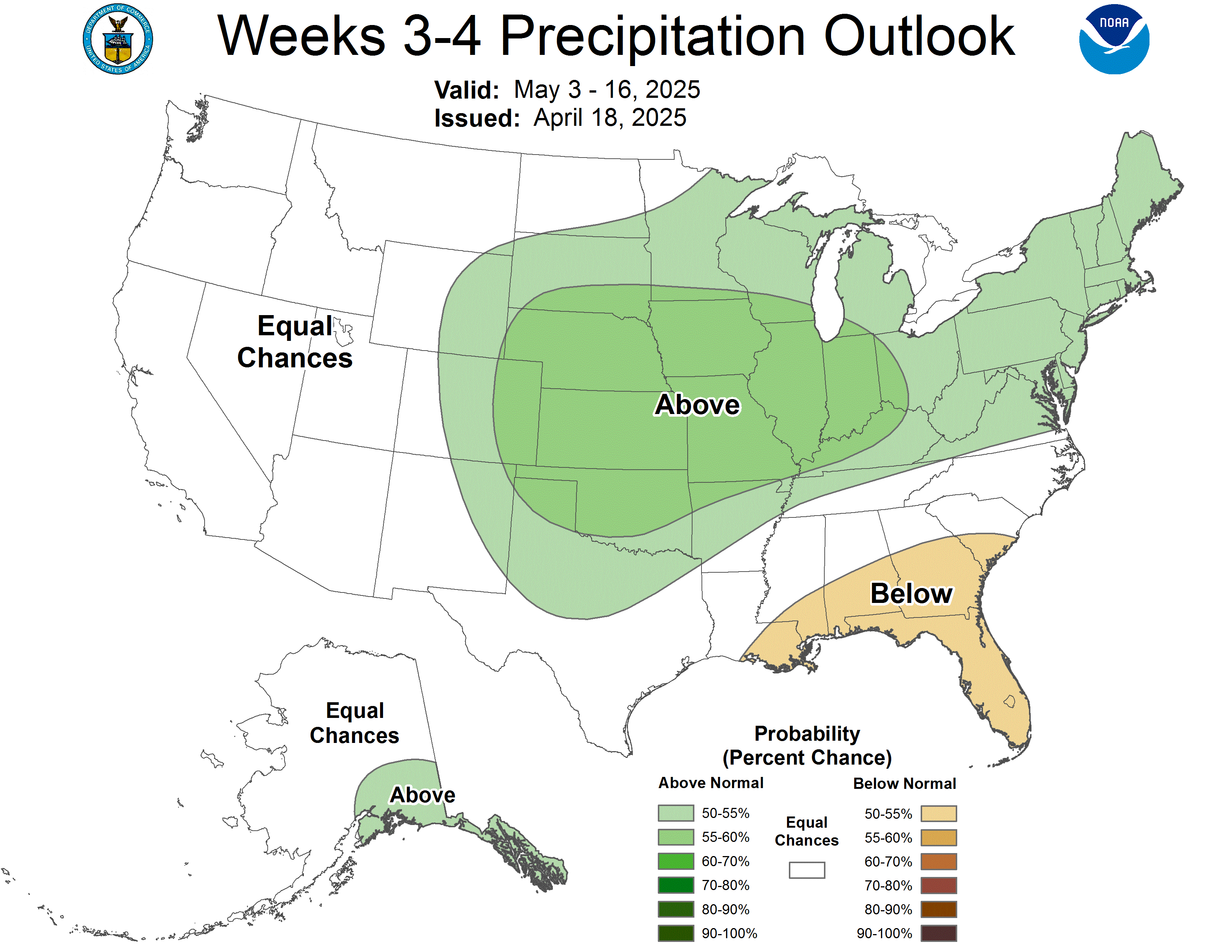 |
The new monthly forecast is to the right. Does it appear to be reflective of the four parts of the month for which we have forecasts? → |
| ↑ ←The Week 3 – 4 forecast was updated Friday, July 31 so we will probably not need to update the commentary when the Week 3 – 4 update is reissued on August 7. But that probably will not be necessary. At this point, we have forecasts for 28 days of the 31 days in August and the fit looks pretty good. | |
Because the end of the month forecast was issued on a Friday it makes sense to publish the Week 3 – 4 Discussion issued today and here it is.
Week 3-4 Forecast Discussion Valid Sat Aug 15 2020-Fri Aug 28 2020
The present Weeks 3-4 outlook is made against the backdrop of an active Madden-Julian Oscillation (MJO) envelope propagating over the Maritime Continent, while El Nino-Southern Oscillation (ENSO) neutral conditions prevail in the Pacific. Despite the ENSO neutral state, low frequency circulations in the Pacific have favored persistent suppressed convection along the equator between roughly 150E and 160W. The MJO is forecast to continue propagating across the Maritime Continent in the next few days, before model guidance suggests destructive interference with the background state. Even without uncertainty on the future tropical state from these competing signals, tropical-extratropical teleconnections during boreal summer remain tenuous. The resultant forecast relies primarily on the various ensemble suites available, with additional considerations to long-term trends.
The ECMWF and JMA forecast circulations are aligned fairly well for Weeks 3-4, featuring anomalous ridging anchored across eastern Canada, as has been present for much of July. These ensembles both feature an extension of the anomalous ridging southwestward through the Desert Southwest. The CFS is an outlier, with anomalous ridging instead forecast east of New England, with a slight tendency for negative height anomalies from Southern California through the Upper Mississippi Valley. The SubX multimodel ensemble is much closer to the ECMWF and JMA forecasts, with positive height departures nationwide and the most prominent of these over Quebec and Ontario. Differences are pronounced upstream over the Pacific as well, with the CFS featuring anomalous troughing over the Aleutians while ridging is forecast there by the ECMWF and JMA (which displaces the ridge eastward more over the Gulf of Alaska).
With above-normal heights generally favored among model guidance, coupled with long-term temperature trends being positive across the Lower 48 states, the resulting forecast odds shift toward above-normal temperatures in most places. Highest confidence for above-normal temperatures exists across Florida and the Four Corners region. These increased chances for above-normal temperatures over Florida are tied to positive height anomalies, coupled with the narrow climatological temperature distribution in the tropical climate. High probabilities for above-normal temperatures over the Four Corners region are tied to an anticipated continuation of a relatively poor-performing North American Monsoon season. A small region of equal chances is carved out across parts of the Mississippi Valley where observed above-normal soil moisture anomalies may help keep temperatures suppressed. Alaska is favored to experience above-normal temperatures, with confidence increasing poleward tied to greater signals in the long-term trend.
Precipitation forecasts over the Lower 48 rely primarily on the expectations of anomalous ridging persisting over eastern Canada and a suppressed North American Monsoon. Highest confidence for below-normal rains are over the monsoonal regions, with this dryness indicated both by dynamical model guidance over the region itself and a lack of forecast tropical cyclone activity over the East Pacific pushing toward Baja California that could induce a robust gulf moisture surge. The tilt toward below-normal rains extends across most areas west of the Rockies, with the exception of climatologically arid regions where equal chances are indicated. Below-normal rainfall chances are also elevated across roughly the northeastern quarter of the Lower 48 in the vicinity of the forecast ridge axis. Below-normal precipitation is also favored with increasing confidence when moving northward over Alaska.
Above-normal sea surface temperatures continue to surround the Hawaiian Islands, supporting increased chances for above-normal temperatures. Model guidance indicates a slight tilt toward above-normal precipitation across the island chain.
Sometimes it is useful to compare the three-month outlook to the forecast for the first of the three months. It shows how much the pattern changes over the three-month period.

One can mentally subtract the First-Month Outlook from the Three-month Outlook and create the Outlook for the last two months in the three-month period.
And with respect to drought, this was also issued on July 31, 2020.

Latest Monthly Assessment – Drought coverage increased across the CONUS during July, outside of areas of improvement across the High Plains. Throughout the West, a relatively dry climatology during August strongly favors persistence. Additional development is likely across the central and southern Great Plains, and the Pacific Northwest to the northern Intermountain West during August. These development areas coincide with where the larger 30-day precipitation deficits exist and little or below normal rainfall and above normal temperatures are likely through August. Above-normal temperature forecasts favor drought to persist and develop across Wyoming, Colorado, parts of southern Nebraska and western Kansas. Forecasts favoring above-normal rainfall coupled with below normal temperatures are likely to result in one class improvement across parts of the northern and eastern High Plains, and the western Midwest Climate Region. Drought persistence is most likely across the interior Northeast due to the lack of a clear rainfall signal and above normal temperatures favored during August. However, drought removal is likely over the coastal portions of the Northeast due to potential impacts from Hurricane Isaias. The updated August outlooks call for increased chances of near to above normal precipitation over a wet climatology across the Southeast, therefore drought removal is expected over the region. Drought is likely to improve across much of western Tennessee due to forecast above normal rainfall coupled with below normal temperatures. Persistence is likely across the ongoing drought areas in Oklahoma and Texas with additional development forecast due to lack of rainfall coupled with above normal temperatures during August. One to two category improvements on the US Drought Monitor depiction are expected for drought areas across Puerto Rico due to impacts from Tropical Storm Isaias, which hit the island on July 30 and produced locally 2-8 inches of rain across the island. Drought persistence is forecast for ongoing drought areas throughout Hawaii, while Alaska is likely to remain drought-free through the end of August.
Looking back on July to relate the forecast for August to the actuals in July
First July Temperature (30 out of 31 days).

And then July Precipitation (30 out of 31 days).

We then show the new forecast and the prior month actuals (less one day) side by side.
| Prior Month (usually missing one day) | Forecast for current Month | |
| Temperature |
|
|
| Precipitation |
|
|
Conclusion
The purpose of this article was to present the updated Outlook for August 2020 and compare it with the Early Outlook. It is not to critique the updated Outlook for August based on our opinions but we point out possible inconsistencies if we find them. We have assessed the extent to which the monthly outlook seems to fit with the other forecasts provided by NOAA. In reality, all forecasts are obsolete when issued as the situation changes day by day or six hours by six hours i.e. each new model run. In our other articles, we continually examine the current forecasts from NOAA including Day 1- 5, 6-10, 8-14, and Week 3 and 4. So we are continually looking at approximately 25 days into the future.
On August 13, 2020, IRI/CBC will issue their ENSO forecast (and we expect them to declare that we are in La Nina Conditions or will soon be in La Nina Conditions) and we will present that and critique it. It is an ongoing process and we attempt to provide our readers with the best current assessment of the next approximately 25 days (except when we cover the Four-Season Analysis or medium-frequency cycles such as ENSO), so our analysis is pretty much ongoing. We also publish a “LIVE” Weather Article which updates in real-time to reflect NOAA Weather Headlines and for those interested provides detailed information down to current warnings in place. All of our reports including past versions of these reports can be located via the Directory/Archive which can be accessed here.


