Written by Sig Silber
Updated at 3:20 PM EDT September 10, 2018. Florence is a projected to be a major Category 4 hurricane as it approaches the East Coast of the U.S. with the risk of inland flooding. Isaac is projected to impact the Lesser Antilles probably as a Category 1 hurricane or having degraded to a Tropical Storm. Olivia wil most likely encounter Hawaii as a strong Tropical Storm. The arrival times for Florence and Isaac now appear to be Thursday with Olivia arriving Wednesday.
From the NHC:
A life-threatening storm surge is likely along portions of the coastlines of South Carolina, North Carolina, and Virginia, and a Storm Surge Watch will likely be issued for some of these areas by Tuesday morning. All interests from South Carolina into the mid-Atlantic region should ensure they have their hurricane plan in place and follow any advice given by local officials.
Our next update will probably not be at this url but will be as part of our Monday Night regular Weather and Climate Report. You can always find all of our reports at this index.

Please share this article – Go to very top of page, right hand side for social media buttons.
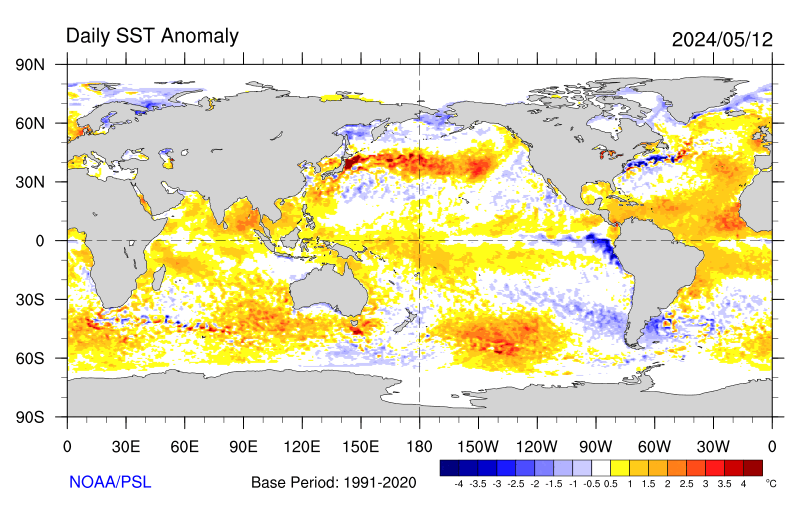
It is useful to understand where these storms will encounter water that is warmer or cooler than normal. It may or may not be useful for determining storm tracks but it is helpful at determing where a storm is likely to get stronger or weaker but does not provide a lot of clues on wind sheer which is also very important. It is one of many things I look at so I share it with my readers. The waters around Hawaii are a bit warmer today.
 +
+
First let us focus on the Atlantic

NHC is not confident that they can forecast the track of this storm. It is likely to impact the U.S. East Coast but where is still not clear. M means a very strong storm.
D: Tropical Depression – wind speed less than 39 MPH S: Tropical Storm – wind speed between 39 MPH and 73 MPH H: Hurricane – wind speed between 74 MPH and 110 MPH M: Major Hurricane – wind speed greater than 110 MPH |
This seven day forecast is interesting.
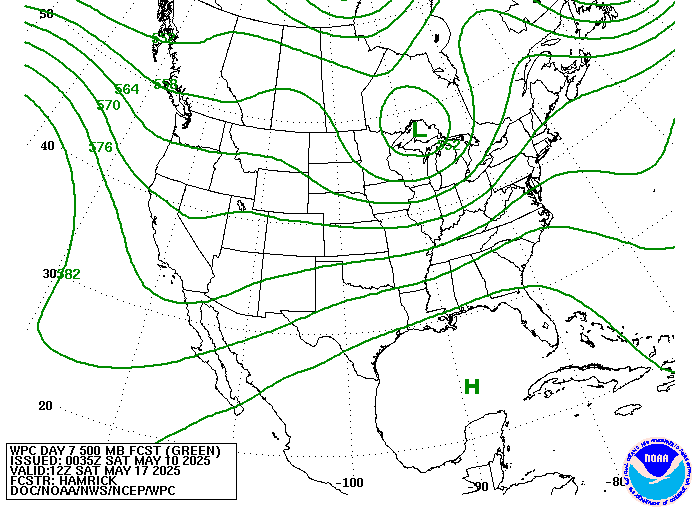
Looks like Florence is projected to be inland over the Carolinas at that time.
Here is the link to the general discussion and much other information.
Here is a recent discussion.
Hurricane Florence Discussion Number 45 NWS National Hurricane Center Miami FL AL062018 1100 AM AST Mon Sep 10 2018
Florence is quickly becoming a powerful hurricane. Satellite images show that the distinct eye has warmed in the center, with convection increasing in the eyewall during the past several hours. The initial wind speed is set to 100 kt, closest to the CIMSS-ADT value. A NOAA Hurricane Hunter will be in the area later this morning for a more accurate estimate.
The hurricane is moving over progressively warmer waters over the next couple of days, with water temperatures peaking near 85F. In combination with the low vertical wind shear in the forecast during that time, Florence should continue to strengthen, and all models show it becoming a category 4 hurricane by tomorrow. The corrected-consensus guidance has done quite well with this intensification episode, and I don’t see any reason to deviate much from them at this time. As Florence approaches the southeastern United States, there will likely be fluctuations in intensity from eyewall cycles, but even if this occurs, the hurricane’s wind field is expected to grow with time, increasing the storm surge and inland wind threats. The bottom line is that there is increasing confidence that Florence will be a large and extremely dangerous hurricane, regardless of its exact intensity.
During the last several hours, Florence has turned westward again, estimated at 11 kt. The steering currents are becoming well-defined as a very strong ridge builds over the northwestern Atlantic Ocean, forcing Florence to move faster toward the west-northwest during the next couple of days. By late Wednesday, a turn toward the northwest is possible due to the orientation of the Atlantic ridge, along with a slight decrease in forward speed due to a new ridge building over the Great Lakes. The various models are shifting around at long range, but the model consensus has barely budged in the past few model cycles. Thus the new NHC forecast is close to the previous one, near the NOAA and FSSE consensus guidance. It is important not to focus on the exact forecast track as average NHC errors at days 4 and 5 are about 140 and 180 n mi, respectively, and dangerous hazards will extend well away from the center.
Key Messages:
1. A life-threatening storm surge is likely along portions of the coastlines of South Carolina, North Carolina, and Virginia, and a Storm Surge Watch will likely be issued for some of these areas by Tuesday morning. All interests from South Carolina into the mid-Atlantic region should ensure they have their hurricane plan in place and follow any advice given by local officials.
2. Life-threatening freshwater flooding is likely from a prolonged and exceptionally heavy rainfall event, which may extend inland over the Carolinas and Mid Atlantic for hundreds of miles as Florence is expected to slow down as it approaches the coast and moves inland.
3. Damaging hurricane-force winds are likely along portions of the coasts of South Carolina and North Carolina, and a Hurricane Watch will likely be issued by Tuesday morning. Damaging winds could also spread well inland into portions of the Carolinas and Virginia.
4. Large swells affecting Bermuda and portions of the U.S. East Coast will continue this week, resulting in life-threatening surf and rip currents.
FORECAST POSITIONS AND MAX WINDS
INIT 10/1500Z 25.0N 60.0W 100 KT 115 MPH
12H 11/0000Z 25.5N 61.9W 115 KT 130 MPH
24H 11/1200Z 26.4N 64.7W 125 KT 145 MPH
36H 12/0000Z 27.8N 67.9W 130 KT 150 MPH
48H 12/1200Z 29.5N 71.0W 130 KT 150 MPH
72H 13/1200Z 33.0N 76.3W 125 KT 145 MPH
96H 14/1200Z 35.0N 79.0W 75 KT 85 MPH…INLAND
120H 15/1200Z 36.0N 80.0W 30 KT 35 MPH…INLAND
This is a graphic that shows the most reasonable time of arrival of winds.

There is also an ealiest time of arrival graphic available.
Isaac

Here is a recent discussion
Hurricane Isaac Discussion Number 12 NWS National Hurricane Center Miami FL AL092018 1100 AM AST Mon Sep 10 2018
Isaac’s cloud pattern is currently a bit ragged-looking, with an irregular CDO and limited convective banding. Dvorak intensity estimates from both TAFB and SAB are 65 kt, and that value will be used for the advisory. There is significant uncertainty in the intensity forecast for this system. Vertical wind shear over the hurricane is forecast to be weak to moderate during the next day or so, which should allow Isaac to strengthen somewhat. By 48 hours, however, the global models depict significantly stronger northwesterly shear, associated with an upper-level trough over the central Atlantic, affecting the tropical cyclone. Most of the guidance does not show Isaac strengthening over the Caribbean. The HWRF model is an outlier, strengthening Isaac into a major hurricane later in the period, and it is the main contributor to high consensus forecasts at days 3-5. The NHC intensity forecast is above the model consensus through 72 hours and below it by the end of the period.
Isaac continues to move westward, or 275/12 kt. A subtropical ridge should be maintained to the north of the tropical cyclone for the next several days, so a continued westward track seems likely. The U. K. Met. Office model is an outlier and shows Isaac turning northwestward and northward to the northeast of the Leeward Islands. The official track forecast, like the previous one, follows the other reliable global models and is also close to the HFIP corrected consensus guidance.
Key Messages:
1. Isaac is a small hurricane and uncertainty in the forecast is greater than normal. Although Isaac is forecast to begin weakening when it approaches the Lesser Antilles, it is still expected to be at or near hurricane intensity when it reaches the islands.
2. Interests in the Lesser Antilles should continue to monitor Isaac during the next few days.
FORECAST POSITIONS AND MAX WINDS
INIT 10/1500Z 14.7N 43.9W 65 KT 75 MPH
12H 11/0000Z 14.9N 45.9W 70 KT 80 MPH
24H 11/1200Z 15.0N 48.7W 75 KT 85 MPH
36H 12/0000Z 15.0N 51.4W 75 KT 85 MPH
48H 12/1200Z 15.1N 54.0W 75 KT 85 MPH
72H 13/1200Z 15.4N 59.4W 70 KT 80 MPH
96H 14/1200Z 15.5N 64.5W 60 KT 70 MPH
120H 15/1200Z 15.7N 70.0W 50 KT 60 MPH
There are more storms to come There are also two pretty much unidentified tropical depressions shown on this map. The one with an X normally would show up in a discussion the NHC website but I have not found it.

Tropical Storm Helene

It does not look like a theat to the U.S. or Bermuda so for the time being we are not providing the discussion but of course it is available from the NHC
Gordon
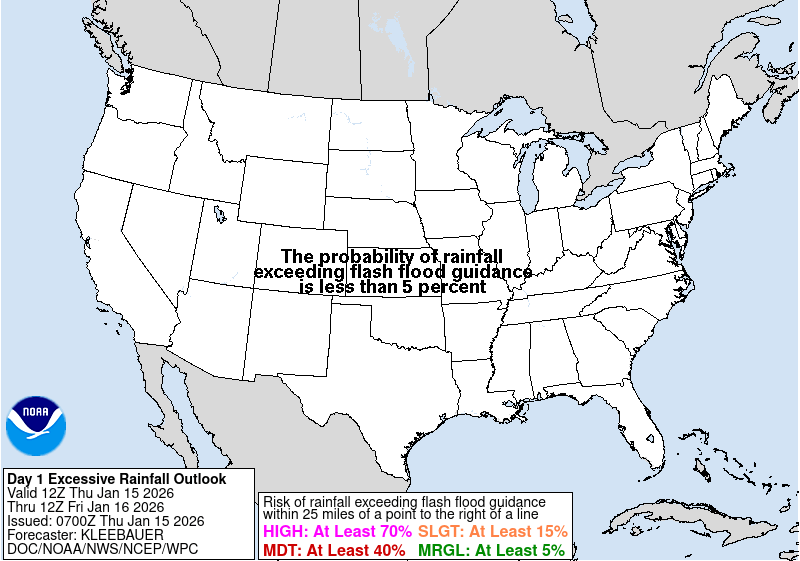
Gordon has has already landed but the remnant continues to have the potential to create local flooding. Coverage of this has been transferred over to the Weather Prediction Center which you can access here or by the local NWS offices in the area impacted.
And longer term:
Shifting focus to Hawaii
Then the next contender in the Pacific. They changed the graphic to not show the track beyond Tuesday. That may be simply to avoid providing what might appear to be track information the goes beyond their current level of confidence re exactly where Olivia will impact the Hawaiian Islands.

Most likely arrival time of TS winds

Here is a recent discussion:
Hurricane Olivia Discussion Number 40 NWS Central Pacific Hurricane Center Honolulu HI EP172018 500 AM HST Mon Sep 10 2018
Olivia’s eye has been appearing at times this morning. The outflow pattern remains impressive, so it does not appear to be negatively impacted by vertical wind shear of around 10 kt. The satellite fix agencies (JTWC, SAB, and PHFO) provided unanimous subjective Dvorak current intensity estimates of 4.5/77 kt. The UW-CIMSS ADT estimate was 4.2/70 kt. Based on all of this information, we are maintaining the initial intensity at 75 kt for this advisory. Note that an aircraft flown by the U.S. Air Force Reserves 53rd Weather Reconnaissance Squadron is scheduled to sample the inner core and outer wind field of Olivia starting in a few hours. This will give us a much better idea of the latest intensity of Olivia once they arrive.
Olivia continues to move nearly due west with a current motion of 270/9 kt. This motion is being induced by a deep layer ridge to the north and northwest of the tropical cyclone. During the next 12 hours or so, the ridge is expected to strengthen and build southward ahead of Olivia, forcing the tropical cyclone to shift toward a west-southwest track. This motion is expected to continue through day 3. The track guidance appears have slightly more spread through 72 hours, especially from 36 to 72 hours. The spread is even greater during days 4 and 5. The current forecast track is very close to the previous, except it has been nudged to the right and is slightly slower during the first 72 hours. Little change has been made in the day 4 and 5 positions. This closely follows the latest TVCE, FSSE, GFEX and HCCA guidance. Again, since the is a wider spread in the track guidance, we want to emphasize the uncertainty in our track forecast. It is important to NOT focus on the exact forecast track of Olivia’s center across the islands. A slight deviation to the right or left can bring vastly different weather hazards to any islands that are directly impacted by this potentially damaging tropical cyclone.
Vertical wind shear remains relatively weak in the vicinity of Olivia. Water temperatures, as well as ocean heat content values, are expected to increase along the forecast track. Therefore, Olivia will likely remain a hurricane through 36 hours. After that, increasing vertical wind shear is forecast to take its toll on Olivia, so that it may be a strong tropical storm within 48 hours. Additional slow weakening is expected to persist during days 3 through 5. The latest forecast is close to the IVCN and CTCI. Note that based on the latest track and intensity along with the wind speed probabilities, Tropical Storm Warnings have been issued for the Big Island of Hawaii and the islands of Maui County.
KEY MESSAGES:
1. It is important to not focus on the exact forecast track and intensity when planning for Olivia. Persons on the main Hawaiian Islands east of Kauai should continue preparing for the likelihood of direct impacts from this system today and early Tuesday. Those impacts could include intense flooding rainfall, damaging winds, large and dangerous surf, and storm surge.
2. Regardless of the exact track and intensity that Olivia takes as it approaches the islands, significant effects often extend far from the center. In particular, the mountainous terrain of Hawaii can produce localized areas of strongly enhanced winds and rainfall, even well away from the tropical cyclone center.
FORECAST POSITIONS AND MAX WINDS
INIT 10/1500Z 21.7N 148.0W 75 KT 85 MPH
12H 11/0000Z 21.7N 149.3W 75 KT 85 MPH
24H 11/1200Z 21.4N 151.3W 75 KT 85 MPH
36H 12/0000Z 21.1N 153.4W 65 KT 75 MPH
48H 12/1200Z 20.7N 155.7W 60 KT 70 MPH
72H 13/1200Z 19.9N 160.7W 45 KT 50 MPH
96H 14/1200Z 20.0N 166.0W 40 KT 45 MPH
120H 15/1200Z 21.0N 171.0W 40 KT 45 MPH
And there is more to come

Tropical Storm Paul previously Depression 18-E may just fade away. We will see but that is what it looks like now.

And the U.S. is not the only place dealing with cyclones. When we published on Monday night, Japan was about to be hit and since has been hit.
This graphic should update and shows the situation in the Western Pacific There was a new area of concern but that area of concern is no longer if major concern. There is a possible replacement TD26W.
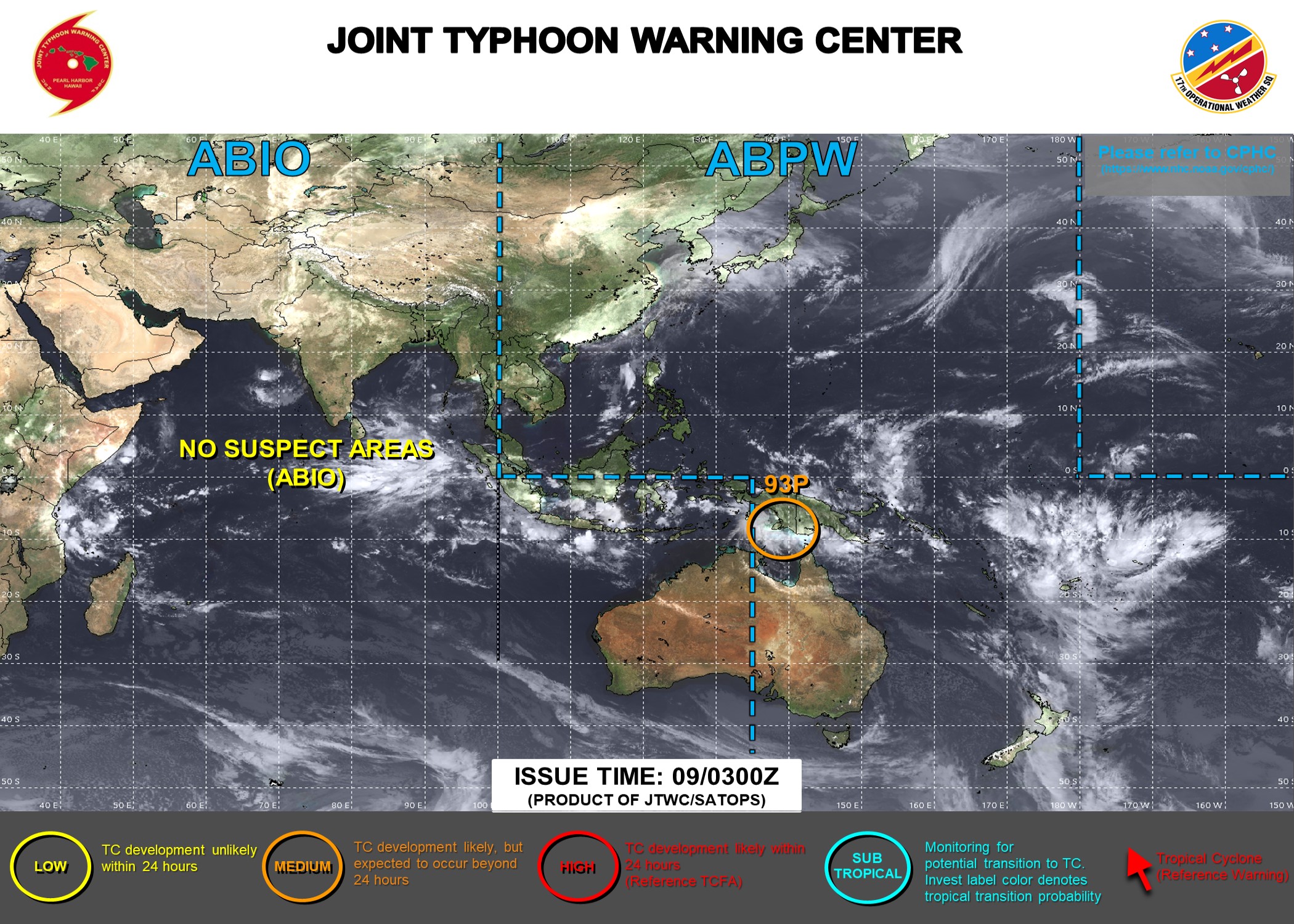
Update information can be found here.
There is a new storm to track: MANGHUT

And now also Alert WTPN21 it does not seem to be updating.

There may be more coming in both the Atlantic and the Pacific.
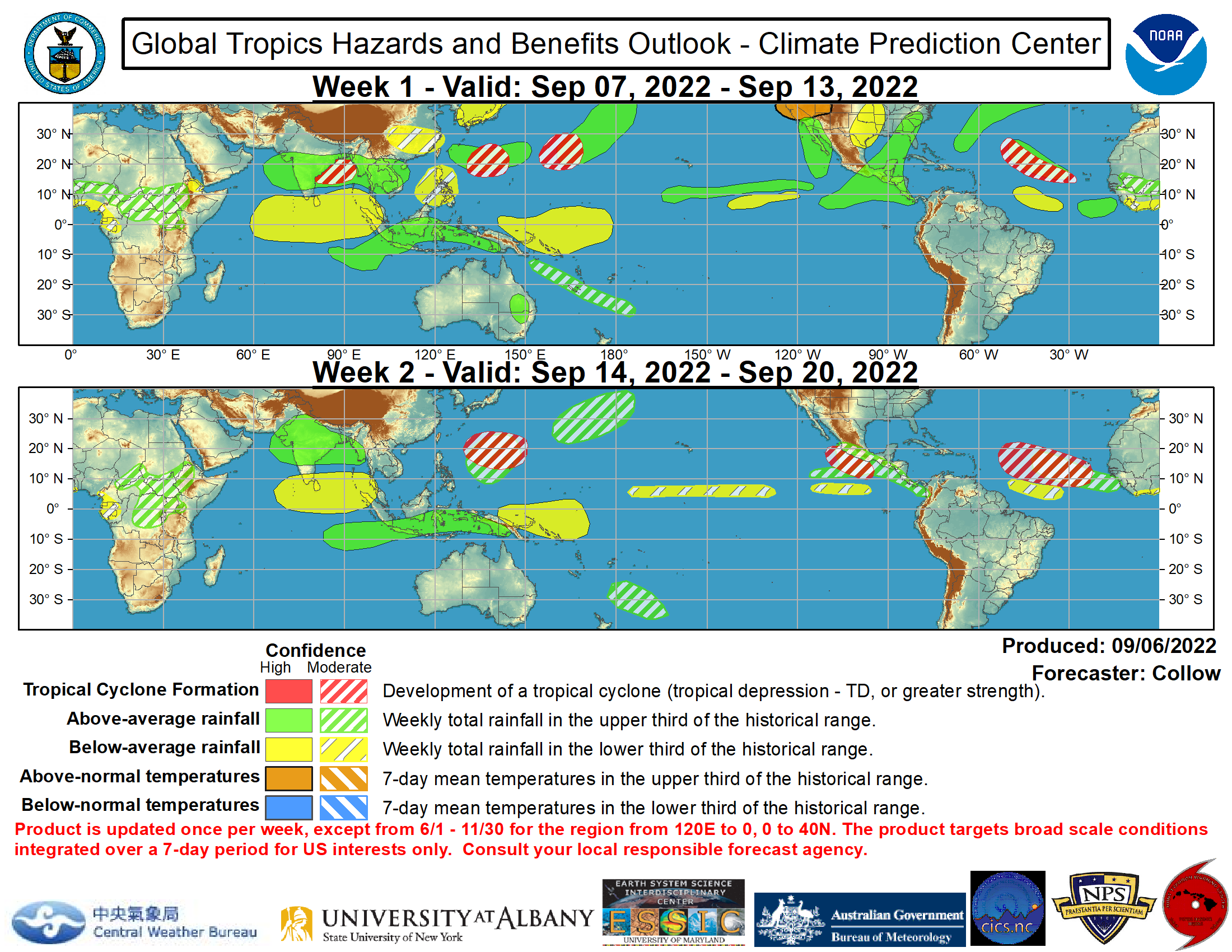
Below is an analysis of projected tropical hazards and benefits over an approximately two-week period.