


Written by Sig Silber
NOAA issues Seasonal Outlook which confirms some of the information we have been presenting in the GEI Weekly Weather and Climate Report. For examples, this El Nino is now dead, the strength of the forecasted La Nina this coming winter may have been overestimated by some of the models, and something interesting is taking place in the North Atlantic. If you want to have bragging rights with your friends, it is a good idea to make this column part of your Tuesday reading material. If you are a sleep deprived person, it is generally available on the GEI website at about Midnight East Coast Time Monday night.

This is the Regular Edition of my weekly Weather and Climate Update Report. Additional information can be found here on Page II of the Global Economic Intersection Weather and Climate Report.
Updated Seasonal Outlook
NOAA issued their updated Seasonal Outlook on the third Thursday of the month i.e. May 19, 2016 as is their normal schedule. Let’s take a look.
Prior Temperature Outlook for JJA 2016

New Temperature Outlook for JJA 2016

Prior Precipitation Outlook for JJA 2016

New Precipitation Outlook for JJA 2016

Now let us focus on the long-term situation.
Prior 14 Month Temperature Outlook: Jun 2016 – Jul 2017

New 14 Month Temperature Outlook: Jul 2016 – Aug 2017

To compare maps from one release to another one needs to remember that the new release drops one three-month period and adds a later one. So to make the comparisons one has to shift the new maps to the right one position and that makes the map on the right drop down to become the left-most map in the next level. I do not have a computer software tool for doing that for you so you have to do it mentally. When I do the comparison I print them out and put them side by side and number the same three-month maps 1, 2, 3,…..,11 in both sets of maps to make it easier for me to easily compare the same three-month period in the new with the previous forecast. One uses the same procedure to compare the precipitation maps. Based on this procedure, I conclude that:
Prior 14 Month Precipitation Outlook: Jun 2016 – Jul 2017

New 14 Month Precipitation Outlook: Jul 2016 – Aug 2017

If you want larger versions of each map (temperature and precipitation) you can find them here. And each of those maps can be clicked on to further enlarge them.
Excerpts (significantly reorganized with a lot of redundancy removed) from the Discussion Released by NOAA on May 19, 2016
CURRENT ATMOSPHERIC AND OCEANIC CONDITIONS
EQUATORIAL PACIFIC SSTS GENERALLY REMAIN ABOVE CLIMATOLOGICAL MEANS, THOUGH THE TRANSITION TO ENSO-NEUTRAL AND LA NINA CONDITIONS HAS BEGUN IN EARNEST. THE LATEST ONI VALUE FOR FMA STANDS AT +1.6 C, BUT THE LATEST WEEKLY NINO 3.4 VALUE HAS DROPPED TO +0.6 C. [Editor’ Note: reported today May 23 at 0.2 ] A NARROW REGION OF SLIGHTLY BELOW NORMAL TEMPERATURES HAS EMERGED ALONG THE EQUATOR, AND ANOMALOUSLY COLD SUBSURFACE WATERS EXTEND ACROSS MUCH OF THE BASIN. ANOMALOUS INTEGRATED (0-300 METERS DEPTH) EQUATORIAL PACIFIC OCEAN HEAT CONTENT BECAME NEGATIVE IN MARCH AND CONTINUED TO DECREASE THROUGH APRIL. THIS EXPANSE OF NEGATIVE HEAT CONTENT ANOMALIES CONTINUES TO FAVOR A RAPID TRANSITION TO LA NINA CONDITIONS DURING 2016.
WITH RESPECT TO THE TROPICAL PACIFIC ATMOSPHERE, ENHANCED CONVECTION CONTINUED FROM NEAR THE DATE LINE SOUTHEASTWARD ALONG THE SPCZ. TRADE WINDS HAVE BEEN NEAR AVERAGE OVER THE PAST MONTH, WHILE THE CIRCULATION AT 200-HPA HAS REMAINED MORE CONSISTENT WITH EL NINO, ALBEIT AT REDUCED AMPLITUDE.
THE EXTRATROPICAL PACIFIC OCEAN REMAINS CONSISTENT WITH THE POSITIVE PHASE OF THE PACIFIC DECADAL OSCILLATION WITH ABOVE AVERAGE SSTS SOUTH OF ALASKA AND ALONG THE WEST COAST. POSITIVE SST ANOMALIES IN THE WESTERN ATLANTIC NEAR THE EAST COAST CONTINUE TO PERSIST AS WELL ESPECIALLY OFF THE NEW ENGLAND COAST. ANOMALOUSLY COLD SSTS REMAIN IN THE NORTH ATLANTIC POLEWARD OF 50 N.
ENSO PHASE TRANSITION
THE CPC SST CONSOLIDATION CONTINUES TO FORECAST A RETURN TO ENSO-NEUTRAL CONDITIONS BY MJJ AND WEAK LA NINA CONDITIONS BY SON. THE PEAK AMPLITUDE THIS MONTH IS LOWER IN MAGNITUDE AT -0.68 C IN NDJ; THIS IS DUE TO THE CCA AND SST CA STATISTICAL MODELS BACKING OFF ON THE STRENGTH OF THE FORECAST LA NINA. PREDICTIONS FROM THE NORTH AMERICAN MULTI-MODEL ENSEMBLE (NMME) MEMBERS REMAIN IN GOOD AGREEMENT, WITH THE ENSEMBLE MEAN AVERAGING NEAR -1.0 C FROM LATE SUMMER THROUGH THE END OF THE YEAR.
THE CPC/IRI CONSENSUS FORECAST INDICATES THAT THE TRANSITION TO ENSO-NEUTRAL IS MOST LIKELY BY EARLY SUMMER, AND THE PROBABILITY OF LA NINA DEVELOPING FIRST EXCEEDS 50% IN JJA 2016, ONE MONTH EARLIER THAN IN THE PREVIOUS FORECAST. THE PROBABILITY OF LA NINA PEAKS AT 76% FOR AUTUMN AND WINTER.
30-DAY OUTLOOK DISCUSSION FOR JUNE 2016
THE SUITE OF TEMPERATURE OUTLOOKS THIS MONTH ARE SIMILAR TO THOSE RELEASED LAST MONTH AS THE GENERAL THINKING OVER THE OUTLOOK PERIOD REMAINS GENERALLY UNCHANGED. WHAT FOLLOWS BELOW IS THE RATIONALE BEHIND THE CHANGES THAT WERE MADE TO THE OUTLOOKS.
A KEY UNCERTAINTY LINGERS WITH RESPECT TO THE ROLE OF LONG TERM TRENDS IN THE WARM SEASON FORECASTS. SIMPLE PROJECTION OF THE CURRENT EXTRATROPICAL SST PATTERN ONTO THE HISTORICAL TIME SERIES REVEALS THAT POSITIVE CORRELATIONS ARE MORE LIKELY EARLY IN THE PERIOD, YIELDING SOMEWHAT OF AN ANTI-TREND SIGNAL. TO BE SURE, THE LOW-FREQUENCY NEGATIVE SST ANOMALIES IN THE NORTH ATLANTIC COULD BE RELATED TO CHANGING DECADAL VARIABILITY. SUCH VARIABILITY IS EASILY ALIASED INTO TRENDS, AND ITS POSSIBLE THAT TRENDS ARE BEING SLIGHTLY OVER-UTILIZED AS A RESULT. THIS BRIEF DISCUSSION IS JUST A SAMPLE OF THE THOUGHT PROCESS UNDERPINNING THE APPLIED RESEARCH EFFORTS ON THIS ISSUE.
Special Note: Signs of a more sophisticated approach by NOAA. It looks like they are attempting to factor in low frequency cycles and consider both the Atlantic and the Pacific.
THE JUNE 2016 TEMPERATURE AND PRECIPITATION OUTLOOKS ARE BASED ON DYNAMICAL MODEL GUIDANCE, STATISTICAL TOOLS, AND CLIMATE LINKAGES TO SOIL MOISTURE CONDITIONS. EL NINO IS EXPECTED TO PLAY A DIMINISHING ROLE IN CLIMATE ANOMALIES ACROSS THE FORECAST DOMAIN. ALTHOUGH THE MJO STRENGTHENED DURING MID-MAY, ITS EFFECTS ON THE EXTRATROPICS ARE LESS IMPACTFUL DURING THE EARLY PART OF THE WARM SEASON. THE EVOLVING MJO ALONG WITH ATMOSPHERIC KELVIN WAVES AND THEIR POTENTIAL INFLUENCE ON THE DEVELOPMENT OF AN EARLY SEASON TROPICAL CYCLONE WILL BE CLOSELY MONITORED FOR THE UPDATE ON MAY 31.
THE DYNAMICAL AND STATISTICAL MODELS DEPICT INCREASED CHANCES OF ABOVE-NORMAL TEMPERATURES ACROSS MOST OF THE WESTERN AND EASTERN U.S., WHILE SOIL MOISTURE IS EXPECTED TO HAVE A STRONG INFLUENCE ON JUNE TEMPERATURES ACROSS THE GREAT PLAINS. CURRENT SOIL MOISTURE VALUES RANK ABOVE THE 90TH PERCENTILE ACROSS A LARGE AREA OF THE GREAT PLAINS, WITH VALUES ACROSS NORTHEAST COLORADO, MUCH OF NEBRASKA, NORTHERN TEXAS, AND SOUTHEAST WYOMING ABOVE THE 99TH PERCENTILE FOR THIS TIME OF YEAR. THE BELOW-NORMAL TEMPERATURES FAVORED FOR PARTS OF THE GREAT PLAINS ARE BASED ON THIS ANOMALOUS SOIL MOISTURE AND ARE ALSO SUPPORTED BY THE CALIBRATED NMME TEMPERATURE PROBABILITIES. THE SPATIAL PATTERN FOR EQUAL CHANCES OF BELOW, NEAR, OR ABOVE-NORMAL TEMPERATURES FORECAST ACROSS THE CENTRAL U.S. IS CONSISTENT WITH GUIDANCE FROM THE DYNAMICAL MODELS AND STATISTICAL TOOLS.
A CONSENSUS FROM THE DYNAMICAL MODELS FEATURES ENHANCED ODDS FOR ABOVE-MEDIAN PRECIPITATION ACROSS THE NORTH-CENTRAL ROCKIES, MUCH OF THE GREAT PLAINS, LOWER TO MIDDLE MISSISSIPPI VALLEY, AND PARTS OF THE SOUTHEAST. THE CALIBRATED NMME PRECIPITATION TOOL INDICATES THE MOST FAVORED AREAS FOR ABOVE-MEDIAN PRECIPITATION, ALBEIT WITH MODEST PROBABILITIES, INCLUDE THE NORTH-CENTRAL ROCKIES AND THE WEST-CENTRAL GULF COAST. A SLIGHT TILT IN THE ODDS FOR BELOW-MEDIAN PRECIPITATION ACROSS THE UPPER MISSISSIPPI VALLEY IS BASED ON THE CFS MODEL FOR JUNE ALONG WITH SOME SUPPORT FROM THE ECMWF MODEL FOR WEEKS 3 AND 4, WHICH COVERS THE FIRST HALF OF THE MONTH. FORECAST CONFIDENCE IN THE PRECIPITATION OUTLOOK IS LIMITED DUE TO THE LACK OF PREDICTABILITY OF CONVECTIVE RAINFALL ON A MONTHLY TIME SCALE.
THE DYNAMICAL MODEL GUIDANCE IS IN GOOD AGREEMENT WITH INCREASED CHANCES OF ABOVE-NORMAL TEMPERATURES ACROSS ALASKA. THE HIGHEST CHANCES FOR ABOVE-NORMAL TEMPERATURES ARE FORECAST ACROSS THE ALEUTIANS, SOUTHERN COASTAL ALASKA, AND THE ALASKA PANHANDLE WHERE SEA SURFACE TEMPERATURE ANOMALIES ARE AVERAGING MORE THAN 1.5 DEGREES C ABOVE-NORMAL. THE MODEL CONSENSUS FAVORS A RELATIVELY WET JUNE ACROSS SOUTHWESTERN ALASKA.
THREE MONTH JUN – JUL – AUG
AS EL NINO CONTINUES TO WEAKEN, ENSO IMPACTS ARE NOT EXPLICITLY CONSIDERED FOR JJA. HOWEVER, LAGGED IMPACTS FROM EL NINO ARE LIKELY TO REMAIN IMPLICITLY, INCLUDING VIA THE EXTRATROPICAL SST FOOTPRINT LEFT IN ITS WAKE. SOIL MOISTURE CONDITIONS WERE ALSO CONSIDERED IN EARLY OUTLOOKS WHERE SOME REGIONS CURRENTLY HAVE SUBSTANTIAL DEPARTURES FROM NORMAL.
THE JUNE-JULY-AUGUST (JJA) 2016 TEMPERATURE OUTLOOK INDICATES INCREASED PROBABILITIES OF ABOVE-NORMAL TEMPERATURES ACROSS MUCH OF THE CONTINENTAL U.S. AND ALASKA, WITH THE EXCEPTION OF PARTS OF THE CENTRAL U.S., WHERE THE FORECAST DOES NOT DEVIATE FROM THE CLIMATOLOGICAL DISTRIBUTION. THE HIGHEST PROBABILITIES FOR ABOVE-NORMAL TEMPERATURES ARE NEARER THE COASTS. THE JJA 2016 PRECIPITATION OUTLOOK FAVORS ABOVE-MEDIAN PRECIPITATION FOR PARTS OF THE ROCKIES AND CENTRAL PLAINS, AS WELL AS PARTS OF NEW ENGLAND.
FOR JJA TEMPERATURE, CHANGES CONSISTED LARGELY OF INTRODUCING A REGION OF EQUAL CHANCES ACROSS PARTS OF THE CENTRAL U.S. EAST OF THE ROCKIES. SUCH A CHANGE WAS CONSISTENT WITH STATISTICAL GUIDANCE BASED ON TRENDS AND SOIL MOISTURE, AS WELL AS STATISTICAL GUIDANCE FROM CURRENT TROPICAL AND EXTRATROPICAL SSTS. BEYOND THAT, ABOVE-NORMAL TEMPERATURES ARE FAVORED COAST-TO-COAST, WITH LOWER PROBABILITIES INDICATED IN THE CENTRAL CONUS. CARE WAS TAKEN TO MAKE SURE THE TEMPERATURE FORECAST WAS CONSISTENT WITH THE FORECAST PRECIPITATION PATTERN DURING THE WARM SEASON. THE CALIBRATED GUIDANCE FROM THE NMME WAS ALSO HEAVILY UTILIZED HERE, ALTHOUGH THE FORECAST PATTERN IS LARGELY CONSISTENT WITH OBSERVED TEMPERATURE TRENDS OVER THE PAST 65 YEARS.
PROGNOSTIC DISCUSSION OF 14 MONTH OUTLOOKS – JJA 2016 TO JJA 2017
AT LONGER LEADS, THE FORECAST BEGINS TO MORE EXPLICITLY ACCOUNT FOR DEVELOPING LA NINA CONDITIONS AND THE ASSOCIATED EXTRATROPICAL TELECONNECTIONS. BY WINTER, BELOW-NORMAL TEMPERATURES ARE SLIGHTLY FAVORED FOR THE NORTH-CENTRAL U.S., WHILE ABOVE-NORMAL TEMPERATURES ARE FAVORED ACROSS THE SOUTHERN TIER OF THE COUNTRY. BELOW-MEDIAN PRECIPITATION IS MORE LIKELY ACROSS THE SOUTHERN U.S. FOR THE SAME LEAD.
PROSPECTS FOR A TRANSITION TO LA NINA CONDITIONS WERE CONSIDERED PRIMARILY BEGINNING IN ASO 2016 AND THROUGHOUT THE AUTUMN AND WINTER MONTHS AT THE CURRENT TIME. IN ADDITION TO THE ABOVE FACTORS, CALIBRATED DYNAMICAL MODEL GUIDANCE FROM THE NMME, AND THE INTERNATIONAL MULTI-MODEL ENSEMBLE (IMME) CONTRIBUTE TO THE OUTLOOKS THROUGH OND 2016. THE OUTLOOKS ALSO UTILIZED QUITE HEAVILY THE SST-BASED CONSTRUCTED ANALOGUE AND STATISTICAL GUIDANCE THAT COMBINES THE EFFECTS OF ENSO AND LINEAR TRENDS.
TEMPERATURE
OTHER CHANGES WERE MADE TO THE FORECASTS CENTERED ON SON, WITH THE KEY CHANGES BEING MADE TO SLOW THE TRANSITION TO A CANONICAL LA NINA RESPONSE. THIS CHANGE IS BASED ON THE GOOD AGREEMENT BETWEEN CALIBRATED NMME PROBABILITIES AND STATISTICAL GUIDANCE UTILIZING ENSO, TRENDS, AND GLOBAL SSTS. BY WINTER, SLIGHT CHANGES WERE MADE TO SHIFT THE CENTER OF THE ENHANCED PROBABILITIES FOR BELOW-NORMAL TEMPERATURES SLIGHTLY EASTWARD, CONSISTENT WITH THE STATISTICAL GUIDANCE AT THAT LEAD. THE LATEST CFS RUNS, INCIDENTALLY, SUPPORT THIS CHANGE.
PRECIPITATION
LONG TERM TRENDS FAVOR ABOVE-MEDIAN PRECIPITATION ACROSS PARTS OF NEW ENGLAND. AN INCREASED CHANCE OF ABOVE-MEDIAN PRECIPITATION IS ALSO FORECAST FOR WESTERN AND NORTHERN ALASKA FOR JJA AND JAS 2016 BY DYNAMICAL MODELS, RESULTING FROM ANOMALOUSLY OPEN SEA ICE AND WARMER-THAN-AVERAGE OCEAN TEMPERATURES.
POTENTIAL LA NINA INFLUENCE AND STATISTICAL FORECAST GUIDANCE SUPPORT A SLIGHT TILT IN THE ODDS TO ABOVE-MEDIAN SEASONAL TOTAL PRECIPITATION AMOUNTS FOR COASTAL AREAS OF THE SOUTHEAST DURING JAS AND ASO 2016. BY SON, THE PATTERN QUICKLY BEGINS TO TRANSITION TOWARD DRIER-THAN-NORMAL CONDITIONS OVER THE SOUTHEAST AS THE MIDLATITUDE LA NINA TELECONNECTION INTENSIFIES. POTENTIAL LA NINA CONDITIONS ALSO SUPPORT FAVORED BELOW-MEDIAN PRECIPITATION ACROSS PORTIONS OF CENTRAL PLAINS WESTWARD TO THE CENTRAL ROCKIES DURING ASO 2016.
DURING AUTUMN OF 2016 AND WINTER OF 2016-17, THE POTENTIAL FOR ONGOING LA NINA CONDITIONS IS THE PRIMARY FACTOR FOR INCREASED PROBABILITIES OF BELOW-MEDIAN PRECIPITATION ACROSS THE SOUTHERN TIER OF THE CONTIGUOUS U.S. AND THE SOUTHERN COAST OF ALASKA, AND INCREASED PROBABILITIES OF ABOVE-MEDIAN PRECIPITATION FOR THE PACIFIC NORTHWEST AND OHIO VALLEY AND CENTRAL GREAT LAKES. THIS FORECAST PROBABILITIES ARE UNCHANGED FROM THE LAST FORECAST CYCLE, SINCE THE ENSO FORECAST REMAINS STABLE.
AT THE LONGEST LEADS, MJJ AND JJA 2017, A SLIGHT TILT TOWARD ABOVE-MEDIAN PRECIPITATION FOR NEW ENGLAND WAS ADDED DUE TO STRONG LONG TERM TRENDS.
Sometimes it is useful to compare the present month outlook to the three-month outlook

One can mentally subtract the June Outlook from the three-month Outlook and create the Outlook for the last two months in the three-month period namely July and August 2016. When I do that, I deduce that:
Let’s Now Focus on the Current (Right Now to 5 Days Out) Weather Situation.
A more complete version of this report with daily forecasts is available in Part II. This is a summary of that more extensive report. Worldwide Weather: Current and Three-Month Outlooks: 15 Month Outlooks will take you directly to that set of information but it may take a few seconds for your browser to go through the two-step process of getting to Page II and then moving to the Section within Page II that is specified by this link.
Many graphics in this report are auto-updated by the source of the graphic. It is always my choice as the writer to allow these graphics to auto-update or “freeze them” to what they looked like when I write the article. Generally speaking graphics in research themes which appear above this point do not auto-update as they come from published scientific papers. When I make the decision to allow certain graphics to auto-update, it creates two issues: A. As the graphic updates, my commentary becomes out of sync with the new version of the graphic. This can be very extreme if for example you take a look at my report from months ago. B. On rare occasions, source sites for graphics go down and the graphic does not appear in the article and you probably see white space. If you experience such an event and that graphic is important to your understanding of the report, please return later to view my weather and climate column. Sometimes the “outage” is only for several minutes, but often the duration can be a number of hours or even one or more days. We feel that this inconvenience is preferable to looking at “frozen” weather map images that do not update since I write the article on Monday evenings and you probably do not read it until Tuesday and perhaps later in the week. So I want you to have the advantage of seeing the most up-to-date graphics. If the source is down, the white space is the price paid for most of the time being able to see the latest available graphics. |
First, here is a national animation of weather front and precipitation forecasts with four 6-hour projections of the conditions that will apply covering the next 24 hours and a second day of two 12-hour projections the second of which is the forecast for 48 hours out and to the extent it applies for 12 hours, this animation is intended to provide coverage out to 60 hours. Beyond 60 hours, additional maps are available at the link provided above.
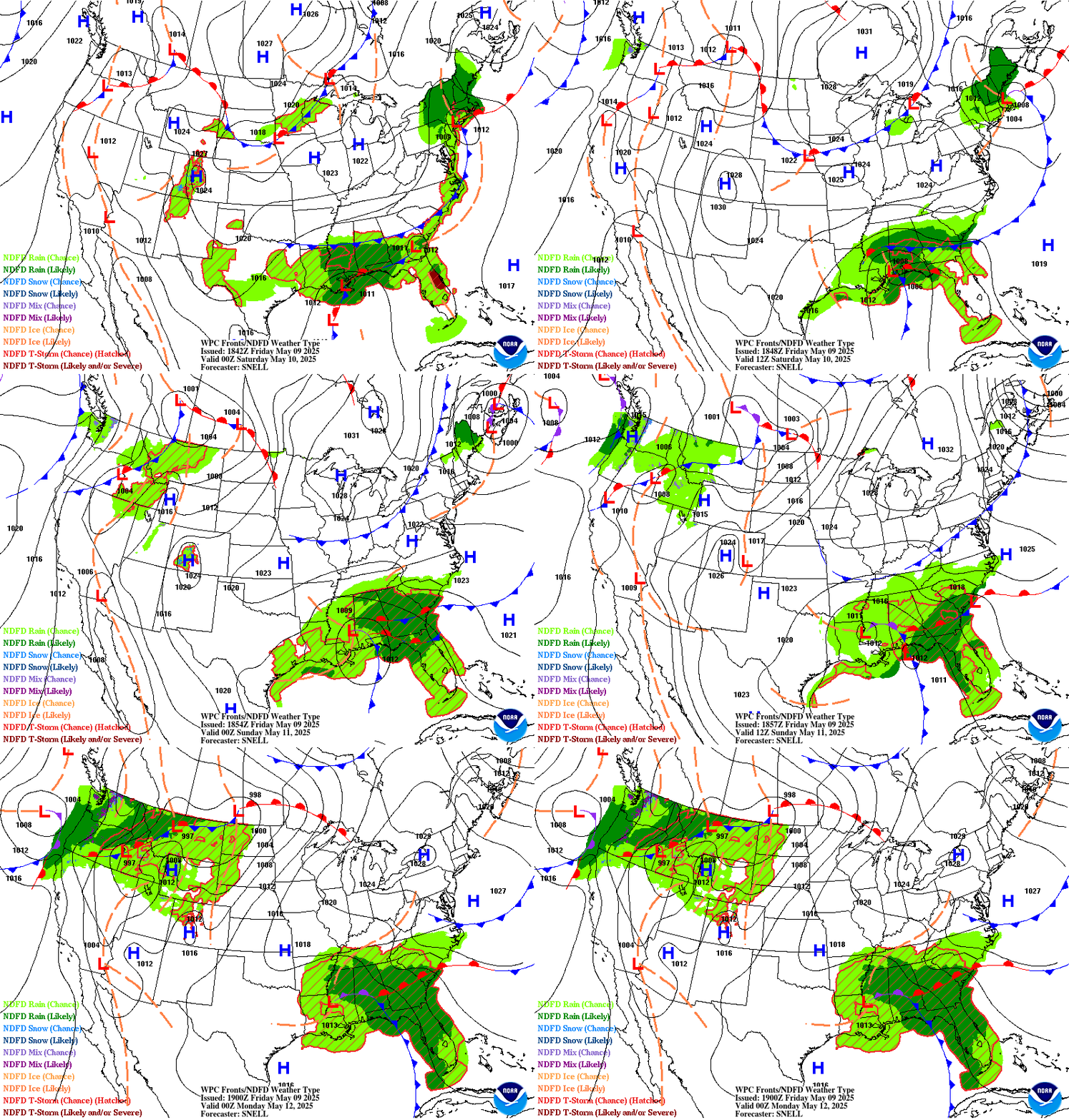
The explanation for the coding used in these maps, i.e. the full legend, can be found here although it includes some symbols that are no longer shown in the graphic because they are implemented by color coding.
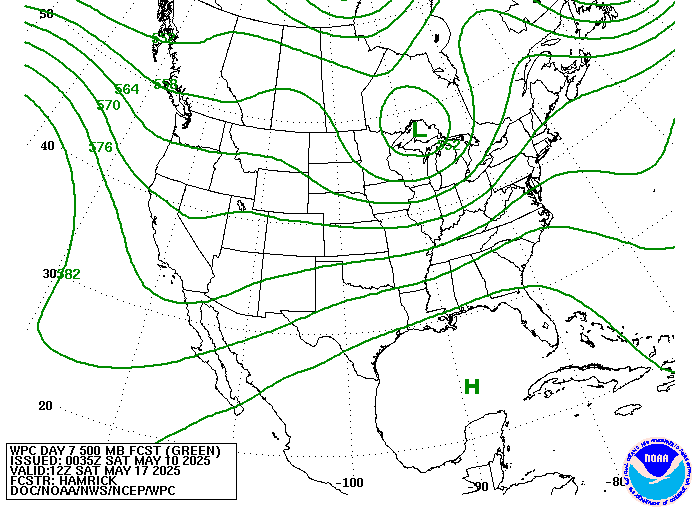
The map below is the mid-atmosphere 7-Day chart rather than the surface highs and lows and weather features. In some cases it provides a clearer less confusing picture as it shows only the major pressure gradients.This graphic auto-updates so when you look at it you will see NOAA’s latest thinking. The speed at which these troughs and ridges travel across the nation will determine the timing of weather impacts. This graphic auto-updates I think every six hours and it changes a lot.
The MJO is not likely to have much of an impact for the month of June as a whole as this MJO cycle appears to be weak and the forecasts of phase changes are contradictory. The MJO has had significant impacts this winter but the impact on June is not likely to be very noticeable. But over the next few months it might slow the development of the La Nina.
Notice the Northern Pacific is again more like a giant anticyclone with clockwise motion so that which gets sent west at low latitudes is to some extent returned to North America but at higher latitudes. That pattern was interrupted last week probably due to the demise of the El Nino and the impact of the MJO. We still do not see the rapid movement of storms at lower latitudes from east to west. Most of CONUS storms are originating from Asia without nearly as much support from storms related to the Equator although we see some of that occurring. The entire circulation has slowed down as one would expect this time of the year.
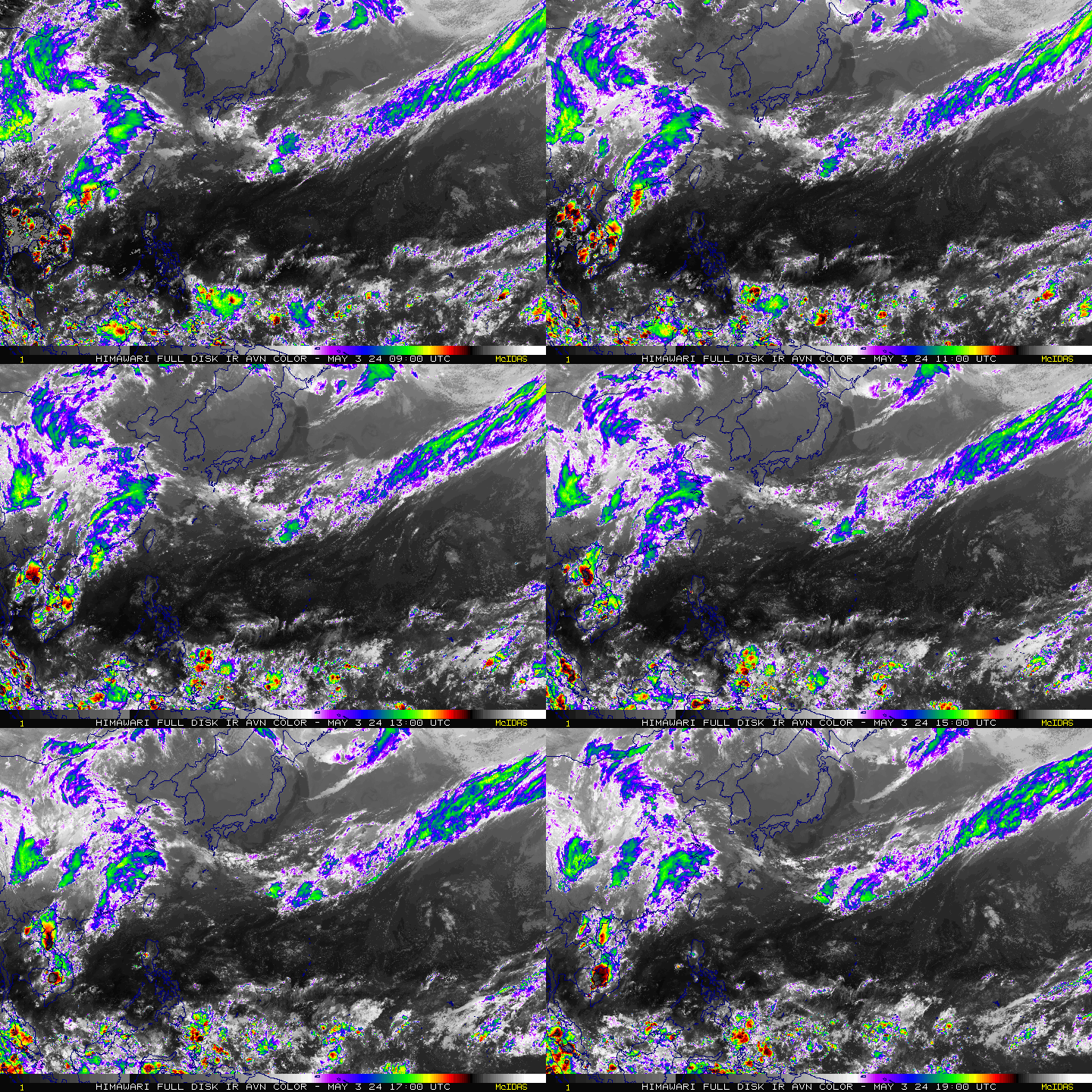
As I am looking at the below graphic Monday evening May 23, I see what had been an active dry line firing up over Texas and to the north into the Great Plains now moving to the east. As we move into a Summer Pattern, the concept of a storm track west to east becomes less relevant and we focus more on south to north movements i.e. the Monsoon in the Southwest and Tropical Storms in the East and Gulf of Mexico. This graphic updates automatically so it most likely will look different by the time you look at it as the weather patterns are moving from west to east.

Below is an analysis of projected tropical hazards and benefits over an approximately two-week period. This graphic is scheduled to update on Tuesday and I am reading the May 17, 2016 Version and looking at Week 2 of that forecast.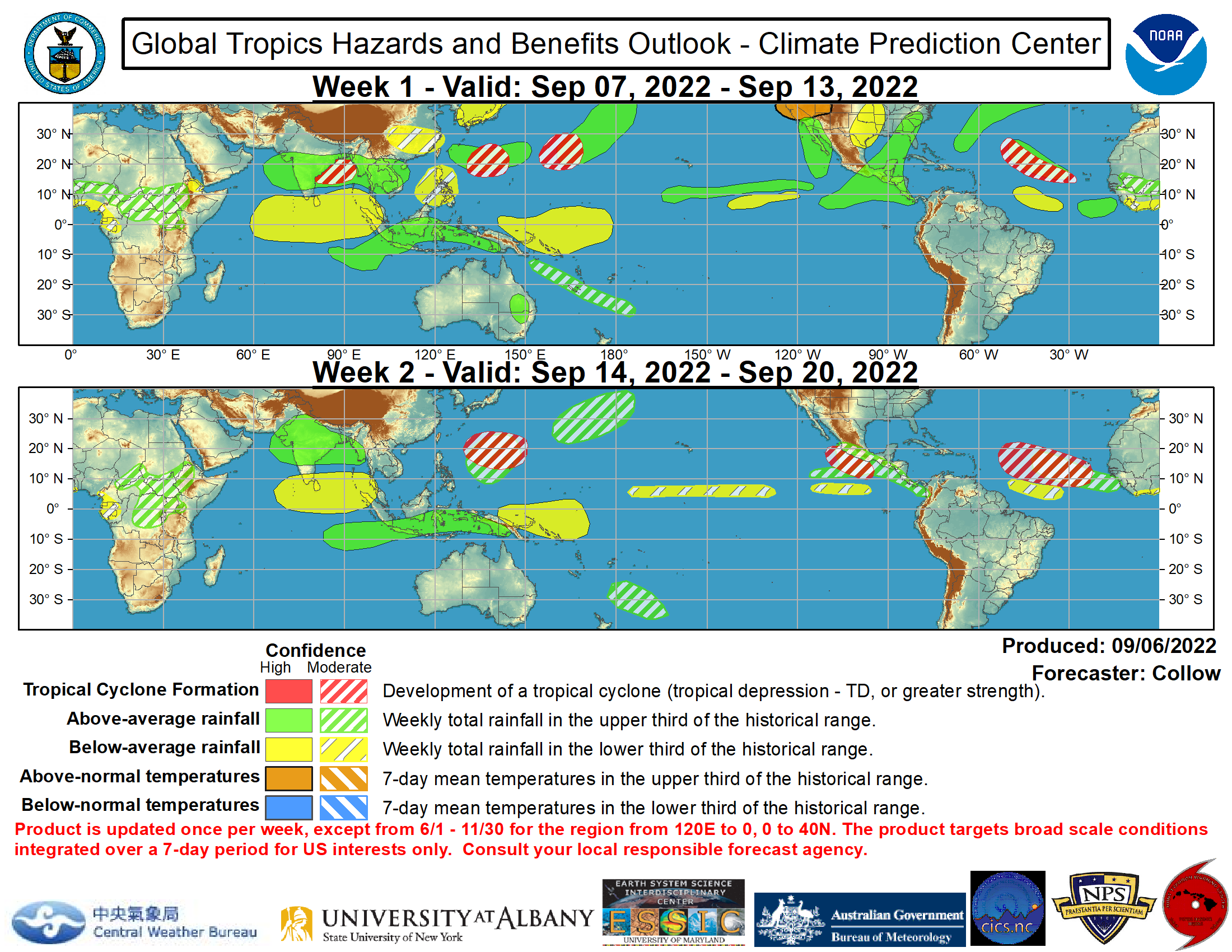
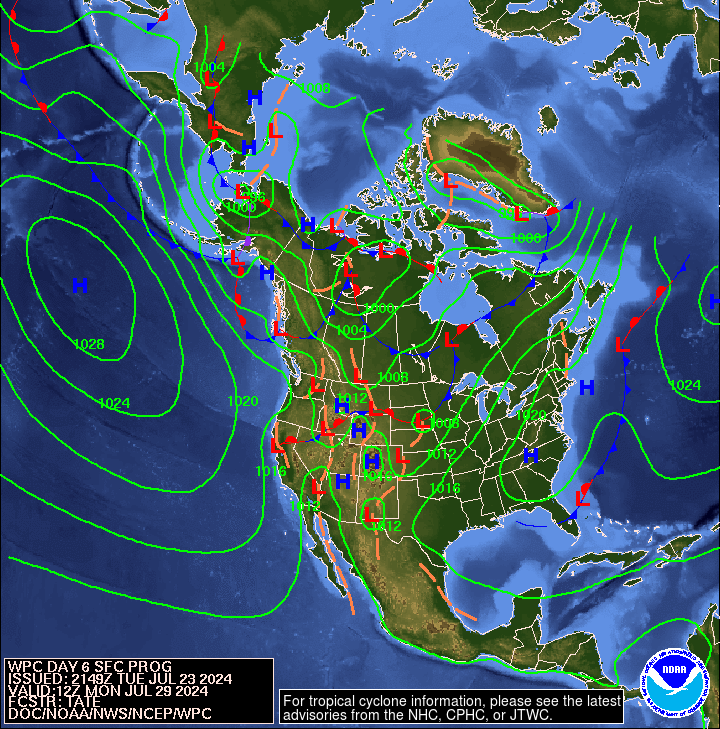
Below is a graphic which highlights the forecasted surface Highs and the Lows re air pressure on Day 6 (the Day 3 forecast is available on Page II of this Report). This graphic also auto-updates.
Looking at the current activity of the Jet Stream

And here is the forecast out five days.

To see how the pattern is projected to evolve, please click here. In addition to the shaded areas which show an interpretation of the Jet Stream, one can also see the wind vectors (arrows) at the 300 Mb level.
This longer animation shows how the jet stream is crossing the Pacific and when it reaches the U.S. West Coast is going every which way.
Click here to gain access to a very flexible computer graphic. You can adjust what is being displayed by clicking on “earth” adjusting the parameters and then clicking again on “earth” to remove the menu. Right now it is set up to show the 500 hPa wind patterns which is the main way of looking at synoptic weather patterns.
And when we look at Sea Surface anomalies below, we see a lot of them not just along the Equator related to El Nino.
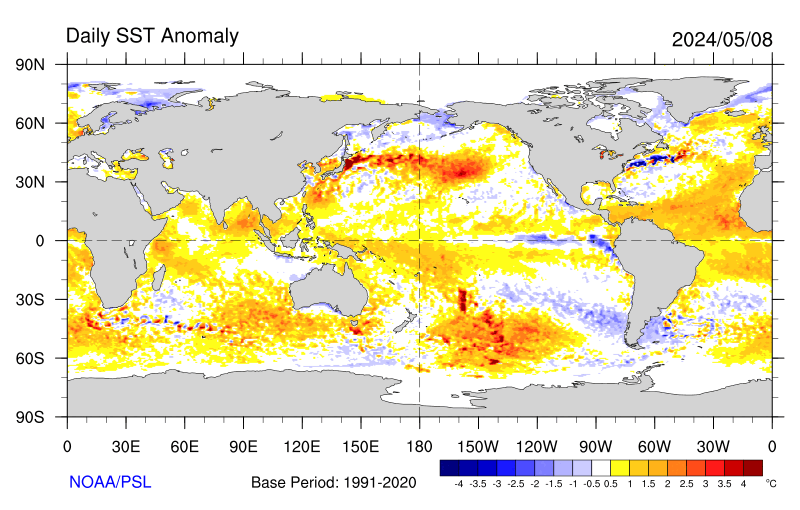
Below I show the changes over the last month in the Sea Surface Temperature (SST) anomalies.

6 – 14 Day Outlook Plus the Week 3-4 Experimental Forecasts
Now let us focus on the 6 – 14 Day Forecast for which I generally only show the 8 – 14 Day Maps. The 6 – 10 Day maps are always available in Part II of this report but in the Winter and Spring I often show both maps as the forecasted weather patterns change during that nine day period.
To put the forecasts which NOAA tends to call Outlooks into perspective, I am going to show the three-month MJJ Outlook and the recently updated Outlook for the single month of May and then discuss the 6 – 10 Day and 8 – 14 Day Maps and the 6 – 14 Day NOAA Discussion within that framework.
First – Temperature
Here is the Three-Month MJJ Temperature Outlook issued on May 19, 2016:
Here is the Early Outlook for June Temperatures issued on May 19, 2016.

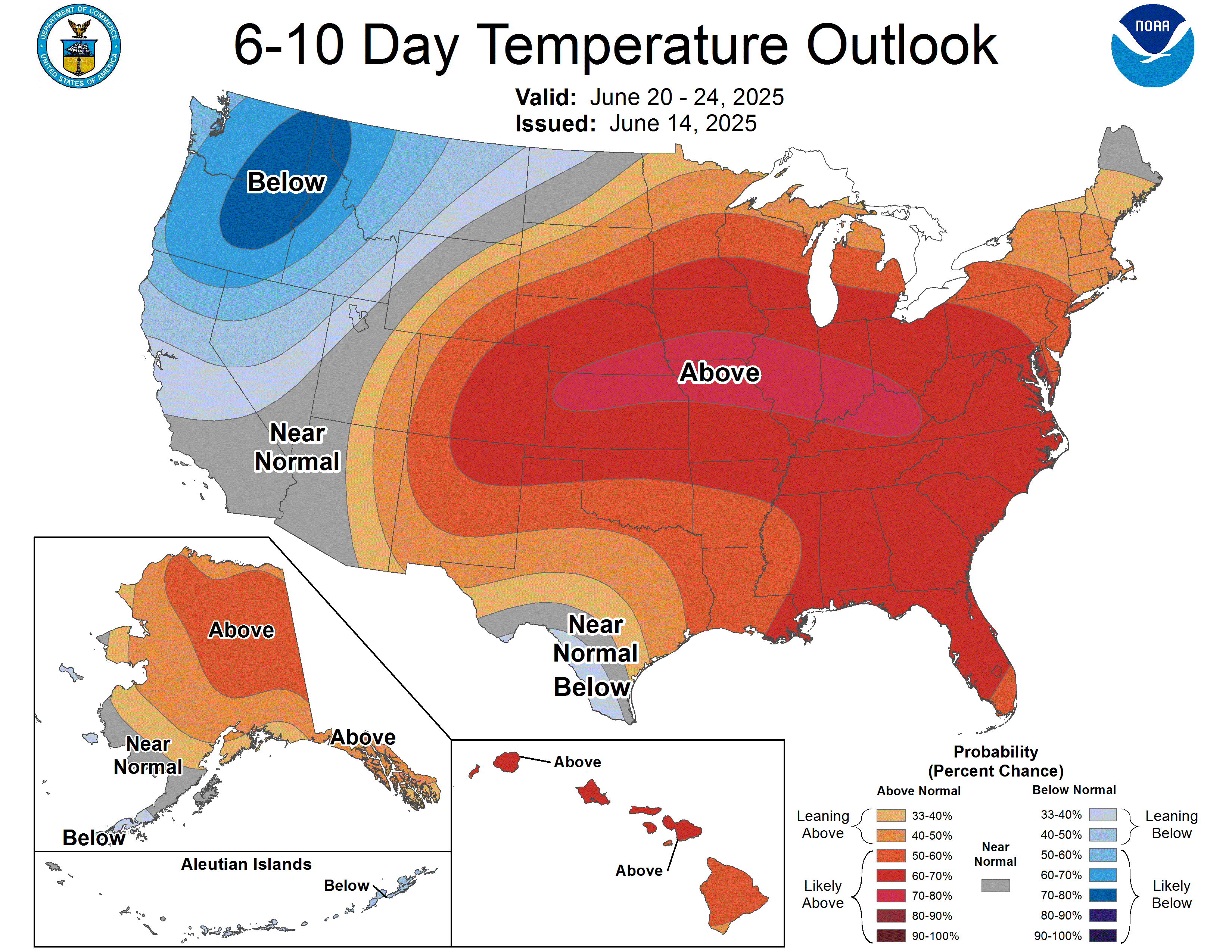
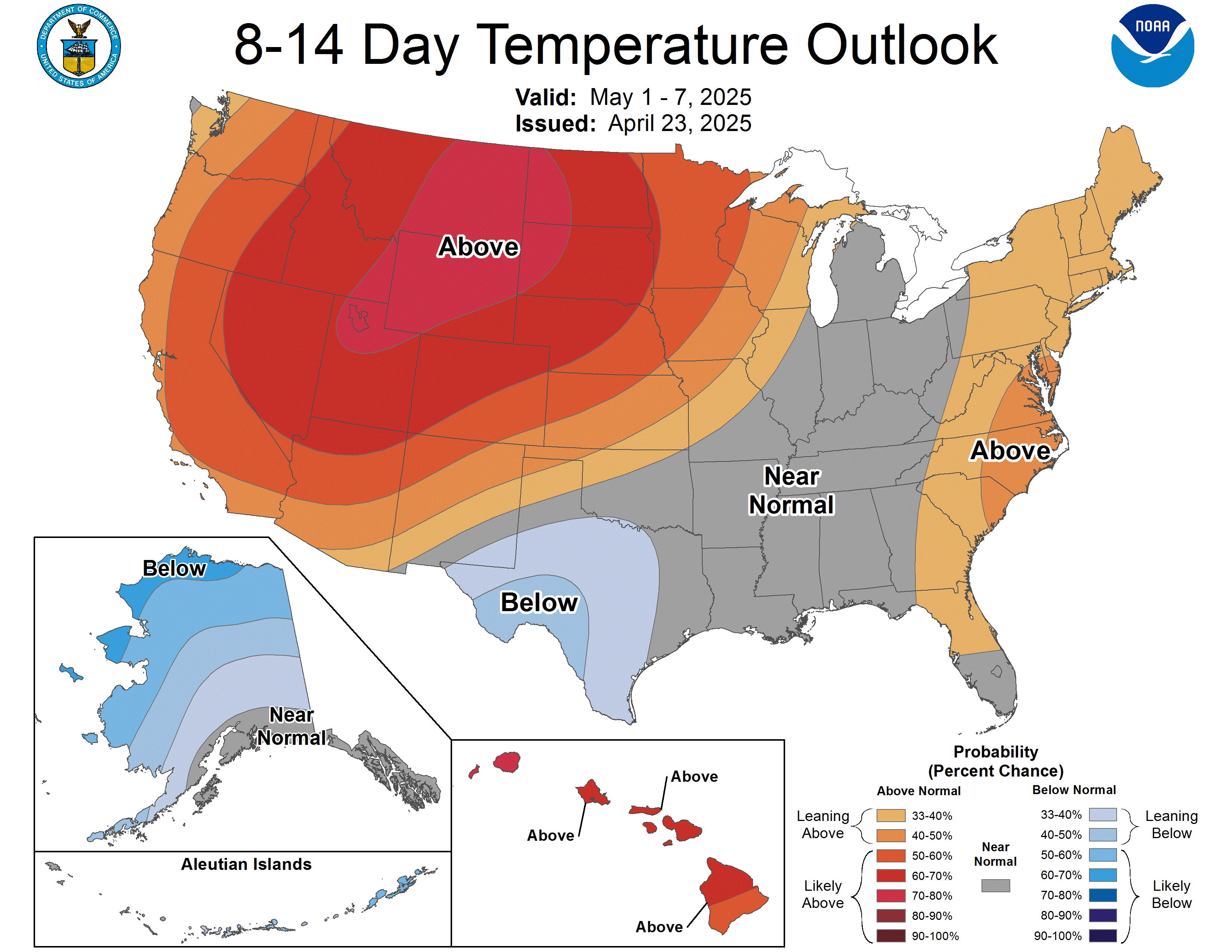
Below are the current 6 – 10 Day and 8 – 14 Day Temperature Outlook Maps which will auto-update daily and thus be current when you view them. It covers the nine days following the tail end of the current week. I have included both today and probably will continue to do that as long as the patterns are moving from west to east fairly rapidly. I have also included the experimental Week 3 and 4 Outlook. The Week 3-4 Experimental Outlook updates weekly on Friday. Notice the Week 3-4 Experimental Outlook has fewer levels of probability starting with 50%.
6 – 10 Day Temperature Outlook
8 – 14 Day Temperature Outlook
Looking further out.
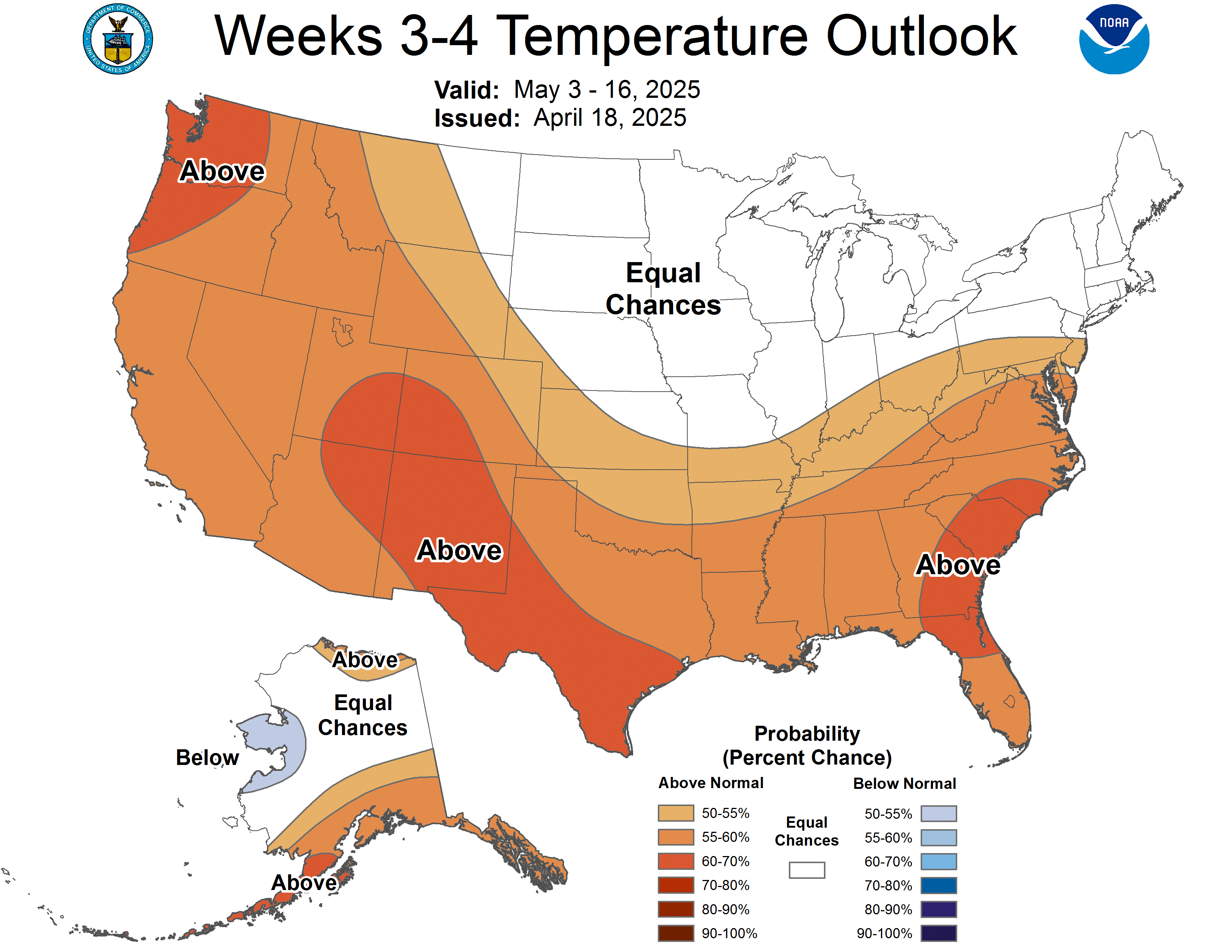
Now – Precipitation
Here is the three-month MJJ Precipitation Outlook issued on May 19, 2016:
Here is the Early Outlook for June Precipitation Issued on May 19, 2016

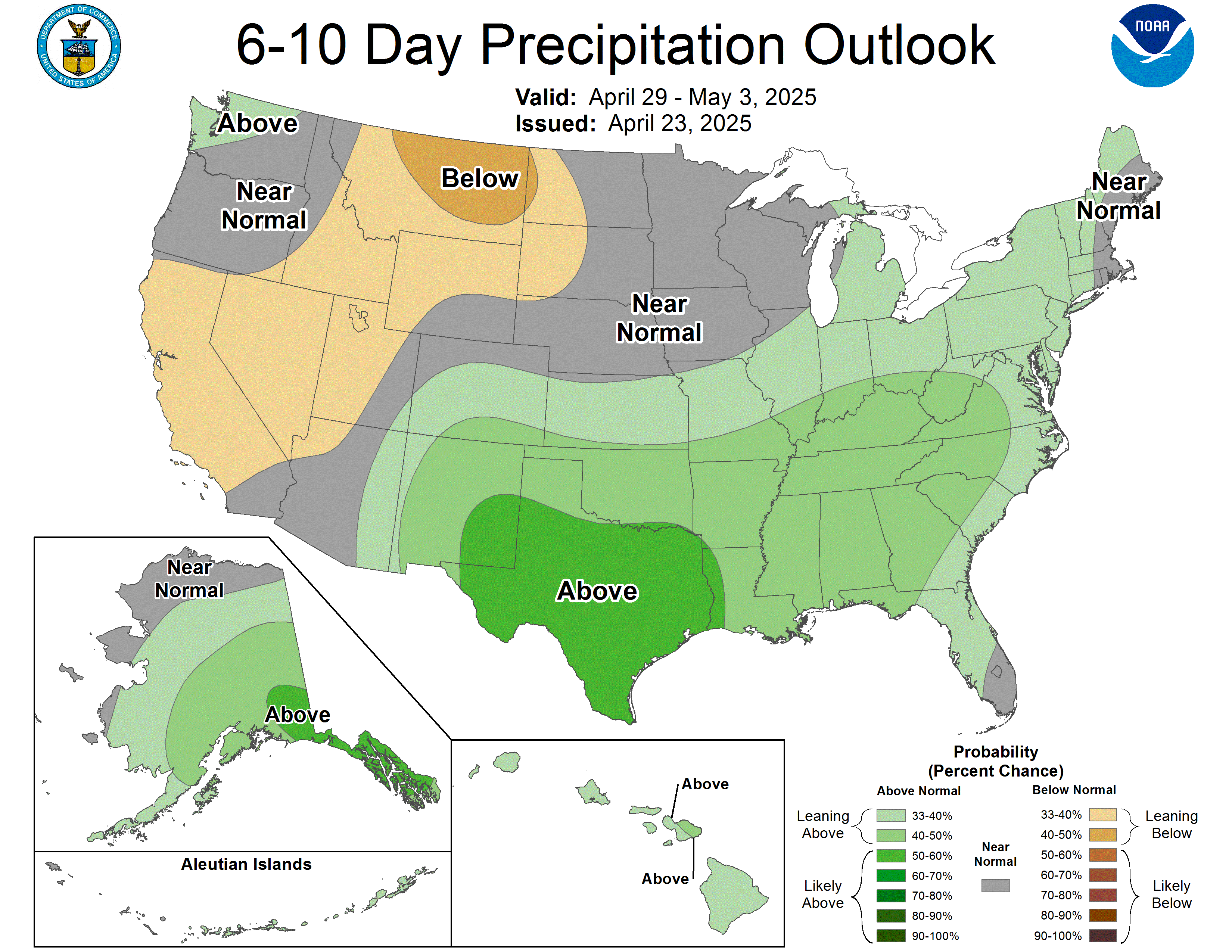
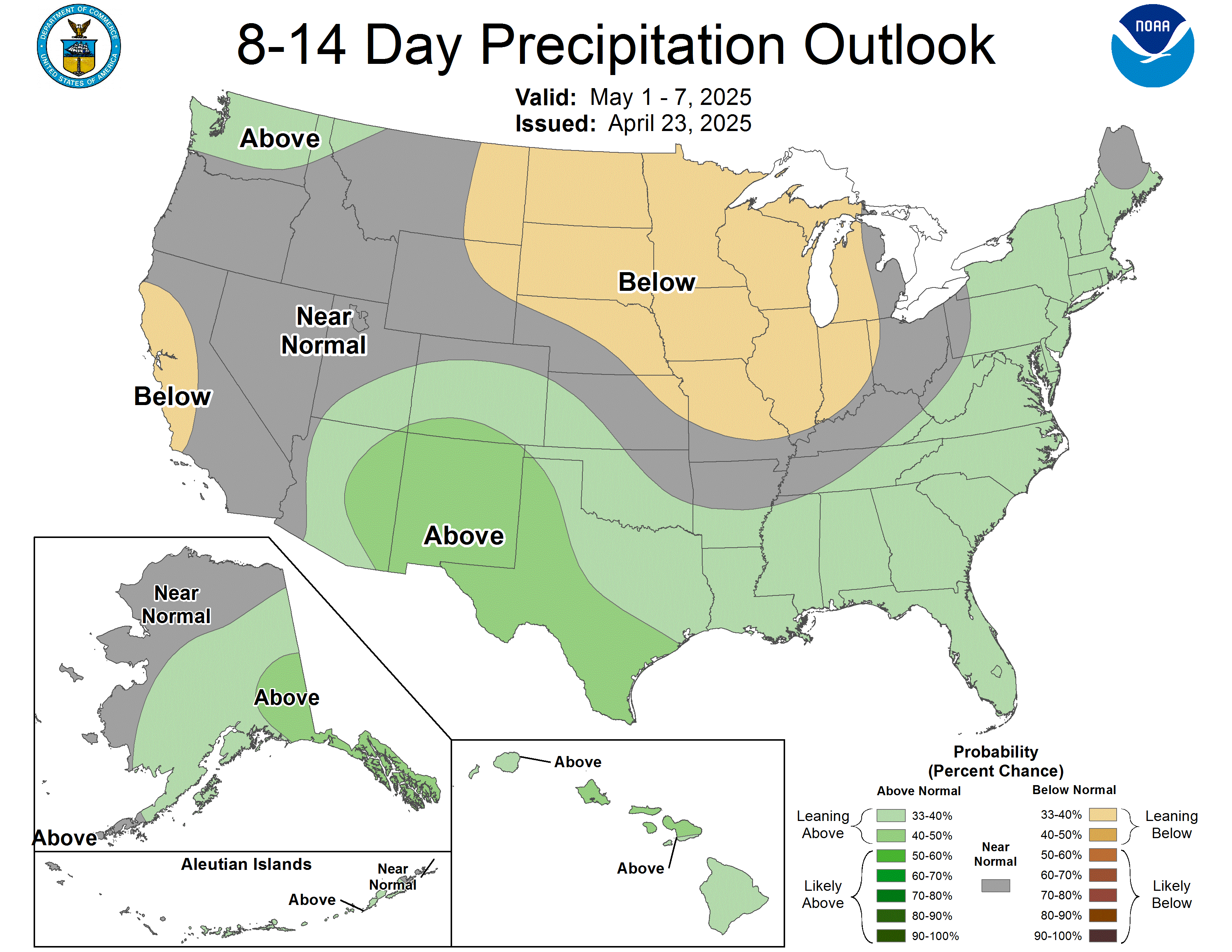
Below are the current 6 – 10 Day and 8 – 14 Day Precipitation Outlook Maps which will auto-update and thus be current when you view them. It covers the nine days following the tail end of the current week. I have included both today and probably will continue to do that as long as the patterns are moving from west to east fairly rapidly. I have also included the experimental Week 3 and 4 Outlook. The Week 3-4 Experimental Outlook updates weekly on Fridays. Notice the Week 3-4 Experimental Outlook has fewer levels of probability starting with 50%.
6 – 10 Day Precipitation Outlook
8 – 14 Day Precipitation Outlook
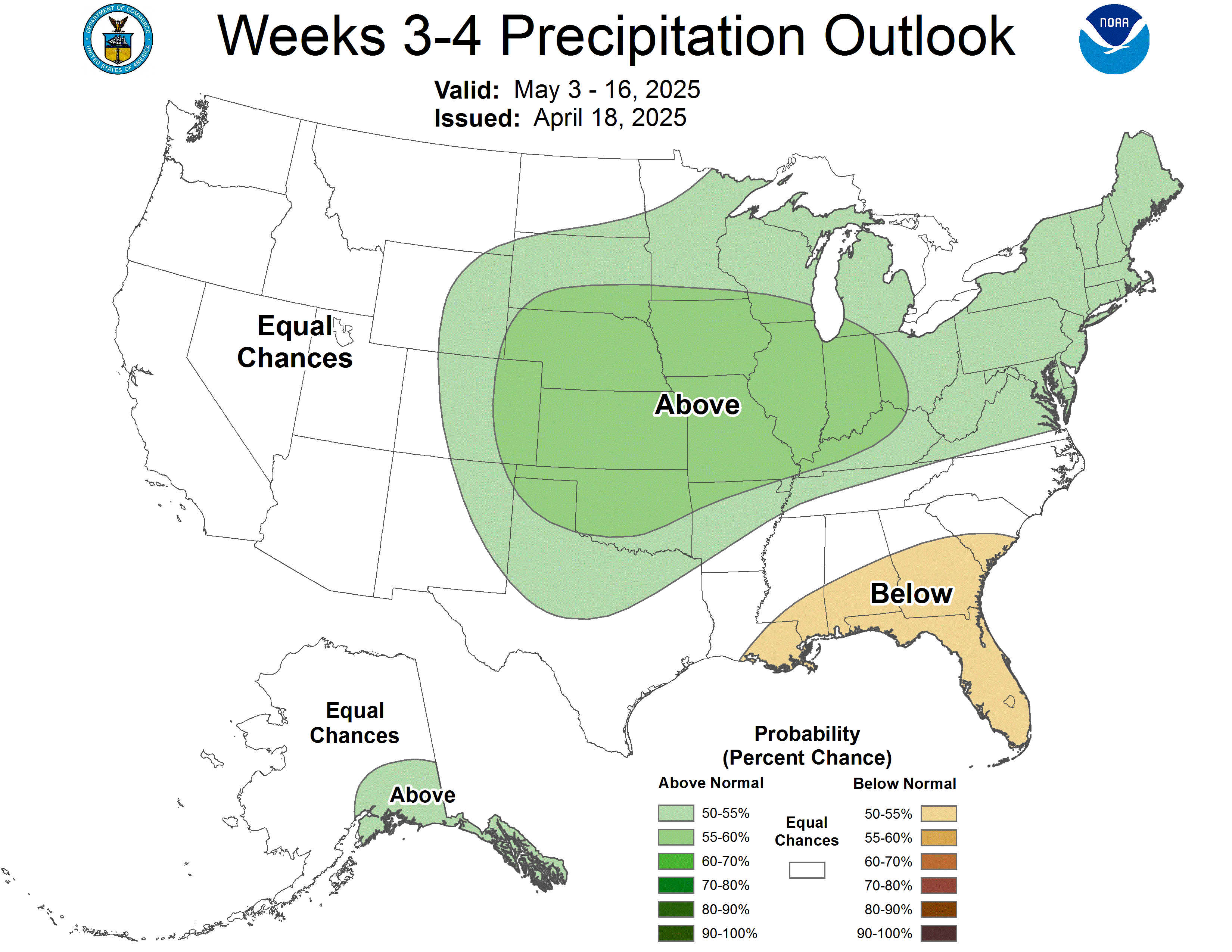
Here are excerpts from the NOAA discussion released today May 23, 2016.
6-10 DAY OUTLOOK FOR MAY 29 – JUN 02, 2016
TODAY’S MODEL SOLUTIONS ARE IN GOOD AGREEMENT ON THE OVERALL 500-HPA FLOW PATTERN OVER NORTH AMERICA. A RIDGE IS FORECAST OVER ALASKA WITH A TROUGH TO THE WEST. A TROUGH IS PREDICTED OVER THE WEST COAST OF NORTH AMERICA, WHILE A RIDGE IS FORECAST OVER MUCH OF EASTERN NORTH AMERICA, AND A SHORTWAVE TROUGH IS PREDICTED OVER THE U.S. SOUTHEAST.
TODAY’S OFFICIAL 500-HPA HEIGHT MULTI-MODEL BLEND OF THE NCEP GEFS, ECMWF AND CANADIAN ENSEMBLE PREDICTION SYSTEMS INDICATES ABOVE-NORMAL HEIGHTS OVER ALASKA, CANADA, AND MUCH OF THE EASTERN CONUS. BELOW-NORMAL HEIGHTS ARE PREDICTED OVER PARTS OF THE SOUTHWEST AND OVER FLORIDA, ACCORDING TO THE OFFICIAL BLENDED HEIGHT FIELD.
POSITIVE HEIGHT ANOMALIES OVER ALASKA SUPPORT ENHANCED PROBABILITIES FOR ABOVE-NORMAL TEMPERATURES OVER MOST OF THE STATE, EXCEPT FOR THE NORTHEAST, WHERE NEAR-NORMAL IS MORE LIKELY. ABOVE-NORMAL TEMPERATURES ARE LIKELY FOR THE PACIFIC COAST FROM CENTRAL CALIFORNIA TO WASHINGTON STATE AND FOR MUCH OF THE CENTRAL AND NORTHERN PLAINS AND THE EASTERN HALF OF THE CONUS, UNDER NEAR OR ABOVE-NORMAL HEIGHT ANOMALIES.
ABOVE-MEDIAN PRECIPITATION IS FAVORED OVER MOST OF THE CONUS, WITH PROBABILITIES MOST ENHANCED OVER THE SOUTHERN AND CENTRAL PLAINS STATES AND THE SOUTHEAST AHEAD OF THE PREDICTED TROUGH AXES. BELOW-MEDIAN PRECIPITATION IS MORE LIKELY OVER THE PACIFIC COAST OF THE CONUS AND MOST OF THE ATLANTIC COAST OF THE NORTHEAST CONUS AHEAD OF THE PREDICTED RIDGE LOCATIONS. PROBABILITIES OF ABOVE-MEDIAN PRECIPITATION ARE ENHANCED OVER NORTHERN ALASKA WITH POTENTIAL SHORTWAVES PASSING OVER THE PREDICTED RIDGE, WHILE BELOW-MEDIAN PRECIPITATION IS MORE LIKELY FOR SOUTHERN ALASKA.
FORECAST CONFIDENCE FOR THE 6-10 DAY PERIOD: ABOVE AVERAGE, 4 OUT OF 5, DUE TO GOOD AGREEMENT AMONG THE MODELS AND FORECAST TOOLS.
8-14 DAY OUTLOOK FOR MAY 31 – JUN 06, 2016
TODAY’S MODEL SOLUTIONS REMAIN IN GOOD AGREEMENT ON THE OVERALL 500-HPA CIRCULATION PATTERN OVER NORTH AMERICA DURING THE WEEK 2 PERIOD, WITH SOME REDUCTION IN THE MAGNITUDE OF ANOMALIES. RIDGING IS FORECAST TO PERSIST OVER ALASKA WITH A WEAKER TROUGH TO THE WEST COMPARED TO THE 6-10 DAY PERIOD. THE PREDICTED TROUGH OVER THE WEST COAST OF THE CONUS WEAKENS IN FORECASTS FOR WEEK 2, WHILE RIDGING AND ABOVE-NORMAL 500-HPA HEIGHT ANOMALIES ARE PREDICTED TO PERSIST OVER MUCH OF EASTERN NORTH AMERICA, AND A WEAKER SHORTWAVE TROUGH IS PREDICTED OVER THE U.S. SOUTHEAST.
ABOVE-NORMAL HEIGHTS ARE FORECAST TO PERSIST OVER ALASKA, CANADA, AND ACROSS THE NORTHERN CONUS. SLIGHTLY BELOW-NORMAL HEIGHTS ARE PREDICTED OVER A SMALL AREA OF THE SOUTHWEST AND OVER THE SOUTHEAST, ACCORDING TO THE WEEK 2, OFFICIAL BLENDED HEIGHT FIELD.
POSITIVE HEIGHT ANOMALIES OVER ALASKA SUPPORT ENHANCED PROBABILITIES FOR ABOVE-NORMAL TEMPERATURES OVER THE STATE. ABOVE-NORMAL TEMPERATURES ARE LIKELY FOR THE PACIFIC COASTAL STATES FROM CALIFORNIA TO WASHINGTON, FOR THE NORTHERN ROCKIES, THE CENTRAL AND NORTHERN PLAINS, AND THE EASTERN HALF OF THE CONUS, UNDER NEAR OR ABOVE-NORMAL HEIGHT ANOMALIES. BELOW-NORMAL TEMPERATURES ARE FAVORED OVER SOUTHERN AREAS OF THE SOUTHWEST AND WESTERN PARTS OF TEXAS AHEAD OF THE PREDICTED TROUGH AXIS.
ABOVE-MEDIAN PRECIPITATION IS FAVORED OVER A LARGE PART OF THE CONUS, WITH PROBABILITIES MOST ENHANCED OVER THE NORTHERN ROCKIES, THE CENTRAL PLAINS AND MUCH OF THE SOUTHERN PLAINS, AND THE SOUTHEAST AHEAD OF THE PREDICTED TROUGH AXES. BELOW-MEDIAN PRECIPITATION IS MORE LIKELY OVER THE ALASKA PANHANDLE, AND THE PACIFIC COAST OF NORTHERN CALIFORNIA, AS WELL AS OREGON AND WASHINGTON STATES, AHEAD OF A PREDICTED RIDGE OVER THE NORTH PACIFIC. PROBABILITIES OF ABOVE-MEDIAN PRECIPITATION ARE ENHANCED OVER NORTHERN ALASKA WITH POTENTIAL SHORTWAVES PASSING OVER THE PREDICTED RIDGE.
FORECAST CONFIDENCE FOR THE 8-14 DAY PERIOD IS: ABOUT AVERAGE, 3 OUT OF 5, DUE TO A WEAK 500-HPA ANOMALY PATTERN, OFFSET BY GOOD AGREEMENT BETWEEN THE MODELS AND TOOLS.
THE NEXT SET OF LONG-LEAD MONTHLY AND SEASONAL OUTLOOKS WILL BE RELEASED ON JUNE 16
Some might find this analysis interesting as the organization which prepares it looks at things from a very detailed perspective and their analysis provides a lot of information on the history and evolution of this El Nino.
Analogs to the Outlook.
Now let us take a detailed look at the “Analogs” which NOAA provides related to the Outlook.
I prefer the set of analogs that relates to the 5 day period centered on 3 days ago and the 7 day period centered on 4 days ago. “Analog” means that the weather pattern then resembles the recent weather pattern and was used in some way to predict the 6 – 14 day Outlook. But the NOAA system for generating those pre-forecast analogs is not working. They publish a second set of analogs which relates the 6 – 10 Day Outlook to previous occurrences of that weather pattern and similarly for the 8 -14 Day Outlook. So that is what I am using today. It is explained here and here. I do not like my work being doubled so I decided to just use the second set of analogs which corresponds to Day 11 of the Outlook. In my mind that set of analogs tells you nothing (zilch) about the reliability of the forecasts but is helpful in predicting the outlook for the subsequent time periods. That is interesting also. I am also presenting them today in the order that they are provided which means the ones at the top have the highest level of correlation with the forecast and thus are more reliable for forecasting future time periods.
Day | ENSO Phase | PDO | AMO | Other Comments |
| May 20, 1962 | Neutral | – | + | |
| May 22, 1962 | Neutral | – | + | |
| June 3, 1980 | Neutral | + | + | |
| May 4, 1988 | Neutral | + | + | |
| May 13, 1989 | La Nina | + | + | |
| May 13, 1989 | La Nina | + | + | |
| May 26, 2008 | La Nina | – | + |
One thing that jumped out at me right away was the spread among the analogs from May 4 to June 3 which is again a full month. Day -3 and -4 of this Outlook (I blend the two sets of pre-forecast analogs and remove duplicates which adds a bias to my analysis but makes it less confusing) it may change by the time you view it) are May 19 and 20. So the analogs are reasonably distributed around the centroid of the forecast suggesting to me that summer is coming at this point right on schedule. There are this time three El Nino Analogs, six ENSO Neutral Analogs and one La Nina Analog suggesting indecision or that we are now beyond the point where the Phase of ENSO is very important.
The phases of the ocean cycles in the analogs are strongly suggesting of McCabe conditions C or D. They both suggest the Atlantic is in control right now. McCabe C and D are opposites and may not apply as much to this time of the year. It is interesting however that all the analogs are associated with periods of time which were AMO+ which still is the case. Also many of the analogs were just before or just after ENSO events. It is hard for me to say that the overall set of analogs are consistent with the forecast. The seminal work on the impact of the PDO and AMO on U.S. climate can be found here. Water Planners might usefully pay attention to the low-frequency cycles such as the AMO and the PDO as the media tends to focus on the current and short-term forecasts to the exclusion of what we can reasonably anticipate over multi-decadal periods of time.

You may have to squint but the drought probabilities are shown on the map and also indicated by the color coding with shades of red indicating higher than 25% of the years are drought years (25% or less of average precipitation for that area) and shades of blue indicating less than 25% of the years are drought years. Thus drought is defined as the condition that occurs 25% of the time and this ties in nicely with each of the four pairs of two phases of the AMO and PDO.
Historical Anomaly Analysis
When I see the same dates showing up often I find it interesting to consult this list.
With respect to relating analog dates to ENSO Events, the following table might be useful. In most cases this table will allow the reader to draw appropriate conclusions from NOAA supplied analogs. If the analogs are not associated with an El Nino or La Nina they probably are not as easily interpreted. Remember, an analog is indicating a similarity to a weather pattern in the past. So if the analogs are not associated with a prior El Nino or prior La Nina the computer models are not likely to generate a forecast that is consistent with an El Nino or a La Nina.
| El Ninos | La Ninas | |||||||||
|---|---|---|---|---|---|---|---|---|---|---|
| Start | Finish | Max ONI | PDO | AMO | Start | Finish | Max ONI | PDO | AMO | |
| DJF 1950 | J FM 1951 | -1.4 | – | N | ||||||
| T | JJA 1951 | DJF 1952 | 0.9 | – | + | |||||
| DJF 1953 | DJF 1954 | 0.8 | – | + | AMJ 1954 | AMJ 1956 | -1.6 | – | + | |
| M | MAM 1957 | JJA 1958 | 1.7 | + | – | |||||
| M | SON 1958 | JFM 1959 | 0.6 | + | – | |||||
| M | JJA 1963 | JFM 1964 | 1.2 | – | – | AMJ 1964 | DJF 1965 | -0.8 | – | – |
| M | MJJ 1965 | MAM 1966 | 1.8 | – | – | NDJ 1967 | MAM 1968 | -0.8 | – | – |
| M | OND 1968 | MJJ 1969 | 1.0 | – | – | |||||
| T | JAS 1969 | DJF 1970 | 0.8 | N | – | JJA 1970 | DJF 1972 | -1.3 | – | – |
| T | AMJ 1972 | FMA 1973 | 2.0 | – | – | MJJ 1973 | JJA 1974 | -1.9 | – | – |
| SON 1974 | FMA 1976 | -1.6 | – | – | ||||||
| T | ASO 1976 | JFM 1977 | 0.8 | + | – | |||||
| M | ASO 1977 | DJF 1978 | 0.8 | N | – | |||||
| M | SON 1979 | JFM 1980 | 0.6 | + | – | |||||
| T | MAM 1982 | MJJ 1983 | 2.1 | + | – | SON 1984 | MJJ 1985 | -1.1 | + | – |
| M | ASO 1986 | JFM 1988 | 1.6 | + | – | AMJ 1988 | AMJ 1989 | -1.8 | – | – |
| M | MJJ 1991 | JJA 1992 | 1.6 | + | – | |||||
| M | SON 1994 | FMA 1995 | 1.0 | – | – | JAS 1995 | FMA 1996 | -1.0 | + | + |
| T | AMJ 1997 | AMJ 1998 | 2.3 | + | + | JJA 1998 | FMA 2001 | -1.6 | – | + |
| M | MJJ 2002 | JFM 2003 | 1.3 | + | N | |||||
| M | JJA 2004 | MAM 2005 | 0.7 | + | + | |||||
| T | ASO 2006 | DJF 2007 | 1.0 | – | + | JAS 2007 | MJJ 2008 | -1.4 | – | + |
| M | JJA 2009 | MAM 2010 | 1.3 | N | + | JJA 2010 | MAM 2011 | -1.4 | + | + |
| JAS 2011 | FMA 2012 | -0.9 | – | + | ||||||
| T | MAM 2015 | NA | 1.0 | + | N | |||||
Progress of the Warm Event (Perhaps the title should change and it probably will next week)
Let us start with the SOI.
Below is the Southern Oscillation Index (SOI) reported by Queensland, Australia. The first column is the tentative daily reading, the second is the 30 day moving/running average and the third is the 90 day moving/running average.
| Date | Current Reading | 30-Day Average | 90 Day Average |
| May 17 | +0.1 | -8.32 | -12.49 |
| May 18 | -13.9 | -8.12 | -12.31 |
| May 19 | -15.3 | -7.94 | -12.21 |
| May 20 | +18.0 | -5.83 | -11.68 |
| May 21 | +6.7 | -4.39 | -11.23 |
| May 22 | +2.7 | -3.05 | -10.64 |
| May 23 | +8.7 | -2.10 | -10.03 |
The 30-day average, which is the most widely used measure, as of May 23 is reported at -2.10 which is no longer associated with an El Nino (usually required to be more negative than -8.0 but some consider -6.0 value good enough). It is quite a bit weaker (less negative) this week. The 90-day average remains in El Nino territory at -10.03. Usually but not always the 90 day average changes more slowly than the 30 day average but it depends on what values drop out. The SOI no longer continues to be indicative of an El Nino Event in progress. It kind of looks like the SOI has signaled the end of this EL Nino just as the ONI has.
The MJO or Madden Julian Oscillation is an important factor in regulating the SOI and Kelvin Waves and other tropical weather characteristics. More information on the MJO can be found here. Here is another good resource.
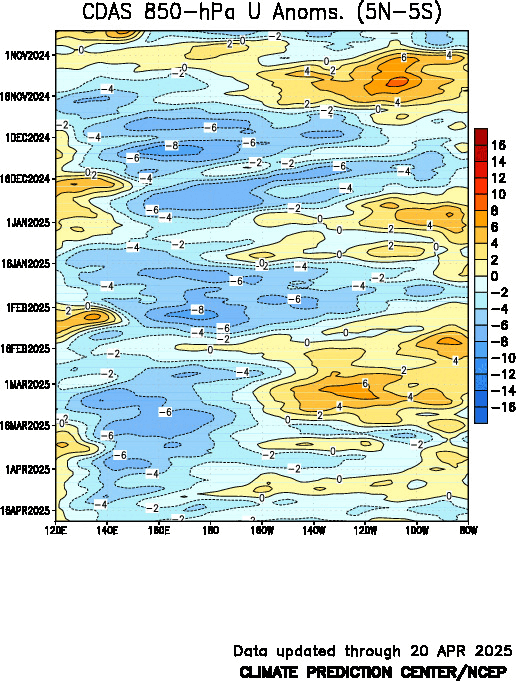
Low-Level Wind Anomalies
Here are the low-level wind anomalies. We now see light easterly anomalies which are probably an indication of both a lack of MJO activity and the death of the El Nino.
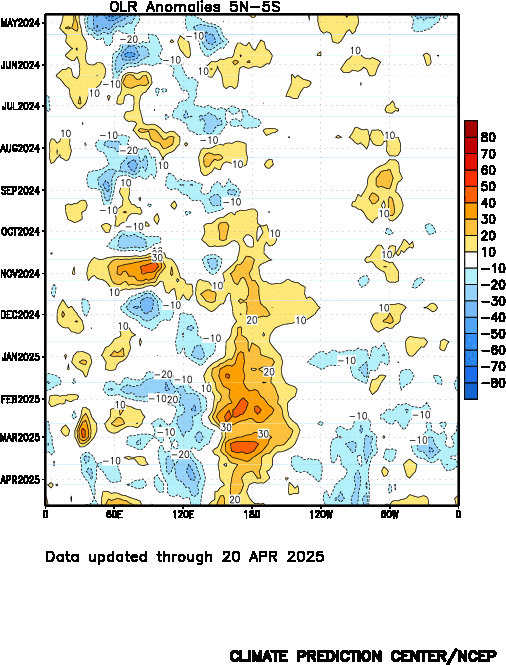
And now the Outgoing Longwave Anomalies which tells us where convection has been taking place.
Kelvin Waves
Let us now take a look at the progress of Kelvin Waves which have been the key to the situation. From the earliest to the most recent they can be named #1 through #5. Kelvin Wave #1 has now been pushed off the top of this graphic as more recent information is added at the bottom. This may be the last week I show this graphic until we start having Kelvin Waves again. They are of most interest when we are in the La Nina condition and waiting to see if an El Nino happens. It did and now Kelvin waves will be of most interest only with respect to how they may slow down the evolution of La Nina.
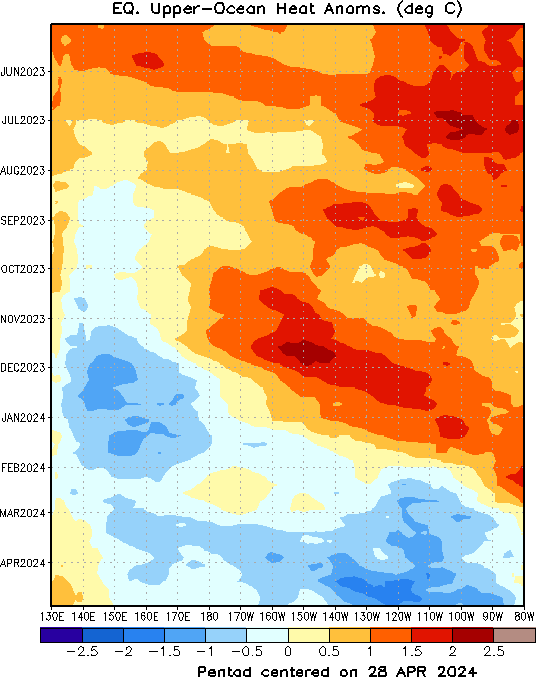
One should keep in mind that for a new Kelvin Wave, the period of time from initiation to the termination of impacts is about six months. So when you have four or five this winter six in a row, the pattern of impacts on different indices and geographic areas becomes quite complex. It is further complicated as you can see above because the Kelvin Waves do not necessarily originate at the same location i.e. longitude.
We are now going to change the way we look at a three dimensional view of the Equator and move from the surface view to the view from the surface down.
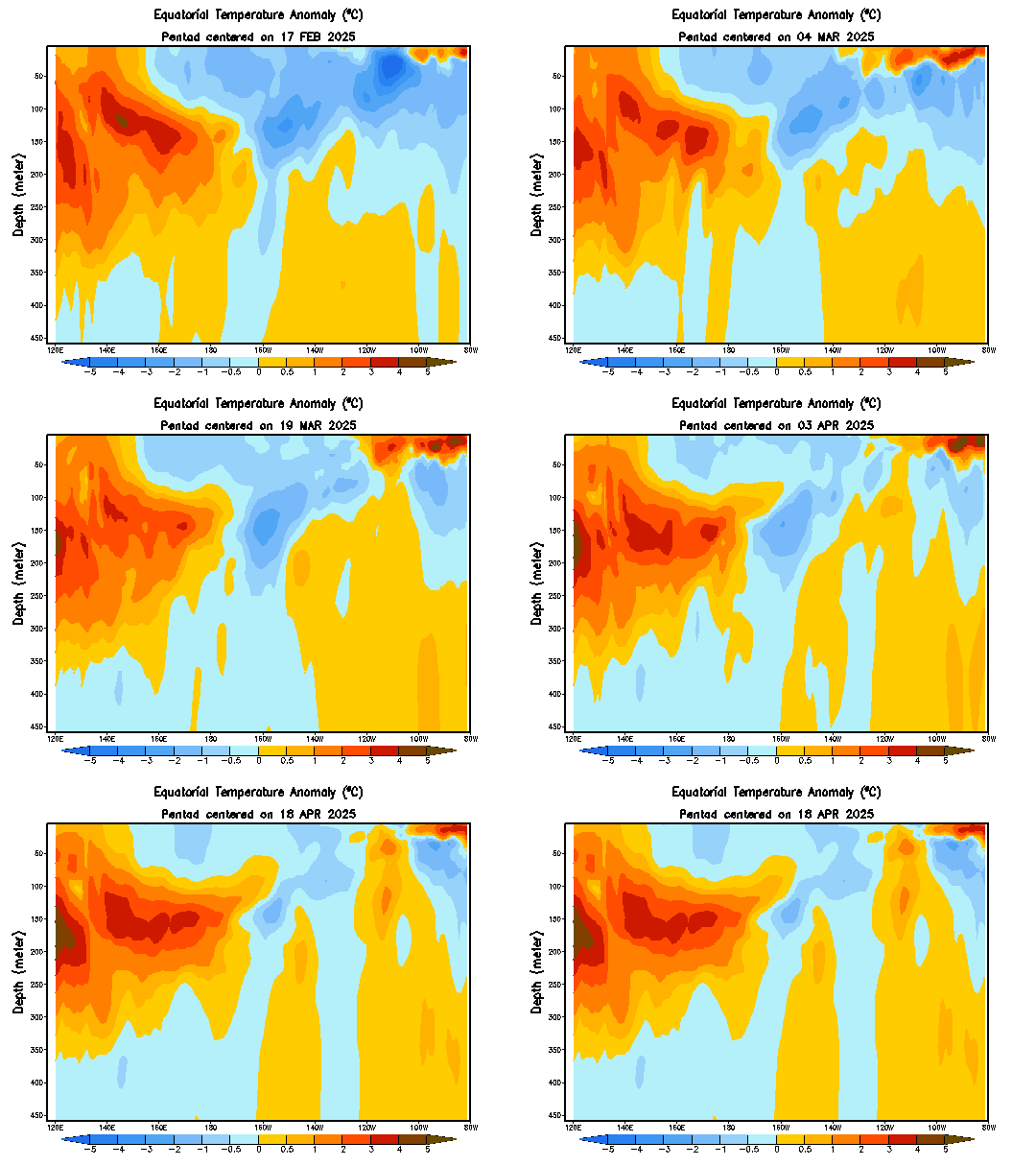
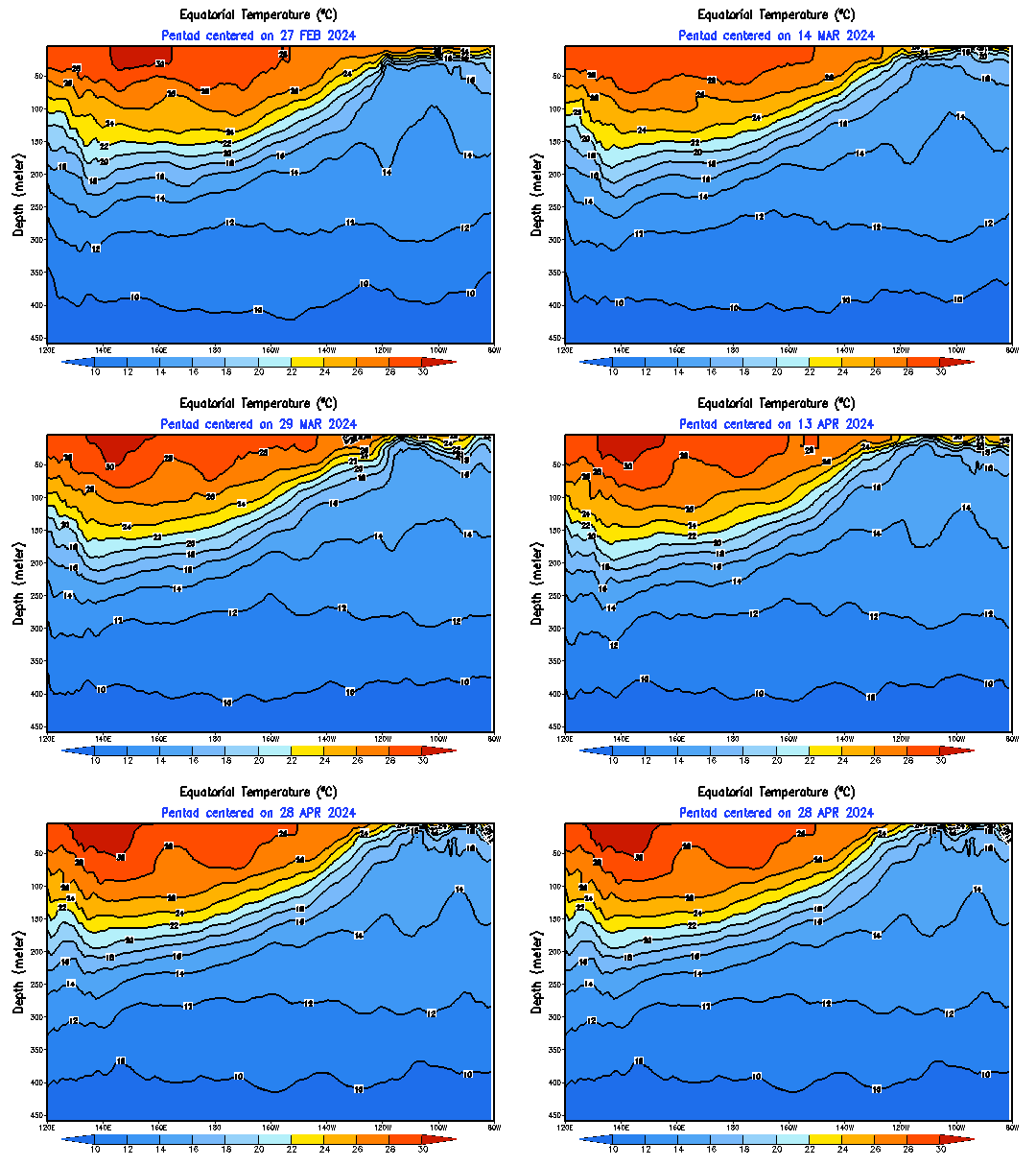
Current Sub-Surface Conditions. Notice the lag in getting this information posted so the current situation may be a bit different than shown.
And now the pair of graphics that I regularly provide and which as I publish are currently able to be accessed from the NOAA website:
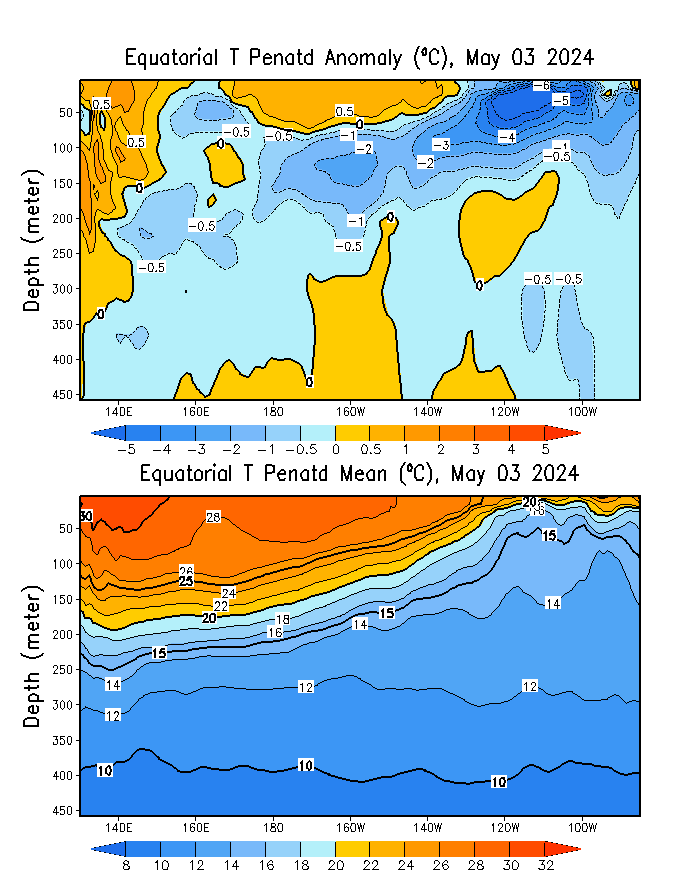
The above pair of graphics showing the current situation has an upper and lower graphic. The bottom graphic shows the absolute values, the upper graphic shows anomalies compared to what one might expect at this time of the year in the various areas both 130E to 90W Longitude and from the surface down to 450 meters.
The bottom half of the graphic (Absolute Values which highlights the Thermocline) perhaps is now more useful as we shift our focus and begin tracking the progress of this new Cool Event.
It shows the thermocline between warm and cool water. The 25C Isotherm is now reaching the surface at 130W. There is a lot of compression of the Isotherms so from 120W on east, the 20C is close to the surface and will reach the surface soon. We now pay close attention to the 28C Isotherm as west of that temperature is where convection is more easy to occur. The 28C Isotherm has moved west to about 155W. This graphic does not show a 27.5C anomaly which might more precisely indicate where convection is likely to occur. The 27C isotherm is now west of 140W. Clearly the area has moved west as one expects when an El Nino dies. But mostly the warm anomaly has simply vanished.
Here are the above graphics as a time sequence animation. You may have to click on them to get the animation going.
TAO/TRITON GRAPHIC

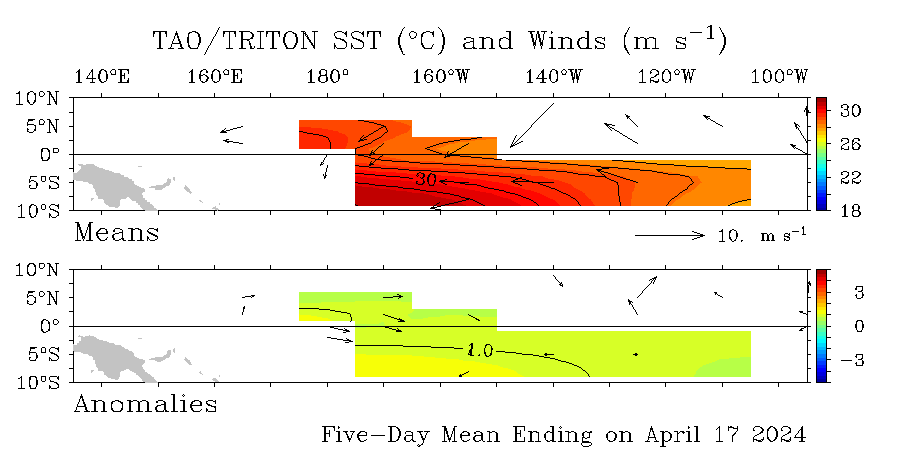
And here is the current version of the TAO/TRITON Graphic.
| ———————————————— | A | B | C | D | E | —————– |
The 3.5C through 1.5C anomalies are no longer visible in the ONI Measurement Areas. So the maximum anomalies have declined by two and one half degrees Centigrade. This means that if one is attempting to mentally estimate the daily ONI, an approach would be to make an initial estimate of the midpoint of the 1C to 1.5C anomaly or 1.25C and subtract the reductions from there where the anomaly is less. What I have just described is not exactly the approach I use in my calculation below but it does provide a quick way to get a feel for the current strength of this El Nino. There is actually shading in the TAO/TRITON Graphic that might allow one to try to refine estimates a bit more than the contour lines but I rely on the contour lines. This El Nino is gone I believe. A little later in the article I will do my own calculation and report on the NOAA calculation.
Subareas of the Anomaly | Westward Extension | Eastward Extension | Degrees of Coverage | ||||
| Today | January 19, 2016 | Today | January 19, 2026 | Today | In Nino 3.4 | January 19, 2016 | |
| These Rows Show the Extent of El Nino Impacts on the Equator | |||||||
| 3C or warmer Anomaly | Gone | 158W | Gone | 134W | 0 | 0 | 24 |
| 2.5C or warmer Anomaly | Gone | 165W | Gone | 110W | 0 | 0 | 55 |
| 2.0C or warmer Anomaly | Gone | 170W | Gone | 100W | 0 | 0 | 70 |
| 1.5C or warmer Anomaly | Gone | 175W | Gone | Land | 0 | 0 | 80 |
| 1.0C or warmer Anomaly | Gone | 175E | Gone | Land | 0 | 0 | 90 |
| 0.5C or warmer Anomaly | Gone | 160E | 155E* | Land | 0 | 0 | 105 |
| These Rows Show the Extent of ENSO Neutral Impacts on the Equator** | |||||||
| 0.5C or colder Anomaly | 155E | Land | 155W | Land | 50 | 15 | 0 |
| 0C or warmer Anomaly | 155W | Land | Land | Land | 60 | 35 | 0 |
| These Rows Show the Extent of the La Nina Impacts on the Equator** | |||||||
| -0.5C or warmer Anomaly | 145W | Land | Land | Land | 55 | 25 | 0 |
| -1C or warmer Anomaly | 140W | Land | 105W | Land | 35 | 20 | 0 |
| -1.5C or warmer Anomaly | 135W | Land | 120W | Land | 15 | 15 | 0 |
* 155E is beyond our area of interest and I show it just for completeness
** The temperatures are not yet clearly marked. I am assuming the isotherms are separated by 0.5C not 1C. There is a color code and I can not correlate it. So my divisions for these two categories could be off by 100% ie. where I say –1.5C that could be -3C but I do not think so. It will become clearer as the lines are spread further apart and PMEL adds numbers to the isotherms to identify them. Right now they are so close together there is not room to put the numbers. This could impact my calculations which could be biased high due to misinterpretation of the values assigned to the cool isotherms.
I calculate the ONI each week using a method that I have devised. To refine my calculation, I have divided the 170W to 120W ONI measuring area into five subregions (which I have designated from west to east as A through E) with a location bar shown under the TAO/TRITON Graphic). I use a rough estimation approach to integrate what I see below and record that in the table I have constructed. Then I take the average of the anomalies I estimated for each of the five subregions. So as of Monday May 23, in the afternoon working from the May 22 TAO/TRITON report, this is what I calculated.
| Anomaly Segment | Estimated Anomaly | |
| Last Week | This Week | |
| A. 170W to 160W | 0.8 | +0.6 |
| B. 160W to 150W | 1.0 | +0.4 |
| C. 150W to 140W | 0.9 | 0.0 |
| D. 140W to 130W | 0.5 | -0.2 |
| E. 130W to 120W | 0.3 | -0.6 |
| Total | 3.5 | -0.2 |
| Total divided by five subregions i.e. the ONI | (3.5/5 = 0.7 | (0.2)/5 = 0 |
My estimate of the daily Nino 3.4 ONI has declined to 0. NOAA has reported the weekly ONI to be 0.2 which is an ENSO Neutral value. Nino 4.0 is being again reported at 0.6 raising questions about if and how fast the Warm Pool is migrating to the West as it dissipates. Nino 3.0 is being reported lower at -0.1. Nino 1 + 2 which extends from the Equator south rather than being centered on the Equator is being reported as being +0.2. WELCOME TO ENSO NEUTRAL. I am only showing the currently issued version of the NINO SST Index Table as the prior values are shown in the small graphics on the right with this graphic.

ONI Recent History
The official reading for Feb/Mar/Apr is now reported as 1.6. I have discussed before the mystery of how the Nino 3.4 (ONI) CFSv2 values above get translated into the ERSST.v4 values shown below and if NOAA feels that working with two sets of books is a good way to operate, who am I argue. Many businesses do the same thing. As you can see this El Nino peaked in NDJ and is now declining and depending on what system you use it is either the 2nd or 3rd strongest El Nino since modern records were kept which is considered to be 1950. You could argue for it being #1 based on a week of readings but few are buying that argument. Still #2 or #3 means it is one of the strongest ever based on the way these events are measured. I will be writing more about that soon in a separate article. I believe the measurement system is inadequate re being useful in forecasting Worldwide weather impacts.
The full history of the ONI readings can be found here. The MEI index readings can be found here.
Was this El Nino a Modoki?
It did not evolve as a Modoki unless you consider it to be a continuation of the Faux El Nino Modoki of 2014/2015 which is a possible interpretation. But the Walker Circulation appears to be much like that of a Modoki. These graphics help explain this.
Although I discussed the Kelvin Waves earlier, now seems to be the best place to show the evolution of the subsurface temperatures.

You can now see that the El Nino is totally gone. But the La Nina is not yet established as it is still mostly along the coast of South America and the waters to the west are ENSO Neutral. On the right you see every second week of this graphic historically so you can follow the progression.
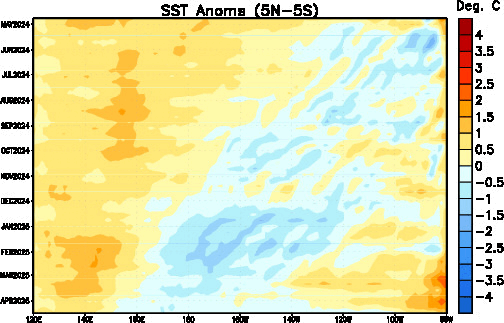
SST Surface Anomaly Hovmoeller
Here is another way of looking at it: Unlike the Upper Ocean Heat Anomaly Hovmoeller (I call it the Kelvin Wave Hovmoeller) which takes an average down to 300 meters, this just measures the surface temperature anomaly. It is the surface that interacts with the atmosphere and causes convection and also the warming and cooling of the atmosphere. A major advantage of the Hovmoeller method of displaying information is that it shows the history so I do not need to show a sequence of snap shots of the conditions at different points in time. Nevertheless this Hovmoeller provides a good way to visually see the evolution of this El Nino and later track its demise.
Recent Impacts of Weather Mostly El Nino but possibly Also PDO and AMO Impacts.
We have been showing snapshots of 30 Day temperature and precipitation departures over the life of this El Nino. The end date of the 30 day period is shown in the graphic. It is a way of seeing how the impacts of this El Nino have unfolded.
Lets take a look at the combined results for the first three months of 2016: January, February and March.

And here is the April (30 day) graphic.

And here is the graphic from last week which added a week and removed the seven earliest days so it is a 30 day analysis through May 14, 2016

And here is the latest 30 Day Temperature and Precipitation Departure (same as anomalies) graphic.

El Nino in the News
This article on Arctic Ice Melt is interesting but to me the graphic is even more interesting.

It shows the impact of the unusual strength and positioning of the Aleutian Low. looking at the 1972/1973 El Nino and the 1982/1982 El Nino and the 1997/1998 El Nino one sees some very interesting differences. I do not see much of a trend in the high temperature peaks with this winter being an outlier and probably due to the position and strength of the Aleutian Low. One may see a trend in the low temperatures but this may be related to the PDO.
India: first drought followed by strong Monsoon.
Heat makes precipitation.
Adaptation to El Nino in Indonesia Not a new paper but very interesting.
Global Warming in the News
Nothing specific to report this week.
View from Australia
El Nino

Below is the discussion just released. Notice the discussion re forecasting a La Nina for next winter.
El Niño ends as tropical Pacific Ocean returns to neutral
The tropical Pacific Ocean has returned to a neutral El Niño–Southern Oscillation (ENSO) state. Sea surface temperatures across the tropical Pacific have cooled to neutral levels over the past fortnight, supported by much cooler-than-average waters beneath the surface. In the atmosphere, indicators such as the trade winds, cloudiness near the Date Line, and the Southern Oscillation Index have also returned to neutral levels. Outlooks suggest little chance of returning to El Niño levels, in which case mid-May will mark the end of the 2015–16 El Niño.
International climate models indicate the tropical Pacific Ocean will continue to cool, with six of eight models suggesting La Niña is likely to form during the austral winter (June–August). However, individual model outlooks show a large spread between neutral and La Niña scenarios.
Changes in the tropical Pacific Ocean and atmosphere, combined with current climate model outlooks, suggest the likelihood of La Niña forming later in 2016 is around 50%, meaning the Bureau’s ENSO Outlook remains at La Niña WATCH.
Typically during La Niña, winter-spring rainfall is above average over northern, central and eastern Australia.
Climate model outlooks for the Indian Ocean Dipole (IOD) suggest a negative IOD event is likely to develop during the austral winter. However, outlook accuracy for the IOD at this time of year is low. A negative IOD typically brings increased winter-spring rainfall to southern Australia.
IOD (Indian Ocean Dipole)

The graphic comes with only a very short discussion and here is that discussion:
The Indian Ocean Dipole (IOD) is neutral. The weekly Dipole Mode Index value to 22 May is -0.33 °C.
Currently all but one of the international models monitored by the Bureau indicate negative IOD conditions are possible by June. However, model skill is generally lower at this time of year, and outlooks should be used with caution. Negative IOD events are more likely to occur during La Niña. Sea surface temperatures (SSTs) remain significantly warmer than average across the tropical Indian Ocean.
Information on the impact of a negative IOD on Australia can be found here.
Putting it all Together.
This El Nino has just this week ended in terms of current satisfying the criteria. It is possible that officially it may not be declared dead until the end of June because the Mar – Apr – May value of the ONI will clearly satisfy the 0.5 cutoff and it is possible that the Apr – May – Jun average ONI may still mean the criteria even though the daily not longer meets the criteria.
We are beginning to speculate on the winter of 2016/2017 which now according to most of the models seems likely to be a La Nina or Neutral with a La Nina bias.
The below is the CPC/IRI forecast issued on may 12, 2016. It is important to remember that the first report in each month is based on a survey of meteorologists and the second report later in the month is based on the analysis of the forecast models. It is a minor difference but a difference.

And one week later we have the second report recognizing that last week was based on a survey and this week is based on model means.

We have suggested that it is possible that some of the models and in particular NOAA’s model will be wrong about how fast the Eastern Pacific Warm Pool moves back towards its La Nina location and it may well be that next winter will be more of a Neutral year or even have some characteristics of an El Nino Modoki and thus be wetter than a typical year as the Warm Pool may still be more in the Central Pacific than shifted all the way west to its La Nina position.
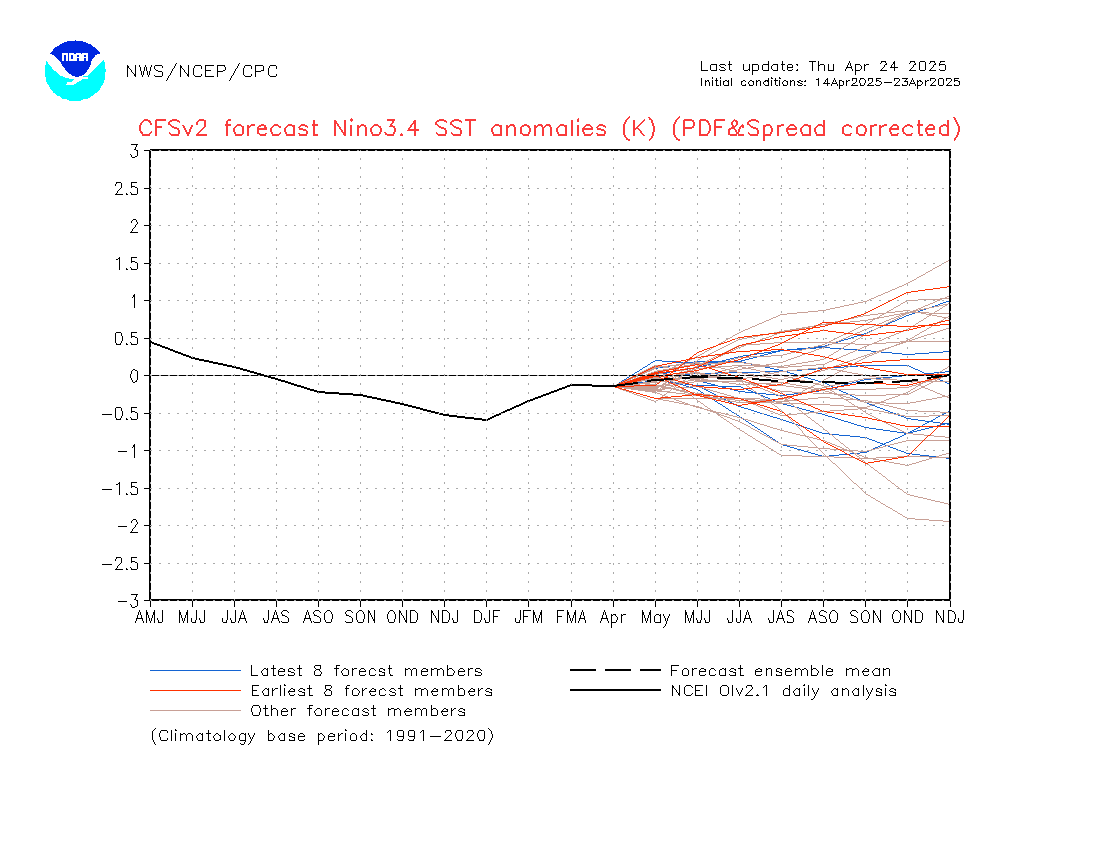
I now have the May 1 Run of the JAMSTEC Model.

It is forecasting a moderate La Nina for next winter and continuing as a La Nina or Neutral with a La Nina tendency for the subsequent winter. That could be the signal for the Pacific Climate Shift.
Here is a repeat of the Australian Model for comparison purposes.
It does not extrapolate as far into the future as the JAMSTEC model. It is somewhat similar to the NOAA model but seems to be less certain that we will have a La Nina rather then ENSO Neutral with a La Nina tendency.
Forecasting Beyond Five Years.
So in terms of long-term forecasting, none of this is very difficult to figure out actually if you are looking at say a five-year or longer forecast. The research on Ocean Cycles is fairly conclusive and widely available to those who seek it out. I have provided a lot of information on this in prior weeks and all of that information is preserved in Part II of my report in the Section on Low Frequency Cycles 3. Low Frequency Cycles such as PDO, AMO, IOBD, EATS. It includes decade by decade predictions through 2050. Predicting a particular year is far harder.
TABLE OF CONTENTS FOR PART II OF THIS REPORT The links below may take you directly to the set of information that you have selected but in some Internet Browsers it may first take you to the top of Page II where there is a TABLE OF CONTENTS and take a few extra seconds to get you to the specific section selected. If you do not feel like waiting, you can click a second time within the TABLE OF CONTENTS to get to the specific part of the webpage that interests you.
A. Worldwide Weather: Current and Three-Month Outlooks: 15 Month Outlooks (Usefully bookmarked as it provides automatically updated current weather conditions and forecasts at all times. It does not replace local forecasts but does provide U.S. national and regional forecasts and, with less detail, international forecasts)
B. Factors Impacting the Outlook
1. Very High Frequency (short-term) Cycles PNA, AO,NAO (but the AO and NAO may also have a low frequency component.)
2. Medium Frequency Cycles such as ENSO and IOD
3. Low Frequency Cycles such as PDO, AMO, IOBD, EATS.
C. Computer Models and Methodologies
D. Reserved for a Future Topic (Possibly Predictable Economic Impacts)
TABLE OF CONTENTS FOR PART III OF THIS REPORT – GLOBAL WARMING WHICH SOME CALL CLIMATE CHANGE. The links below may take you directly to the set of information that you have selected but in some Internet Browsers it may first take you to the top of Page III where there is a TABLE OF CONTENTS and take a few extra seconds to get you to the specific section selected. If you do not feel like waiting, you can click a second time within the TABLE OF CONTENTS to get to the specific part of the webpage that interests you.
D2. Climate Impacts of Global Warming
D3. Economic Impacts of Global Warming
D4. Reports from Around the World on Impacts of Global Warming


