


from the Congressional Budget Office
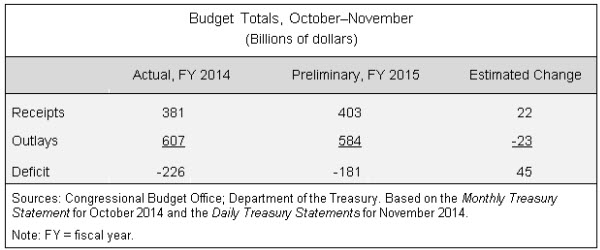
The federal government’s budget deficit was $181 billion for the first two months of fiscal year 2015, $45 billion less than the shortfall recorded in October and November of last year, CBO estimates. That outcome was affected by shifts in the timing of certain payments. Without those shifts, the deficit would have declined by just $9 billion.

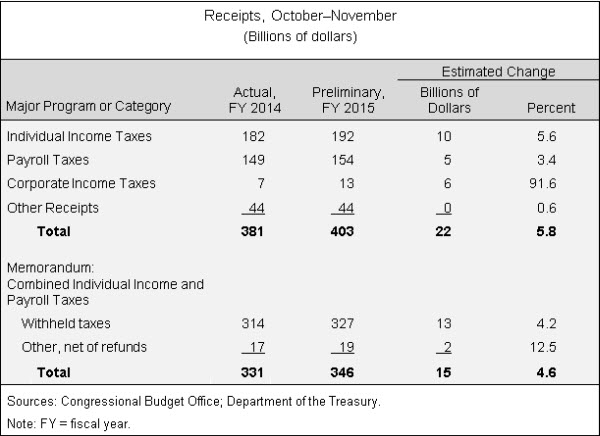
Total Receipts: Up by 6 Percent in the First Two Months of Fiscal Year 2015
Receipts through November totaled $403 billion, CBO estimates—$22 billion more than the amount collected in the same period last year. The largest increases were in the following categories:
- Individual income taxes and payroll (social insurance) taxes together rose by $15 billion (or 5 percent).
- The amounts withheld from workers’ paychecks rose by $13 billion (or 4 percent), which accounted for most of that gain. Growth in wages and salaries probably explains the increase in withheld receipts.
- Nonwithheld receipts—mainly from 2013 income tax returns for people who had received filing extensions—rose by $4 billion (or 18 percent). That increase was partially offset by an increase in income tax refunds, which were $1 billion higher, and by a decline in receipts from unemployment insurance taxes, which were $1 billion lower than in the year before.
- Receipts from corporate income taxes, which generally are small in the first two months of the fiscal year, rose from a total of $7 billion in October and November of last year to $13 billion in the current fiscal year. For most corporations, this fiscal year’s first quarterly estimated payment is due December 15.
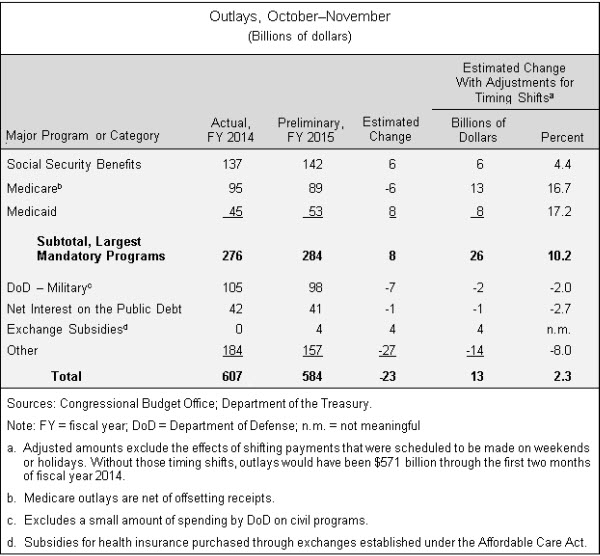
Outlays in October and November: Up by 2 Percent (Adjusted for Timing Shifts)
Compared With Spending During the Same Months in Fiscal Year 2014
Outlays for the first two months of fiscal year 2015 were $23 billion less than they were during the same period last year, CBO estimates. But spending in those months last year was boosted by shifts of certain payments from December to November (because December 1, 2013, fell on a weekend). If not for those shifts, outlays would have been $13 billion (or 2 percent) higher so far this year. (The discussion below reflects adjustments to account for the timing shifts.)
By CBO’s estimate, spending for the three largest mandatory programs increased by over 10 percent:
- Outlays for Medicare were $13 billion (or 17 percent) higher, primarily because of a large payment made to prescription drug plans in November 2014 to account for unanticipated spending increases in calendar year 2014.
- Outlays for Medicaid were $8 billion (or 17 percent) higher, largely because some of the provisions of the Affordable Care Act did not take effect until January 2014.
- Spending for Social Security benefits increased by $6 billion (or 4 percent).
Those increases for the first two months of fiscal year 2015 were partially offset by decreases in spending for some other major programs. Those decreases included the following:
- Outlays recorded for the Department of Justice (included in “Other” in the table) declined by $9 billion because that department recently received proceeds of that amount from a legal settlement with the Bank of America and recorded them as an offset to outlays. However, the Department of the Treasury recently reclassified as revenues (instead of as negative outlays) proceeds from similar settlements received during fiscal year 2014. CBO expects a similar reclassification for settlements in fiscal year 2015, although the timing of that reclassification is uncertain.
- Spending for defense fell by $2 billion (or 2 percent).
Estimated Deficit in November 2014: $59 Billion
CBO estimates that the government recorded a deficit of $59 billion in November 2014—$76 billion less than the deficit in November 2013. But shifts in the timing of certain payments (because the regular payment dates fell on weekends) boosted spending in November 2013 and reduced it in November 2014. Without those shifts, the November 2014 deficit would have been $3 billion more than the November 2013 deficit.
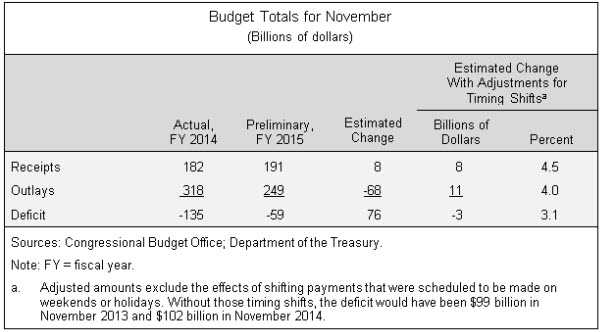
CBO estimates that receipts in November totaled $191 billion—$8 billion (or 4 percent) more than those in the same month last year. Individual income taxes and payroll taxes together increased by $5 billion (or 2 percent); a $4 billion increase in withheld taxes explains nearly all of that change.
Spending in November 2014 was $249 million, CBO estimates—$68 billion less than outlays in the same month in 2013. If not for the effects of timing shifts, spending would have been $11 billion (or 4 percent) higher than in November 2013. (The month-over-month changes discussed below reflect adjustments to account for those shifts.) Among the larger changes in outlays compared with last year were the following:
- Outlays for Medicare Part D (prescription drugs) increased by $6 billion (or 115 percent), reflecting the large payment to prescription drug plans discussed above.
- Spending for Medicaid rose by $4 billion (or 21 percent).
- Social Security payments rose by $3 billion (or 4 percent).
Outlays for other programs and activities differed by smaller amounts in both directions.
Deficit in October 2014: $122 Billion
The Treasury Department reported a deficit of $122 billion for October—the same amount that CBO estimated in theMonthly Budget Review for October 2014 on the basis of the Daily Treasury Statements.
Note: The amounts shown in this report include the surplus or deficit in the Social Security trust funds and the net cash flow of the Postal Service, which are off-budget. Numbers may not add up to totals because of rounding.
This document was prepared by David Rafferty, Joshua Shakin, and Adam Wilson.


