


Written by Sig Silber
U.S. and World Agriculture: Plus an Expanded Weather Forecast Section.
Updated at 4 PM EST February 8, 2019 to reflect the new Week 3 – 4 Forecast which has much uncertainty re the Core Drought Area.
The large reduction in the number of people impacted by the drought while the area that has abnormally dry conditions or drought increases slightly at first glance seems a bit weird. But conditions have improved in California – and there are a lot of people in California. Thus more area can be covered by abnormally dry conditions or drought but fewer people may be impacted. This seems to be the explanation. It is certainly good news for California but the core drought area remains in drought. However the stagnant weather patterns mean more precipitation in approximately the same places so further improvement is quite possible over the next two weeks and possibly longer. Atlanta and other cities in that area smashed their temperature records on Thursday. This is all part of the stagnant weather pattern.

Please share this article – Go to very top of page, right hand side, for social media buttons.

Excerpted from the full discussion presented later:
High Plains
Only a few patches of dryness were observed in the northern half of the Great Plains, but dryness and drought remained far more intense and widespread in Wyoming and especially Colorado. In the Great Plains, recent precipitation was sufficient to remove the area’s only remaining area of drought in northeastern North Dakota, and restrict D0 conditions to the northern tier of the state. In contrast, D0 expanded through northeastern Colorado and the Nebraska Panhandle, where little precipitation has been observed for the last couple of months. But it is a cold and dry time of year in the region, and few impacts have been observed despite only 10 to 30 percent of normal precipitation has fallen on parts of the new D0 area since late last year. Farther west, dryness and drought is generally more intense and far more widespread. Little precipitation fell on either state last week, generally keeping conditions in Wyoming ( mostly D0 to D1) and Colorado (D3 to D4 in southwestern quarter of the state). Once east of the Colorado Rockies, however, no severe drought exists anywhere from the Plains eastward to the Atlantic Coast.
West
In this region extending from New Mexico and Montana eastward to the Pacific Coast, precipitation was unremarkable this past week outside California, and only isolated tweaks were made to the Drought Monitor depiction to cover some spots of deficient snowpack. In contrast, heavy precipitation continued to chip away at the dryness and drought across California. A large swath from western Nevada through the Sierra Nevada, much of the central valleys, and the Bay Area is now free of any significant dryness, and continued heavy precipitation removed most of the moderate drought that had covered southern and southwestern sections of California from around San Luis Obispo and Santa Maria through the southern tier of the state. D1 was kept in a small southwestern part of the state from east of Los Angeles to the Mexican border. Though this area has received surplus precipitation for the water year to date (since Oct. 1, 2018), several reservoirs have failed to significantly respond , remaining at or near their lowest levels in at least a year, to as long as three years in one case.

I guess it is the improvement in California where there are a lot of people.
The amount of precipitation is not the only factor that is important as indicated by the following.

1. Introduction.
We are reorganizing the presentation and plan to expand it.
Current Week (this information is repeated prior to the forecast section of the report)
For reference purposes here is the precipitation information for the prior seven days. It is not the same as what is shown in the USDA Crop Report when it is published (not during the Partial Government Shutdown) which covers the Sunday to Saturday period which corresponds to the crop reports. The below is the current seven-day period and updates in this article automatically every day.


And here is the snow situation.

Now the Temperature and Precipitation Forecasts.
There is a more complete discussion later in our report..
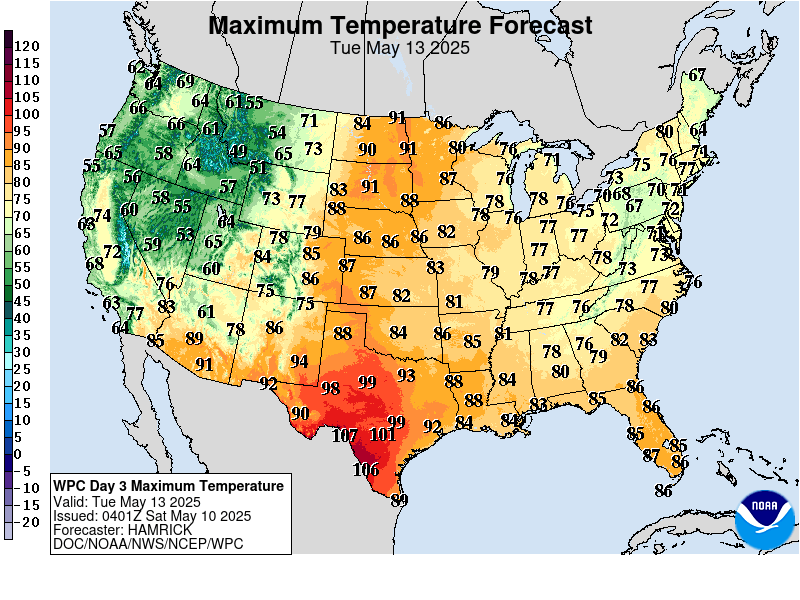 | 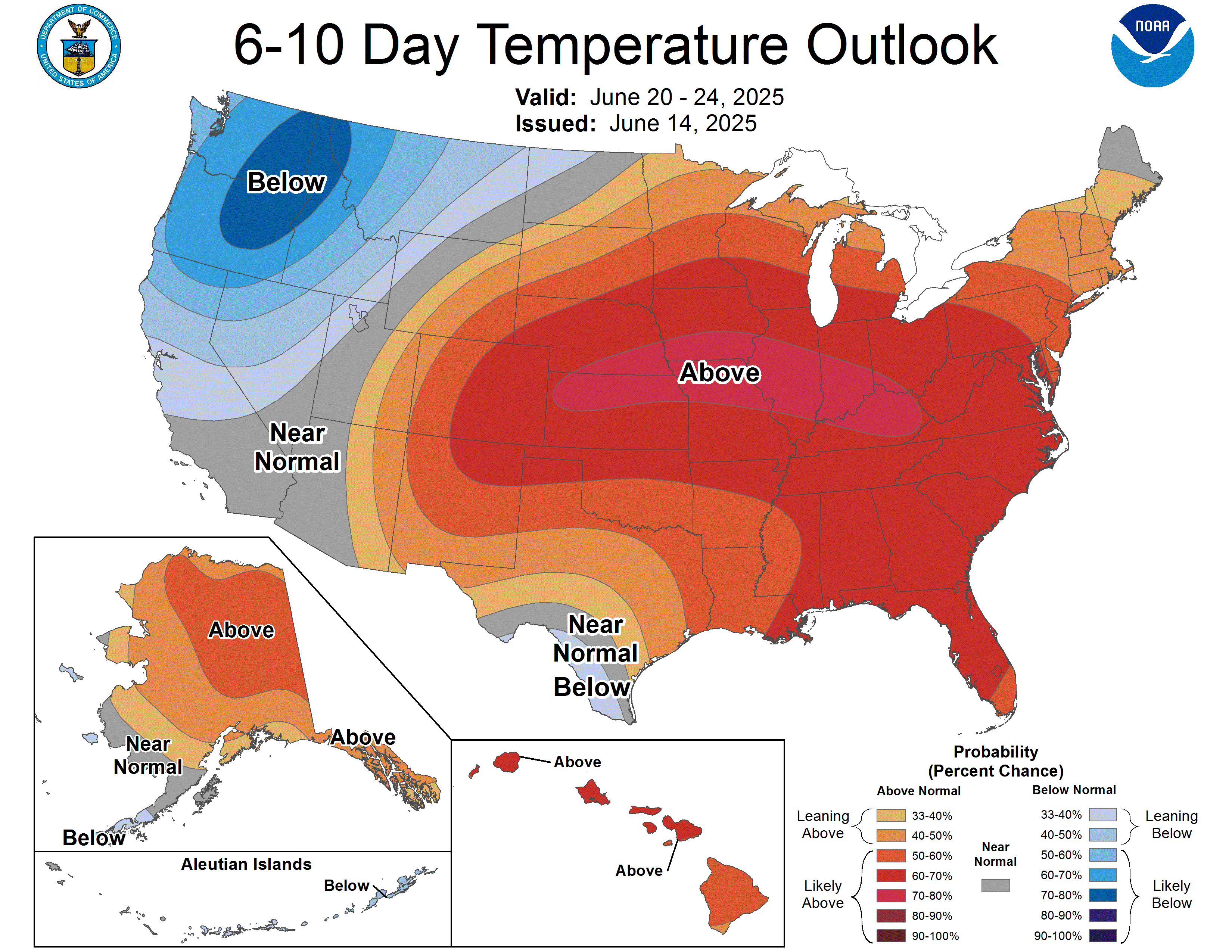 | 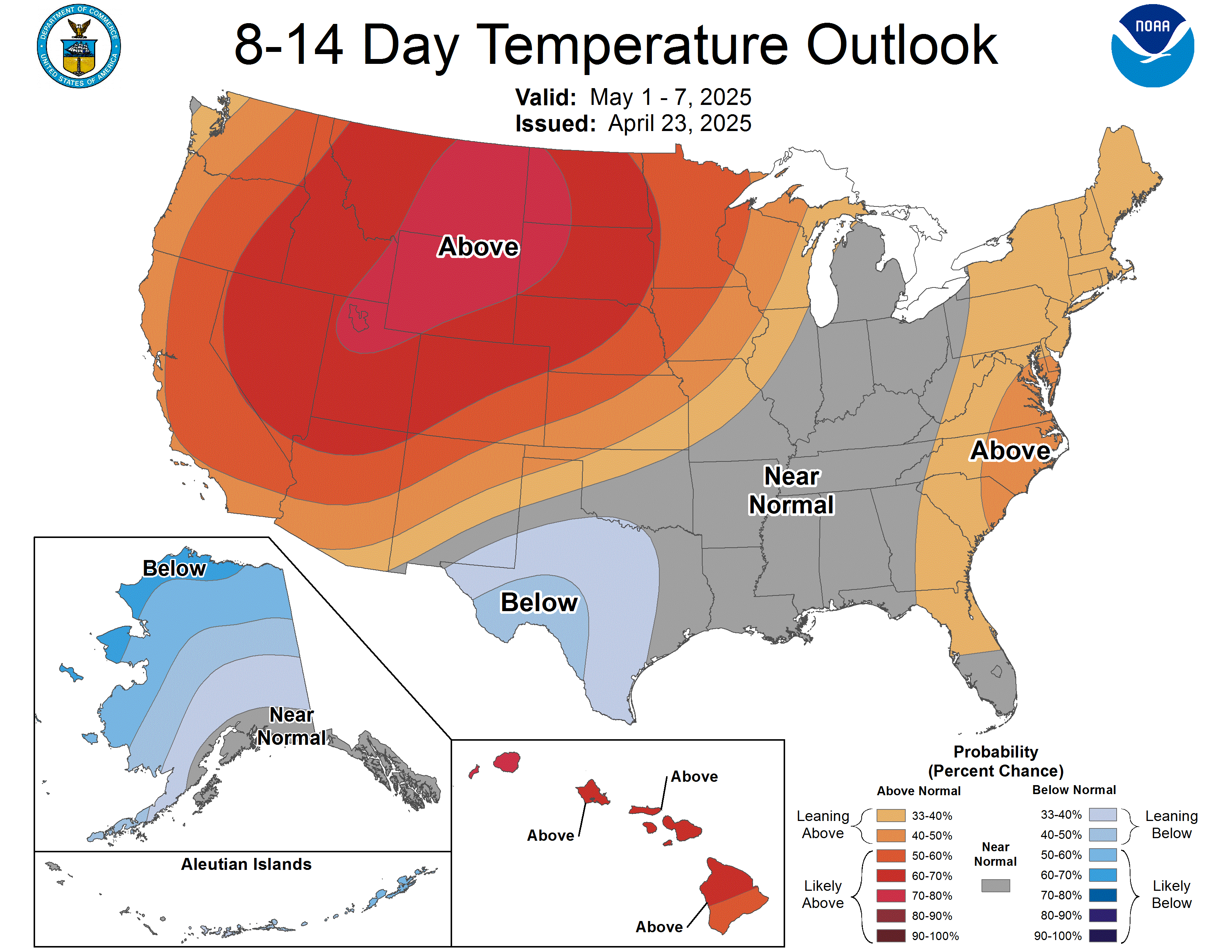 |  |
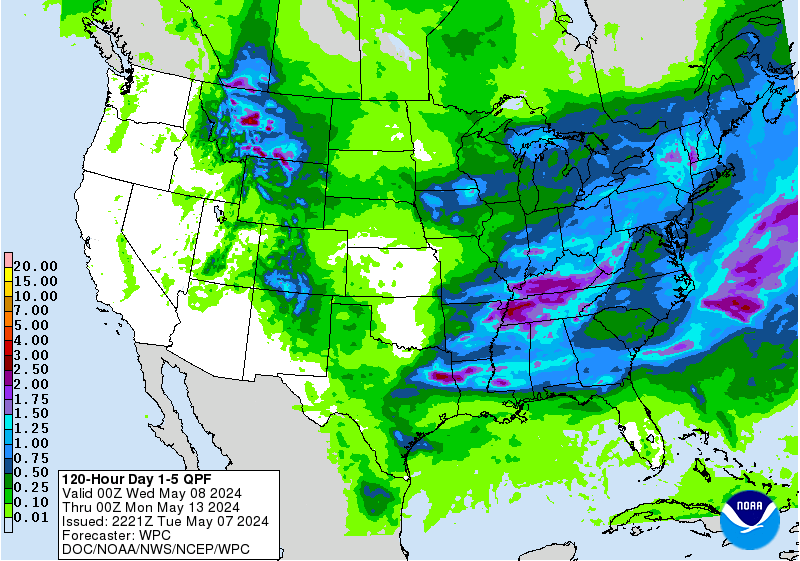
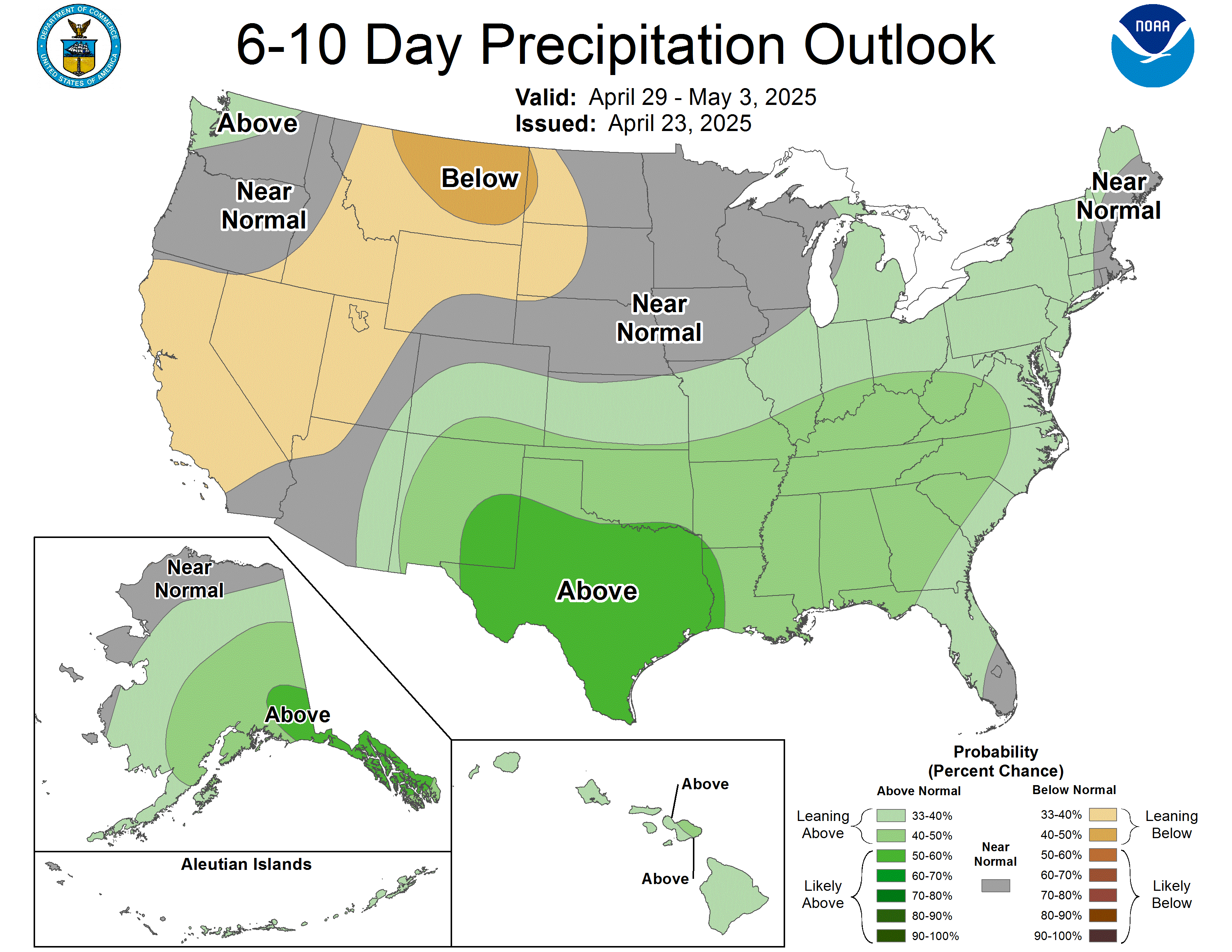
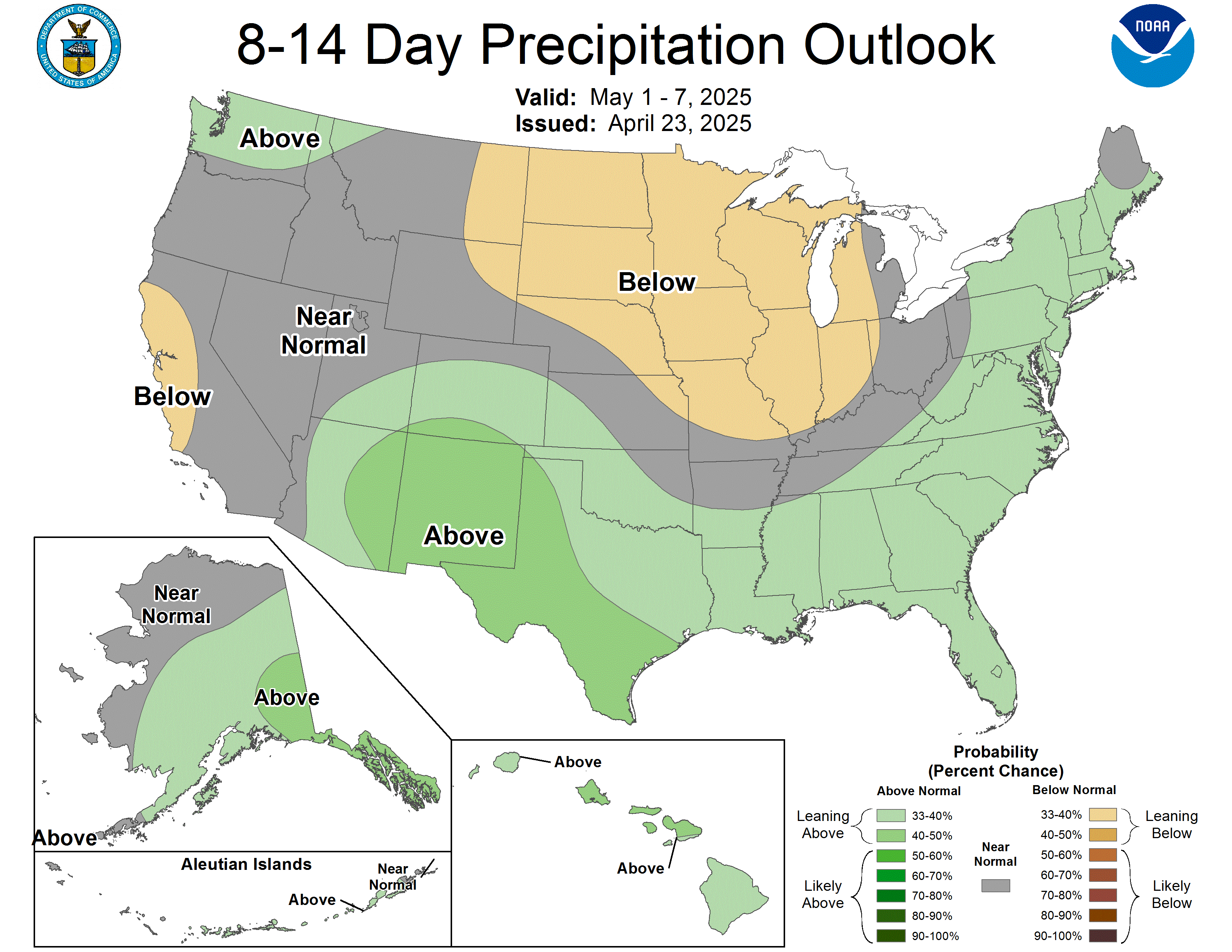
| Days 1 – 5. Temperature above, precipitation below | Temperature Above, Precipitation Below. Two Overlapping Periods. Days 6 – 10 are considered Week – 1 and Days 8 – 14 are considered Week -2. The overlap reflects the difficulty of pinning down the timing a week in advance. |
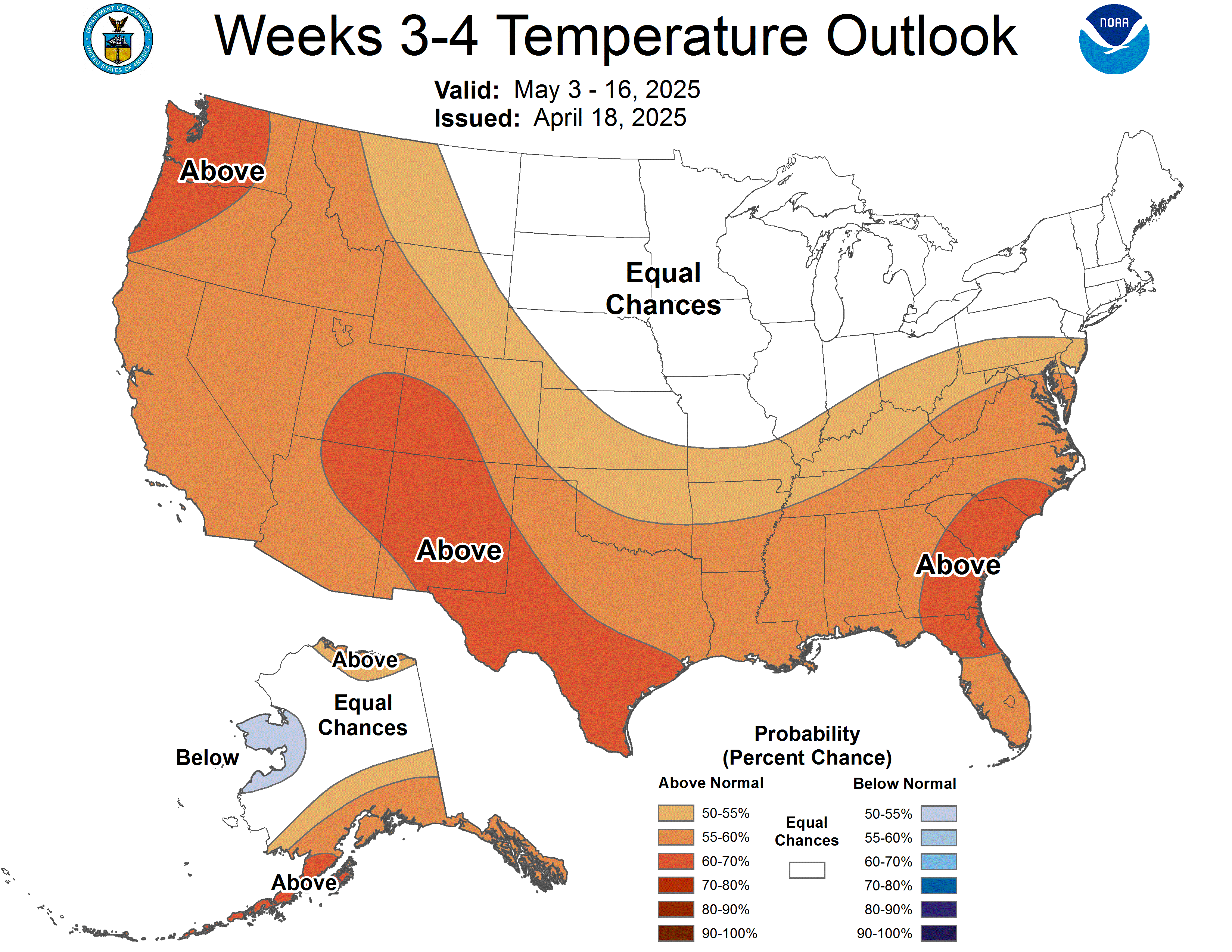
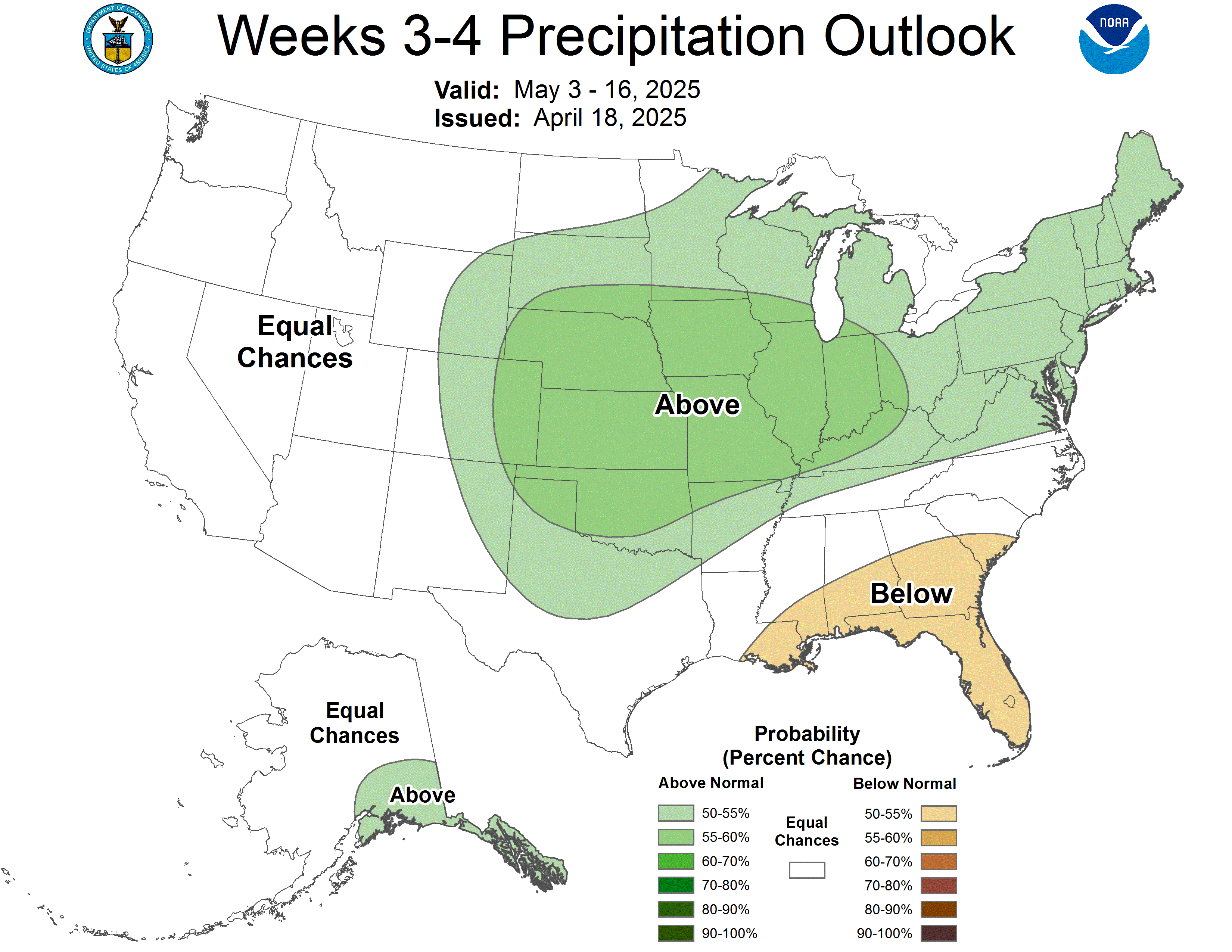
The Week 3 – 4 forecast Wast updated on Friday February 8, 2019. Our comments on the impact of the change are found later in this article. | |
 |  |  |  |
From the Atlanta NWS on Thursday February 7, 2019
Short term /tonight through Friday night/…
another one bites the dust! Today is the first day of record setting
high temperatures of the year as Atlanta smashes it’s previous
record with a high close to 80 so far today. Athens has also broken
it’s high temperature record by several degrees, Macon is expected
to as well, & Columbus will be close. Temperatures around the are
now over 20 degrees above normal.
Now we take a look at the current drought situation.
he U.S. Drought Monitor (full report can be accessed here)
| The content of this article varies throughout the month as some of our sources have a schedule for what they publish mostly related to when certain sets of information become available. All the U.S. Agencies impacted by the Partial Government Shutdown have resumed operations but are still in catch up mode so we have some of the graphics that we have been missing and expect to have more by next week. |
- Selected parts of our Weekly Weather and Climate Report (Monday’s full report can be accessed here) which has forecasts for the next 25 days and which auto-updates
- Selections from the Tuesday USDA Weather and Crop Bulletin (full report can be accessed here). Selections from the USDA Office of the Chief Economist can be found here. Other useful sources of information that I regularly utilize are the National Integrated Drought Information System (NIDIS) which can be accessed here and the USDA NRCS Weekly and Weather Climate Update which can be accessed here.
Remember if you leave this page to go to links or if you have clicked to enlarge a graphic, in order to get back you need to hit the return arrow usually located on the left of your URL box on the upper left of the screen. Also most of the small graphics are designed to become full size when you click on them. If that does not work, an alternative way to view the larger graphics is to right click and then hit “view image”. That should always work.
This report is now organized as follows:
- Introduction
- Present Drought Conditions
- Last Week’s Weather
- Information from our Weekly Weather Column (the forecast maps auto-update) and combined with brief commentary from me provides a forecast which I attempt to interpret re the likely change in drought conditions
- U.S. Crop Information
- International Crop Information and related weather
- Prior month’s weather and month-to-date weather excluding the prior week when I have that information. Drought is based on cumulative deficits.
- A science theme if we have one.
- Economic Impacts (it will time to get that part of the report going.
- Reference Information. (This includes a lot of information on reservoirs and river flows)
2. Present Drought Conditions
The U.S. Drought Monitor is a comprehensive way of understanding the drought situation for the U.S. It is issued every Thursday and reflects the conditions as of the prior Tuesday. Drought is defined as a moisture deficit bad enough to have social, environmental or economic effects. Thus, more factors than recent precipitation are considered and more information on how it is done is found at the end of this report.

Below is the same map but just CONUS and with statistics and below that map I have provided a cut-out of the statistics which I think you can click on to enlarge.
 |
 |
| Last Week | This Week |
|  |
The graphic below shows the one-week change in drought intensity. Yellow is bad. Green is good.
We are showing the change maps for the states that improved the most and deteriorated the most. (You can click on any of these maps and get a larger version)
 |  |  |
 |  |  |
 |
This pair of maps might make it easier to get a general idea of what is happening in the worst part of the drought area.
| Last Week | This Week |
 |  |
Here is one approach to thinking about this area.

This looks at evaporation

This map which covers the West may be useful also.

In the list of references there are links to a number of sources for that information including importantly the National Integrated Drought Information System (NIDIS) which can be accessed here. It makes it easier to find the regional and state reports. I am on the mailing list for some of them and found the regional report for the West via a search engine.

Here is part of the explanation for the overall situation in the West. Looking at the information from the network of SNOTEL sites. These are mainly in remote locations often at high elevations. they report by telecommunications hence their name.


Then we look at how much snow there is to melt when it is warmer.

Now we show the week to week change information by region. The yellow is where the drought has been upgraded. The green is where the level of drought has been downgraded.
 |
Better in North Dakota. Deterioration in NE Colorado and SW Nebraska |
 |
| No Change |
 |
| No Change |
 |
| Some Deterioration in Texas Panhandle, Some Improvement in South Texas |
 |
| Additional improvement in South Florida |
 |
Big Improvement in California. Deterioration in Eastern Colorado. |
Some may find this way of looking at things useful and I hope these graphics are not too small to read. I did not make them so you could click on them individually but you can click on the whole graphic and it may enlarge. But I think you get the picture. It has been a rapid onset and hopefully it’s demise will also be fairly rapid. When you read these graphics remember that the older graphics are not the drought conditions that existed then but the change from then until now.
Some might find this animation of twelve weeks of change useful;

Here is the discussion which was issued with the Drought Monitor today.
This Week’s Drought Summary
Significant precipitation evaded most areas of dryness and drought this week, with one major exception. Heavy precipitation pelted much of California, particularly along the coast and in the higher elevations. Most of the higher Sierra Nevada received 4 to 8 inches, with locally higher amounts. Coastal areas from Los Angeles northward through the Bay Area received 3 to 6 inches of precipitation, as did much of the Cascades and interior northwestern California. Only parts of the interior valleys, the Mojave Desert, and northeastern sections of the state received less than an inch. In sharp contrast, the only dry areas recording over an inch of precipitation in the rest of the 48 contiguous states were in parts of the northern Intermountain West, Isolated higher elevations in the central Rockies, a few patches in western parts of Washington and Oregon, and a small sliver along the southeastern Florida coast.
Northeast
The region remains devoid of significant dryness, so none is depicted in the Drought Monitor.
Southeast
Dryness and drought only exist in southeastern Florida, and even there conditions have improved. Only a small strip along the coast received significant precipitation, but in the wake of last week’s rain, additional improvements were introduced. Dryness was removed from central and southwestern parts of the Florida Peninsula, as was the southern fringe of the moderate drought along the southeastern coastline. Subnormal groundwater and streamflows continued in the remaining areas depicted on the Drought Monitor.
South
Little or no precipitation fell on the few areas of dryness depicted in the Drought Monitor, specifically in the Texas Panhandle and adjacent Oklahoma, parts of west Texas and the Big Bend, and parts of southern Texas. As a result, the dry areas expanded somewhat, and the extent of moderate drought increased very slightly. Further increases should be slow as this is climatologically the driest time of year in southern Texas and especially the High Plains. The dry weather allowed for enhanced fire activity was observed in the Texas Panhandle and western Oklahoma.
Midwest
This region extends from the west-central Appalachians westward through the Great Lakes, the northern Ohio Valley, and the middle and upper reaches of the Mississippi Valley, but significant dryness is limited to a small area in northwestern Minnesota, where the frigid air and frozen ground don’t allow for much change during winter.
High Plains
Only a few patches of dryness were observed in the northern half of the Great Plains, but dryness and drought remained far more intense and widespread in Wyoming and especially Colorado. In the Great Plains, recent precipitation was sufficient to remove the area’s only remaining area of drought in northeastern North Dakota, and restrict D0 conditions to the northern tier of the state. In contrast, D0 expanded through northeastern Colorado and the Nebraska Panhandle, where little precipitation has been observed for the last couple of months. But it is a cold and dry time of year in the region, and few impacts have been observed despite only 10 to 30 percent of normal precipitation has fallen on parts of the new D0 area since late last year. Farther west, dryness and drought is generally more intense and far more widespread. Little precipitation fell on either state last week, generally keeping conditions in Wyoming ( mostly D0 to D1) and Colorado (D3 to D4 in southwestern quarter of the state). Once east of the Colorado Rockies, however, no severe drought exists anywhere from the Plains eastward to the Atlantic Coast.
West
In this region extending from New Mexico and Montana eastward to the Pacific Coast, precipitation was unremarkable this past week outside California, and only isolated tweaks were made to the Drought Monitor depiction to cover some spots of deficient snowpack. In contrast, heavy precipitation continued to chip away at the dryness and drought across California. A large swath from western Nevada through the Sierra Nevada, much of the central valleys, and the Bay Area is now free of any significant dryness, and continued heavy precipitation removed most of the moderate drought that had covered southern and southwestern sections of California from around San Luis Obispo and Santa Maria through the southern tier of the state. D1 was kept in a small southwestern part of the state from east of Los Angeles to the Mexican border. Though this area has received surplus precipitation for the water year to date (since Oct. 1, 2018), several reservoirs have failed to significantly respond , remaining at or near their lowest levels in at least a year, to as long as three years in one case.
Alaska, Hawaii, and Puerto Rico
In Puerto Rico, the large area of abnormal dryness and relatively small area of moderate drought remained unchanged, as did the drought covering parts of the southeastern Alaska Panhandle. In Hawaii, a wet week allowed windward sections of the central Hawaiian Islands to emerge from abnormal dryness, but the leeward sides of Oahu and Maui remained under D0 to isolated D2 conditions. On the Big Island, severe dryness expanded in north-central sections where reports of poor pastures are increasing, leading to water hauling, supplemental feeding, and some reduced herd sizes. On the east side of the Big Island, D1 was expanded broadly eastward, as subnormal precipitation has begun to impact aquaculture.
Looking Ahead
During the next 5 days (February 7-11, 2019) a large storm system is expected to bring heavy rain, freezing rain, and snow to a broad area across the eastern Great Plains, the Ohio and Mississippi Valleys, the Great Lakes region, and the Northeast. Precipitation totals exceeding an inch will be common throughout these regions, with totals as high as 4 to 6 inches forecast in parts of Tennessee. But with respect to areas of dryness and drought, its impact will be limited at best. Only the D0 areas in the east half of the Dakotas will be affected by the fringes of the system, with a few tenths of an inch of precipitation resulting in several inches of snow.
Outside the higher elevations, only a few tenths of an inch of precipitation at best is expected over the entrenched and extensive areas of D0+ from the Intermountain West and Great Basin to the High Plains. Amounts topping an inch should be restricted to the highest elevations from central Idaho into northeastern Oregon. Similarly, a few tenths of an inch are expected in southeast Florida, the dry patches in Texas, and southern California from greater Los Angeles and the Mojave Desert southward to the Mexican Border. But another round of moderate to heavy precipitation is expected across central and northern California, this time extending northward through parts of Washington and Oregon from the Cascades to the Pacific Coast. Most of these areas should pick up at least an inch of precipitation, with a little less possible in the central California Valleys, but significantly more (2 to locally 4 inches) likely throughout the Sierra Nevada. Temperature anomalies should be divided by the Ohio Valley, lower Mississippi Valley, and southern Texas, with warm weather expected to the south and east, and below-normal temperatures farther north and west. Daily highs will average 6 to 10 degrees F above normal in the interior Southeast while temperatures 15 to 35 degrees F below normal cover northern reaches of the Plains and Rockies, with the most severe conditions covering Montana
The CPC 6-10 day extended range outlook (February 12-16, 2019) calls for an almost identical temperature pattern featuring enhanced chances for warmth in the Southeast, and extremely high probabilities for below-normal temperatures from the northern Plains through the Pacific Northwest. southeastern Alaska also has elevated chances for colder than normal weather.
The odds favor dryness in southeast Alaska during this period, but enhanced chances for surplus precipitation covers most of the contiguous 48 states. Chances for a wet 5 day period are particularly high from the California coast between Los Angeles and San Francisco eastward into southwestern Nevada. The only areas without elevated chances for heavy precipitation are western Washington, the Florida Peninsula, and from central and southern Texas westward through the southern High Plains.

Soil Conditions as of January 31, 2019

Wildfires are still possible. But the risk is not high right now.


And we do not want to ignore floods. The updated map can be obtained here.

3. Last Week’s Weather
The maps in this section are synchronized with the crop report. We now have the weather information but not yet the crop reports.


This is more current but less informative. We showed this earlier.
This
Current Week
For reference purposes here is the precipitation information for the prior seven days. It is not the same as what is shown in the USDA Crop Report when it is published since the crop week covers the Sunday to Saturday period which corresponds to the crop reports. The below is the current seven-day period and updates in this article automatically every day.
4. Current Forecast for Precipitation and Drought.
First we show the current month and then the Seasonal Forecast through April which was issued on January 17, 2019 with the full Seasonal Outlook. These two forecasts are sued by the same agency but to obtain them you need to access two different links here and here. We either show the latest or both in this report. Sometimes we show them in more than one place in this report for the convenience of the reader.

And here is the longer seasonal drought forecast which was issued on January 17, 2019. It will update on February 21, 2019. It will be discussed in more detail in our Two-Part Report on the new NOAA Seasonal Outlook.
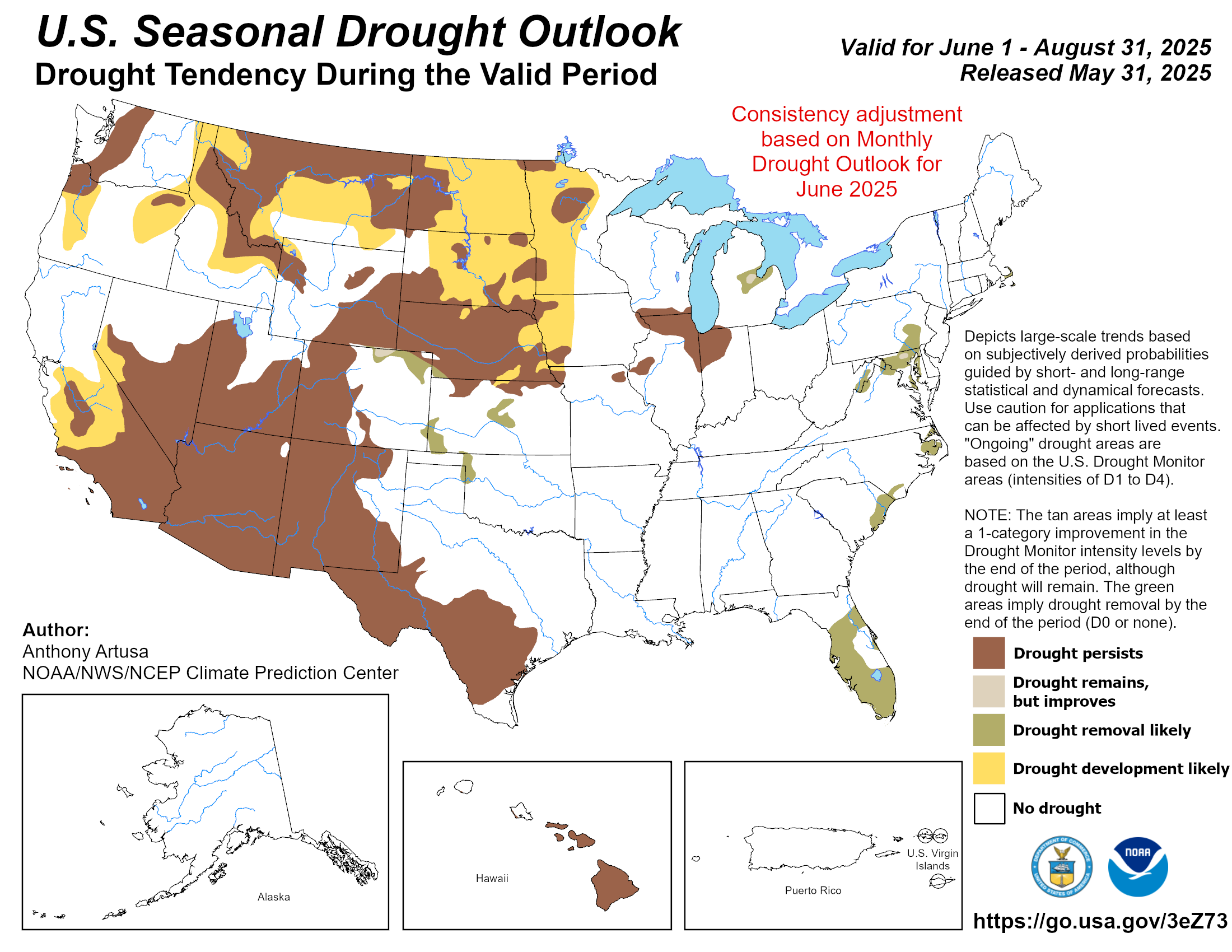
And now the current precipitation forecasts so that we can make our own assessment of the drought forecast. Here I provide the weather forecasts for different periods of time in which should allow the reader to assess the likelihood of this forecast working out as shown over the next three to four weeks. Since we publish this week on Thursday, we update the discussion for the Week 3 – 4 forecast when it is updated on Friday. This is important as the current Day 6 – 14 forecasts and the week-old week 3 – 4 forecast overlap to some extent.
First weather hazards

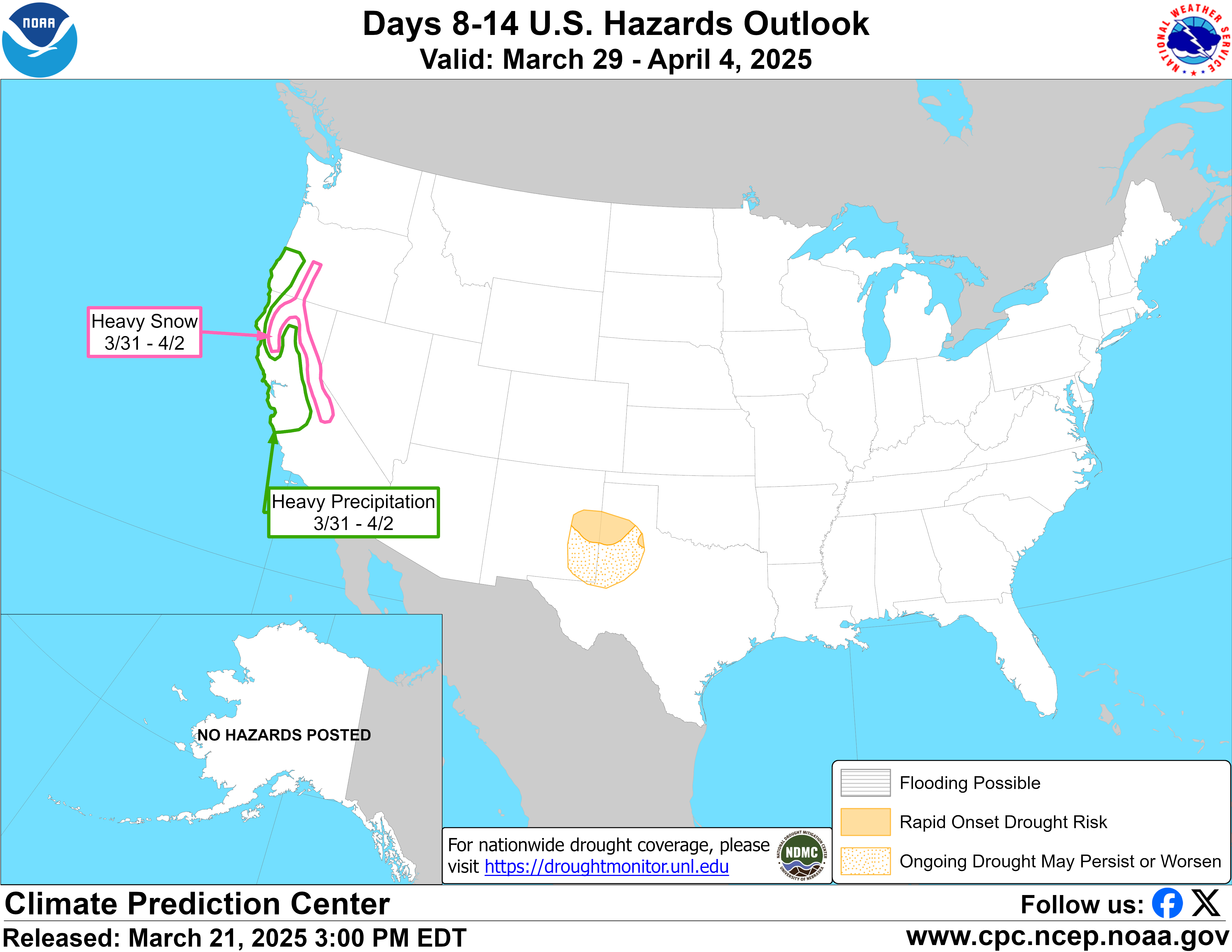
Additional information can be obtained here. We also now publish a Live Severe Weather article which can be accessed here. The link to our Severe Weather Events article changes every Sunday night and the current version can always be found in the directory which can be accessed here.
Now the Temperature Forecast .
| | | |
| This shows magnitude rather than probability of being higher or lower than Normal and shows the middle day of the five day period. | Looks like the Northwest Quadrant will tend be cool* in Week – 1 (Days 6 – 10). The stagnant pattern persists into Week – 2. * warmer or cooler than climatology |
The Week 3 – 4 forecast was updated on Friday February 8, 2019. You can see that the cold anomaly is expected to move to the east. | |
And then the Precipitation Forecast
| | | |
| The five day QPF is shown above. The units are different than the other maps i.e. in units of precipitation (inches) not probabilities of exceeding or being less than climatology. | Except for Florida, it is generally wet. The probabilities for precipitation are especially high in California/Nevada/Utah and in the Ohio River Vallen and also New England. |
The Week 3 – 4 forecast was updated on Friday February 8, 2019. The dry Northwest is not helpful. The forecast for the Core Drought Area is not of high confidence. Thus we have included below the discussion released with the new forecast. | |
Week 3-4 Forecast Discussion Valid Sat Feb 23 2019-Fri Mar 08 2019
ENSO-neutral conditions persist, with equatorial Pacific SST anomalies remaining positive and decreasing slightly in magnitude over the past several weeks. The MJO continues to be active, although the enhanced convective phase has stalled over the Pacific due to interference from a robust equatorial Rossby wave. Dynamical model MJO index forecasts generally favor continued MJO activity over the next several weeks. The increased duration of enhanced Pacific convection may strengthen the potential for a lagged midlatitude response that favors a transition towards a negative NAO pattern. This signal is apparent in the MJO component of the multiple linear regression (MLR) statistical forecast for Weeks 3-4, although the ENSO footprint and long term trends wash out the pattern in the full forecast. This week’s outlook is based primarily on a blend of dynamical and statistical model guidance, with input from the Subseasonal Experiment (SubX), an experimental multi-model ensemble (MME) of both operational and experimental dynamical models, and the constructed analog and MLR statistical tools also considered.
Dynamical model guidance for the Weeks 3-4 period indicate a substantial pattern shift from the relatively high confidence forecast for Week-2. The CFS, ECMWF, and JMA all depict an amplified trough near or south of the Aleutians, with a downstream ridge centered near western North America (ECMWF and JMA) or the central US (CFS). The models differ on the placement of a trough further downstream, with the ECMWF centering the trough over the eastern half of the CONUS, the CFS bringing it over the western Atlantic, and the JMA depicting a less amplified trough over the Southeast. Due to these differences, the CFS solution is warmer across the CONUS than the ECMWF and JMA. The statistical tools and SubX MME forecast generally resemble the ECMWF and JMA solutions more than the CFS; therefore, the potential for troughing over the eastern half of the CONUS was favored in this outlook, with more uncertainty over the West.
Based on support from most of the guidance, the Weeks 3-4 temperature outlook favors enhanced chances for below-normal temperatures east of the Rockies, with the highest probabilities extending from the northern Plains to the Southeast, supported by the ECMWF and JMA. Although the ECMWF extends the cold signal from coast to coast, equal chances for above- or below-normal temperatures were maintained along and west of the Rockies due to greater uncertainty among the various tools. Southerly flow ahead of the amplified trough near the Aleutians favors above-normal temperatures across Alaska.
Due to the potential for cold high pressure invading the central US, below-normal precipitation is favored across much of the Great Plains, the Great Lakes, and the Northeast. A southerly suppressed storm track favors greater potential for above-normal precipitation across southern Texas and the Southeast. Dynamical models are split across the Southwest, with the CFS favoring above-normal precipitation and the ECMWF depicting a drier pattern. Due to the uncertainty, equal chances for above- or below-normal precipitation were maintained for the Southwest; however, dynamical model forecasts do consistently show a dry signal for the Northwest. For Alaska, above-normal precipitation is favored across southern coastal areas due to the onshore flow, with enhanced chances for below-normal precipitation indicated across interior areas.
Sea surface temperatures near Hawaii remain near normal, and model temperature guidance is mixed. There is better model agreement on the precipitation outlook, with enhanced subtropical ridging favoring below-normal precipitation.
Here are two other useful graphics from my weekly report which update automatically.
First the Day 3 Mid-Atmosphere pattern.
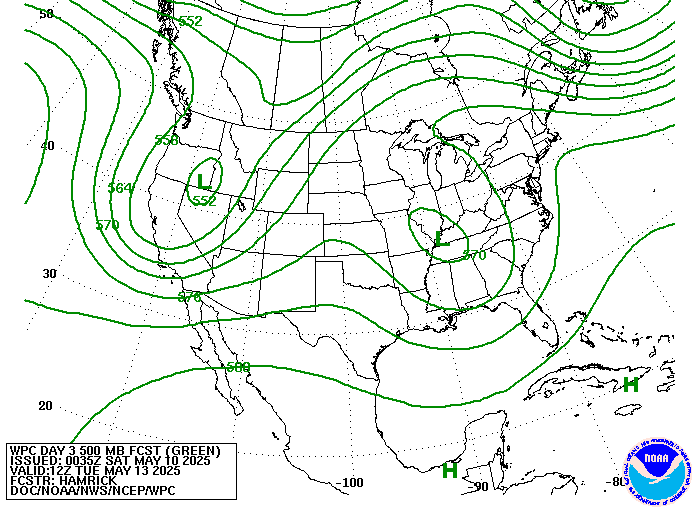
And then the Day 7 forecast.
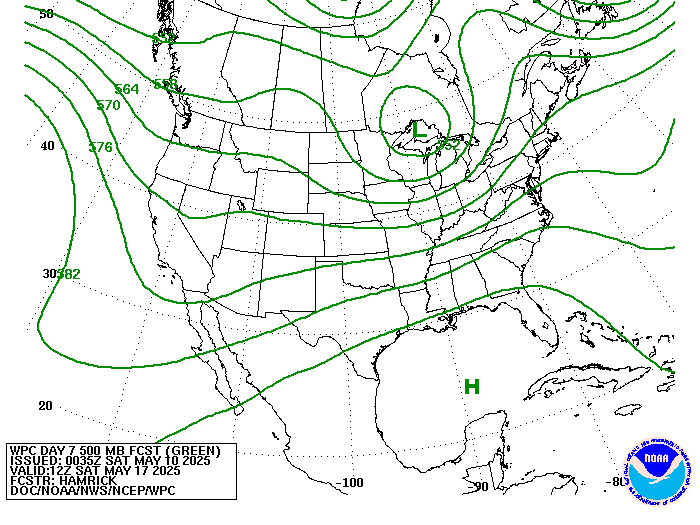
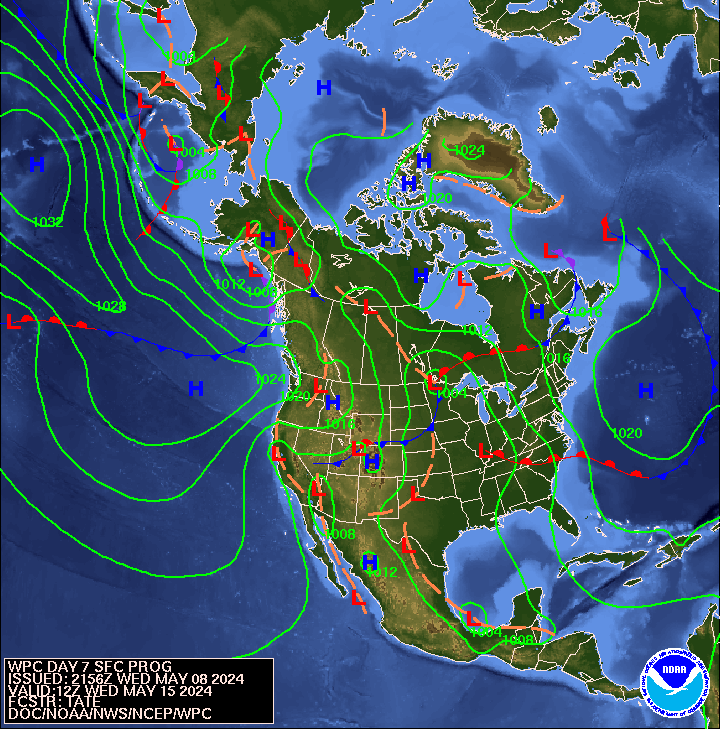
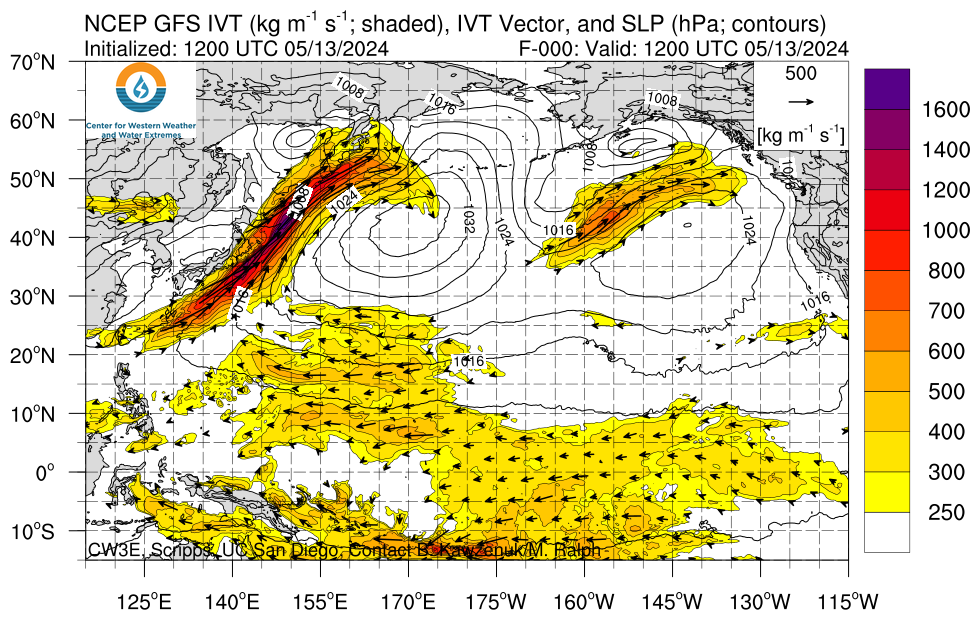
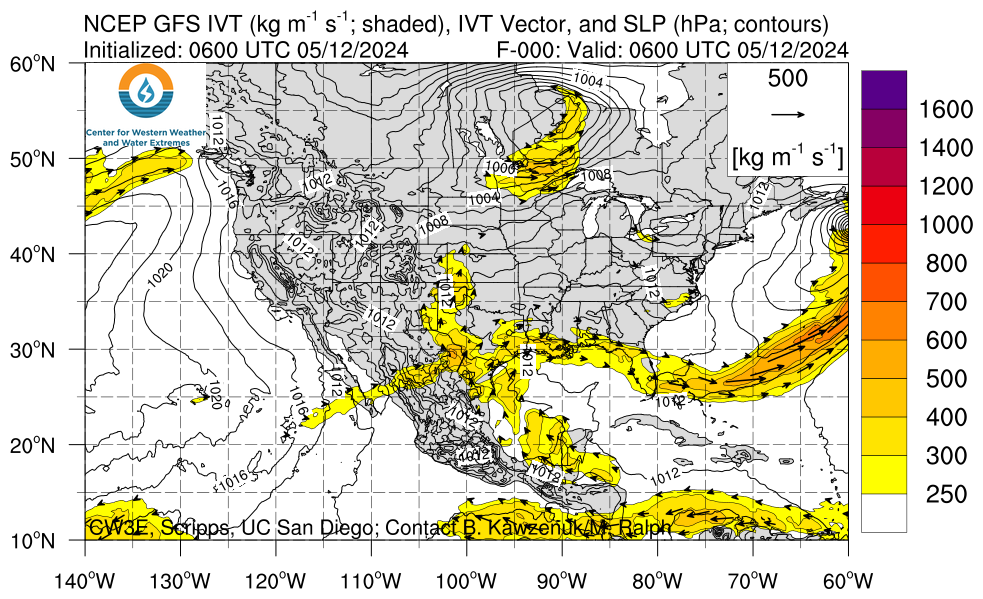
The below is of interest.
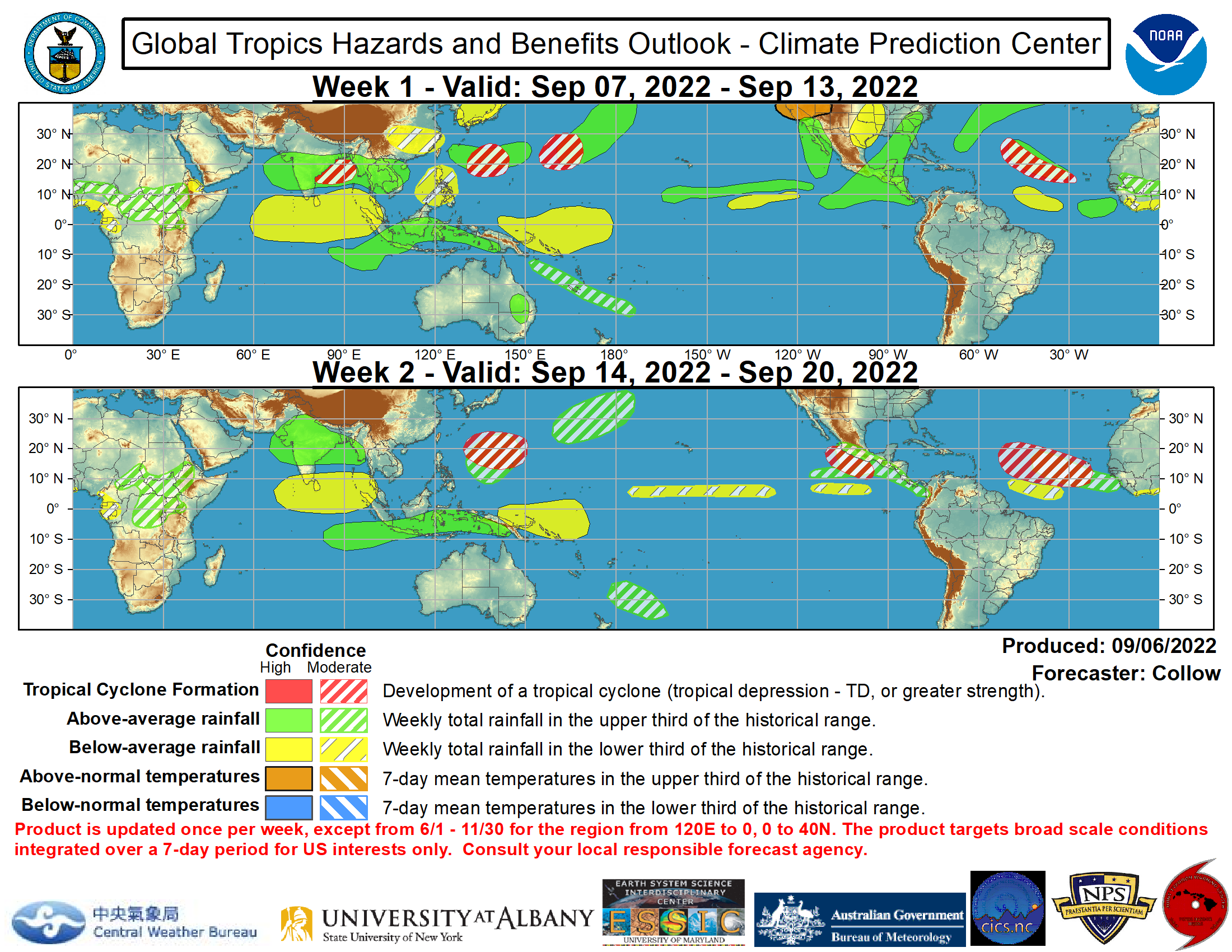
5. U.S. Crop Information
Impact of drought on important crops (the percentage impacted is shown at the top of each graphic)
 |  |
|  |
|  |
|  |
|  |
|  |


6. International Crop and Weather Related Information

7. Prior Month and when available the Current Month-to date Weather (excluding prior week)
Current Month to Date.

And then temperature:

You can generate a wide variety of different graphics here.
8. Science Theme When we Have One.
No Science Theme this week.
9. Economic Impacts
Energy prices depend on the weather. In this case the seem to depend on the forecasts which means model discrepancies.
https://www.fxempire.com/forecasts/article/natural-gas-price-fundamental-daily-forecast-short-covering-fed-by-major-differences-between-weather-models-551086
10. Additional Reference Information
Reservoir Status. This will now be updated as we receive new graphics which is not weekly. We updated most of the graphics this week.
Reservoirs and Stream Flow

Let us look at California

We update these graphics when we receive new ones. They do not auto-update. They tend to change slowly.

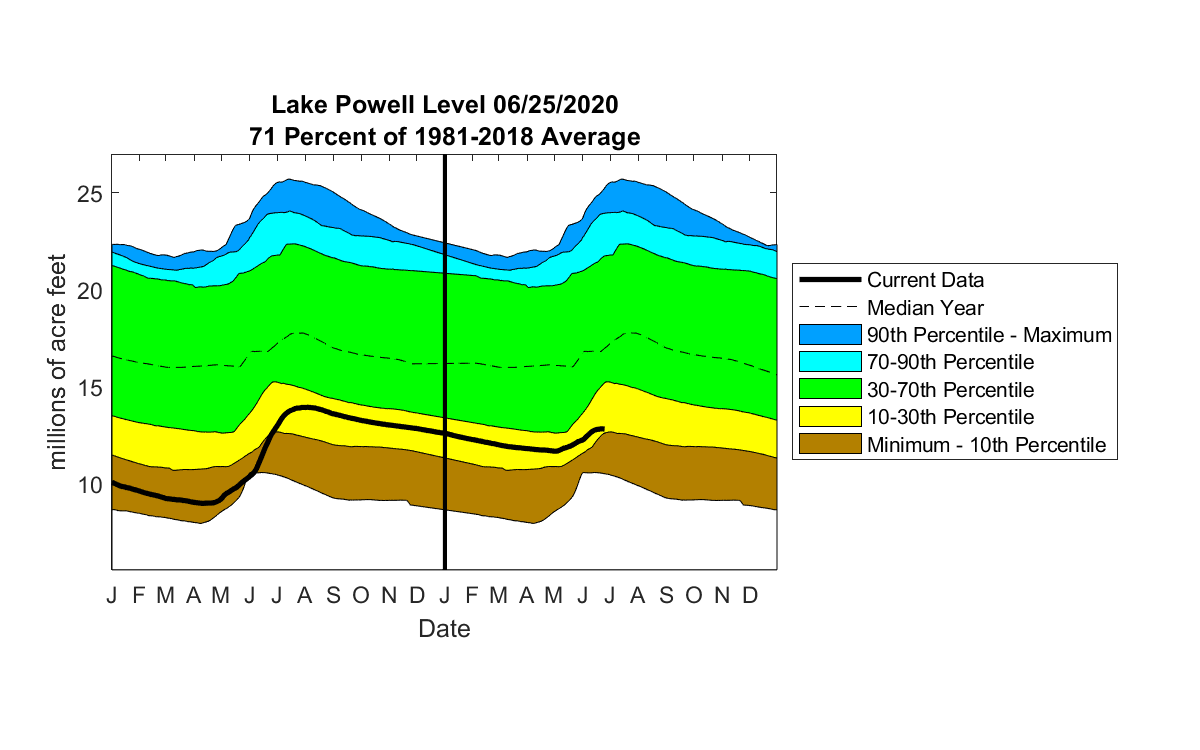
This article provides a little background on the problem.
This is not as graphically pleasing. Updates can be obtained here.

We have added more rivers to the discussion. Above we have reservoirs and they are of course connected by rivers. Both are important and provide insight.
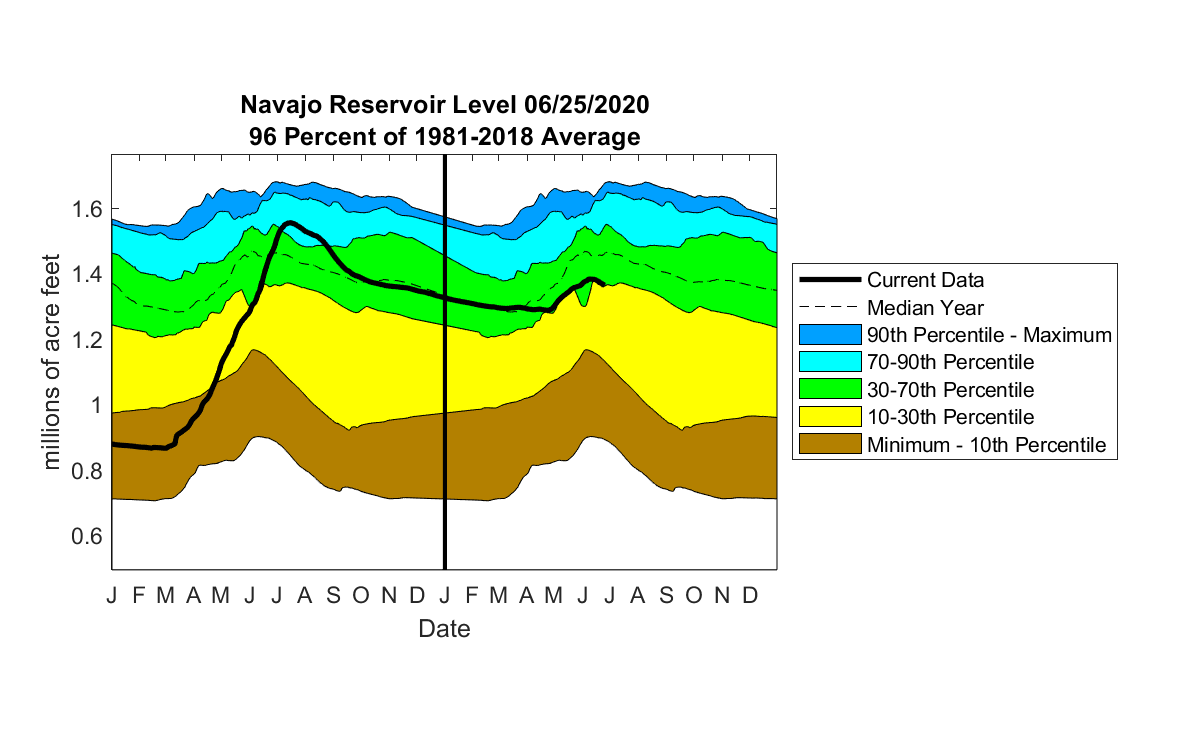
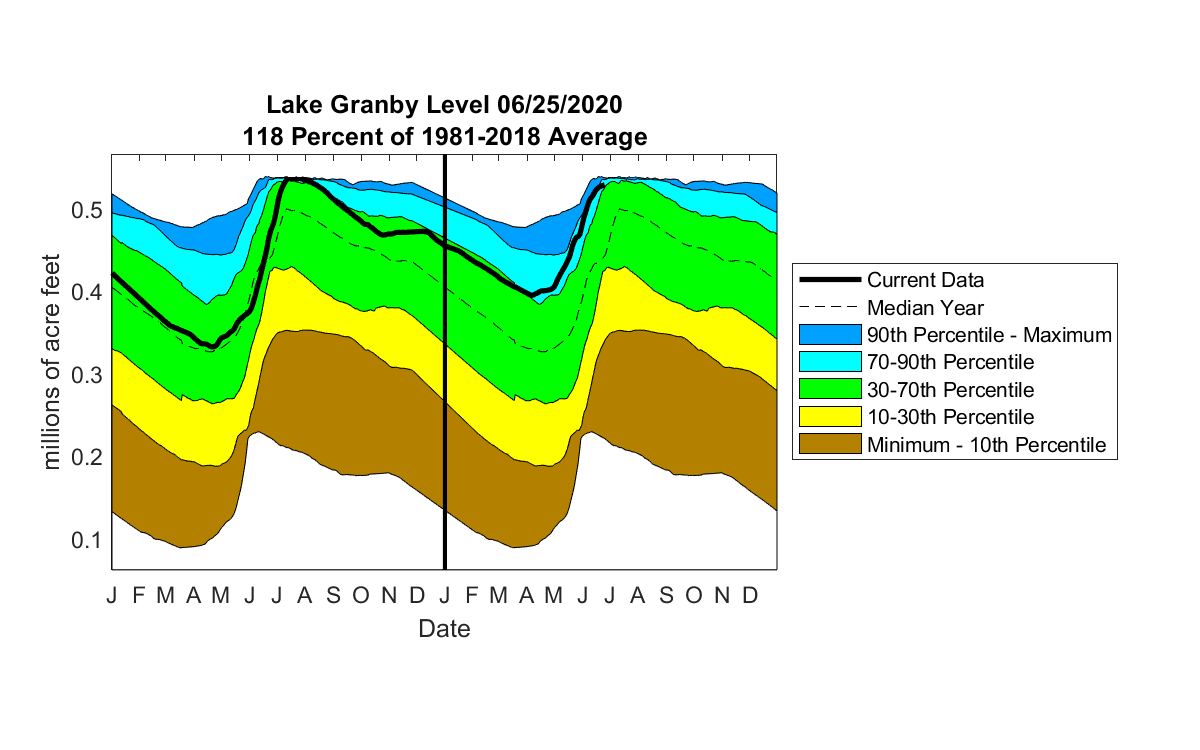
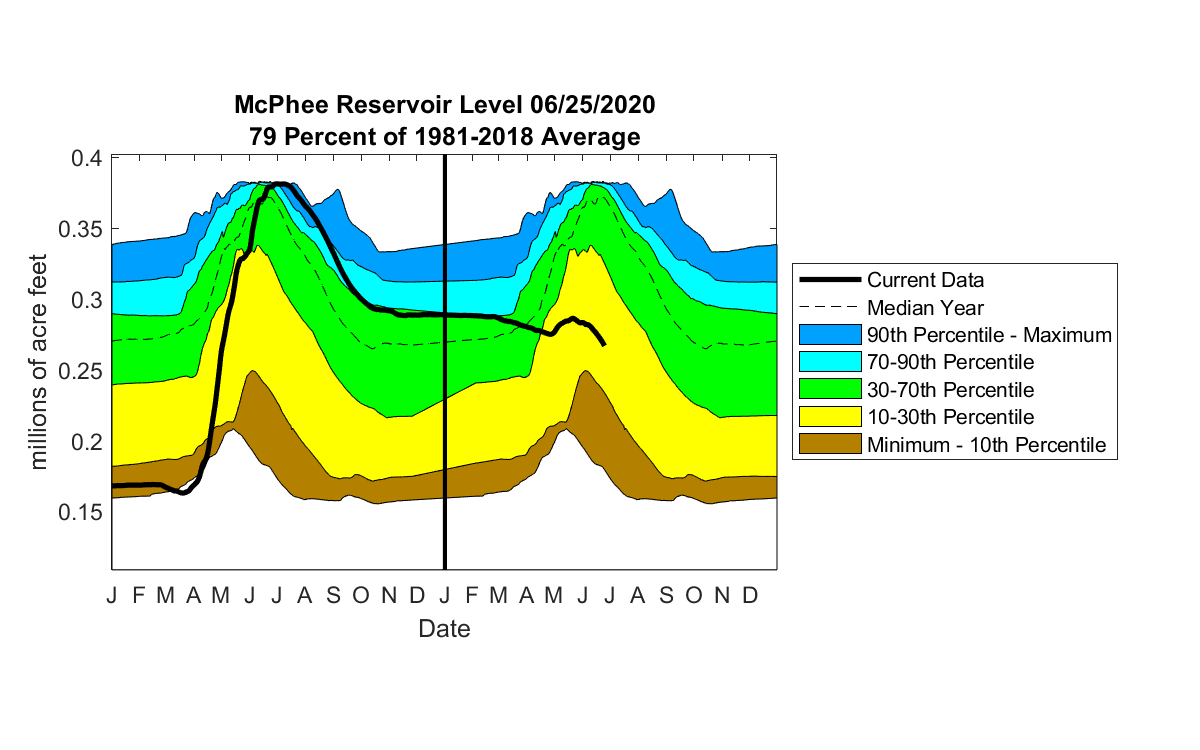
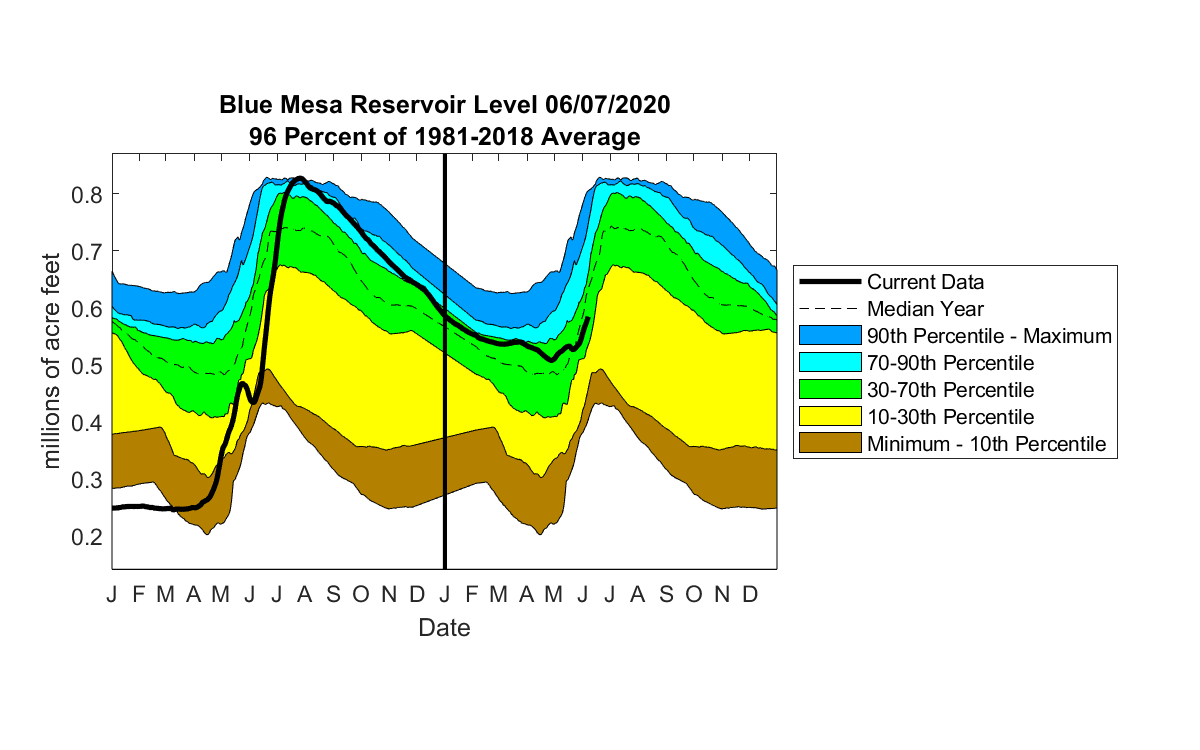
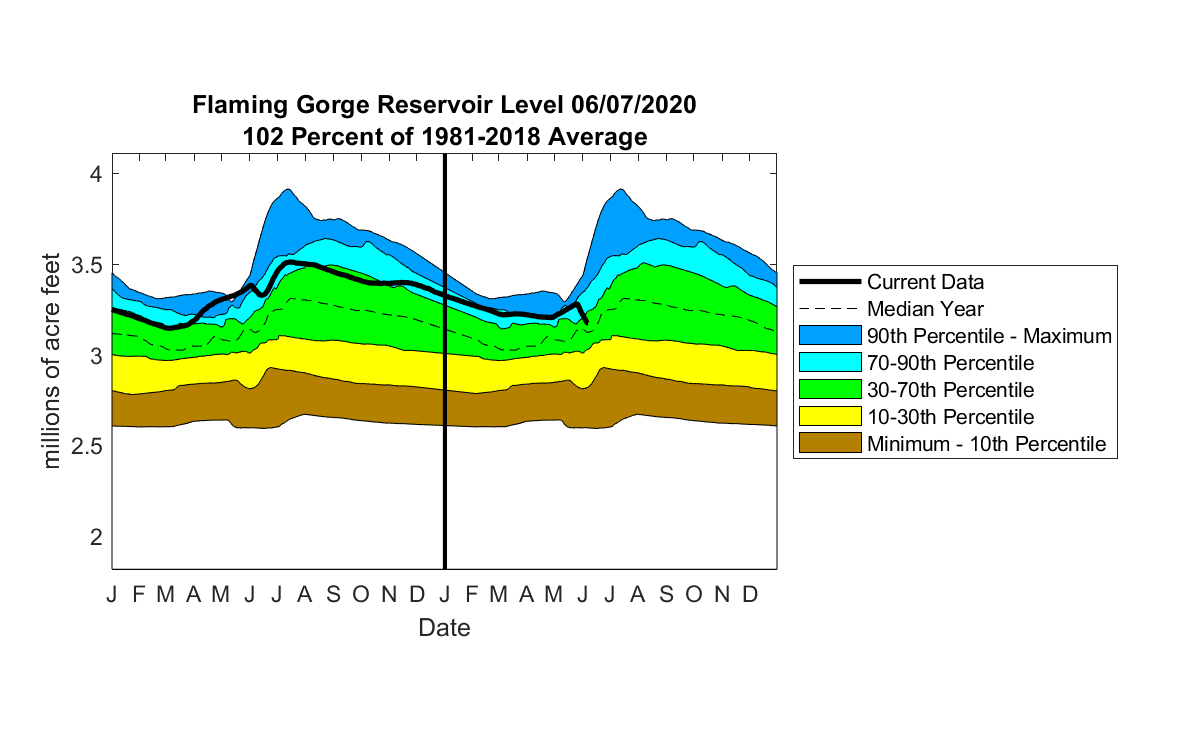
Below is a more complete description of


Sequence of drought occurrence and impacts for commonly accepted drought types. All droughts originate from a deficiency of precipitation or meteorological drought but other types of drought and impacts cascade from this deficiency. (Source: NDMC)
Source: National Drought Mitigation Center, University of Nebraska-Lincoln


