Written by Econintersect
Early Bird Headlines 27 Sep 2018
Econintersect: Here are some of the headlines we found to help you start your day. For more headlines see our afternoon feature for GEI members, What We Read Today, published Monday, Wednesday and Friday, which has many more headlines and a number of article discussions to keep you abreast of what we have found interesting.

Please share this article – Go to very top of page, right hand side for social media buttons.
Notice: The editing office that produces What We Read Today and Early Bird lost ISP connection for nearly 10 hours late Wednesday into early Thursday. The WWRT column for Wednesday was not published and this Early Bird post has abbreviated content.
​Global
- Asia markets down after Fed Chair Powell spurs Wall Street declines (CNBC) Asia markets were largely negative on Thursday, on the back of U.S. Federal Reserve Chairman Jerome Powell’s comments on inflation after the central bank decided to increase interest rates. The U.S. dollar index was up at 94.566 as of 3:20 p.m. HK/SIN, following a turbulent trading session overnight. U.S. crude futures contract advanced by 1.17% to $72.41 per barrel, while the Brent crude futures contract saw gains of 1.04% to $82.19 per barrel. Spot gold had risen 0.4% to $1,198.22 an ounce as of 0404 GMT.

- Approval for US falls to 30% from 48% under Obama
- ‘Historic low’ of Gallup poll ‘sets a new bar for disapproval’
U.S.
- ‘I will never forget’: Kavanaugh accuser to testify as new allegations emerge (The Guardian) See also Kavanaugh, Ford testify: What to watch for (The Hill). Christine Blasey Ford, the California professor who has accused the supreme court nominee Brett Kavanaugh of sexually assaulting her when they were teenagers, will tell the US Senate judiciary committee on Thursday that she will “never forget” what happened to her at a Maryland house party nearly 36 years ago.
Kavanaugh’s nomination to the supreme court hangs in the balance. He and Ford will deliver diametrically opposing accounts at the extraordinary hearing, as fresh accusations of sexual misconduct and contradictory charges swirl around a circus-like confirmation process that has been described as “surreal” and “political as hell”.
- 7 memorable moments from Trump’s wild news conference (The Hill) Read this article. No summary would do it justice.
- White House aides told DOJ official to prepare to take over Rosenstein’s job (The Hill) White House aides this week told a senior Department of Justice official to prepare to replace Deputy Attorney General Rod Rosenstein following reports that Rosenstein was ready to resign, according to a New York Times report. White House chief of staff John Kelly reportedly told Matthew Whitaker, the chief of staff for Attorney General Jeff Sessions, that he was next in line to replace Rosenstein if President Trump fired his deputy attorney general or if he resigned. See also Trump: I’d ‘prefer’ to keep Rosenstein, may delay meeting.
- Daily Treasury Yield Curve Rates (U.S. Department of the Treasury) Remember when “they threw a party and nobody came”? The Fed raised the Fed Funds rate and all other rates came down. (And the entire yield curve flattened ever so slightly.)

EU
- The euro fell 0.3 percent against the dollar to $1.17 at around 7.13 a.m. London time.
- Bond markets were also nervous about the spending plans in Italy, with the yield on the 10-year government bond moving higher to about 2.968 percent.
UK
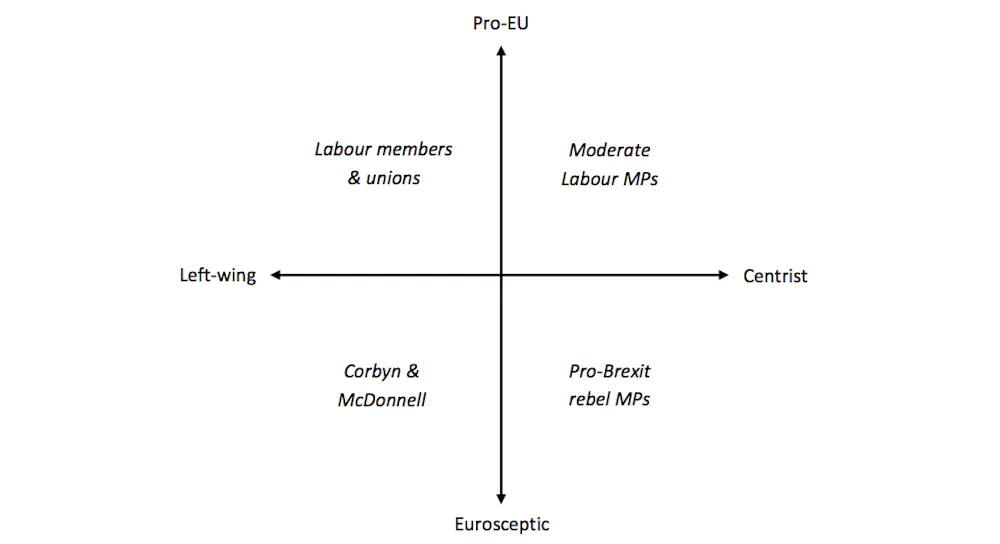
- Behind the Brexit vote, Labour remains dangerously divided (The Conversation) One of the ironies of Brexit is that, while the Conservatives were long seen as divided over Europe, it is Labour’s internal divisions that could play a vital role on the road ahead. Labour’s conference was the scene for a tug-of-war over whether the party should endorse a second referendum on a Brexit deal.
Turkey
- Turkey’s Erdogan hopes to ‘turn over new page’ with Germany in state visit (DW) After years of strained ties, Erdogan has said he wants to reset relations with Berlin during a pomp and circumstance-filled visit to Germany. But German and Turkish politicians aren’t convinced it will lead to a change. See also Looking back on the strained Merkel-Erdogan relationship.
India
- India’s top court won’t re-examine if mosques are essential to Islam (Quartz) With a 2:1 majority, a three-judge bench consisting of chief justice Dipak Misra and justices Ashok Bhushan and S Abdul Nazeer has declared that there is no need for a larger bench to reexamine a 1994 supreme court ruling that said that a mosque was not essential to Islam.
This has far-reaching consequences for the dispute between Hindus and Muslims over a religious site in Ayodhya, a town in the northern state of Uttar Pradesh, which has roiled the political and social landscape of the country for decades.
Japan
- Japanese Prime Minister Shinzo Abe and U.S. President Donald Trump agreed to start trade negotiations on Wednesday.
- The move is expected to shield Tokyo from Trump’s proposed tariffs on Japanese vehicle imports that are seen as likely to damage the Japanese economy.
- But entering talks was considered a major concession for Abe, who is expected to keep his guard up during bilateral discussions, experts said.
China
- Trump accuses China of meddling in midterms, citing Iowa newspaper ad (The Guardian) Donald Trump has accused China of seeking to interfere in US congressional elections in November, using his chairmanship of the UN security council to spring a surprise on his fellow world leaders. Asked for proof, the president later cited a Chinese-funded newspaper advertisement in Iowa, a battleground state in the congressional campaign, that the Chinese government had openly paid for, lobbying against his trade policies.
- President Trump cites China’s respect for his ‘very, very large brain’ (CNBC) President Donald Trump told reporters on Wednesday that China supposedly respects him for his “very, very large brain“.
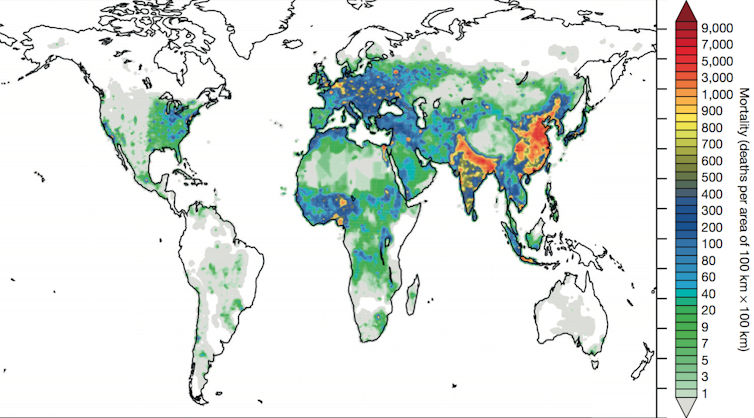
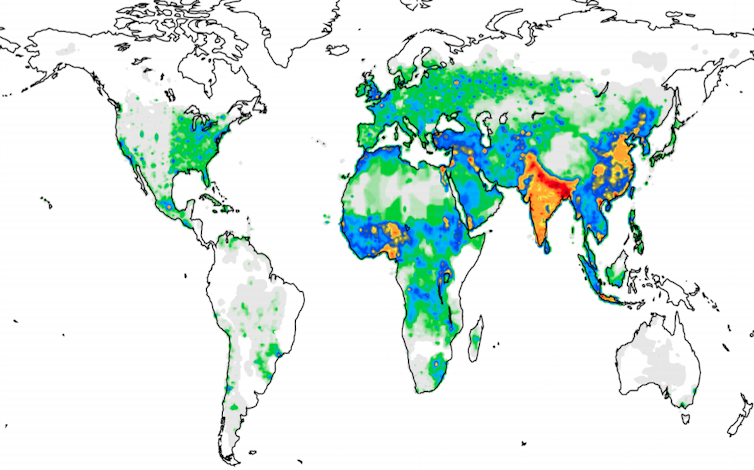
- China’s smog kills more than a million each year – but there’s a clearer road ahead (The Conversation) The balance between economic development and environmental protection is starting to shift, much as it did in the West half a century ago. The new policies now being put in place will put China on a cleaner trajectory than the one assumed previously. The first graphic shows mortality linked to outdoor air pollution in 2010. The two main regions are easy to spot. The second graphic shows increase in mortality linked to outdoor air pollution from 2010 to 2050 (business-as-usual scenario). While things in India will get worse, China is set to clean up.